• Home
  • Guided Trips
  • Book A Presentation
  • Fly Tying Lessons
  • Blog
  • Calendar of Events
  • Podcasts
  • Contact Us
    • Clearance Sale
    • Norvise
    • Fly Tying Kits
    • Fly Tying Materials
    • Hooks & Shanks
    • Tools & Fly Boxes
    • Gift Cards
    • Clothing
    • Commercially Tied Flies
    • Small Batch Flies
    • Our Story
    • About Bart Lombardo
  • Fly Patterns
  • Newsletter
  • Sign In My Account
Menu

Panfish On The Fly

PO Box 174
Clarksburg, NJ 08510
(609) 529-1729
Fly Fishing for America's Favorite Fish

Your Custom Text Here

Panfish On The Fly

  • Home
  • Guided Trips
  • Book A Presentation
  • Fly Tying Lessons
  • Blog
  • Calendar of Events
  • Podcasts
  • Contact Us
  • Shop
    • Clearance Sale
    • Norvise
    • Fly Tying Kits
    • Fly Tying Materials
    • Hooks & Shanks
    • Tools & Fly Boxes
    • Gift Cards
    • Clothing
    • Commercially Tied Flies
    • Small Batch Flies
  • About
    • Our Story
    • About Bart Lombardo
  • Fly Patterns
  • Newsletter
  • Sign In My Account

A Break From Tradition - The Rubber Leg Soft Hackle

February 20, 2026 Panfish On The Fly

A break from tradition - The Rubber Leg Soft Hackle

A Proven Pattern - Why Change It?

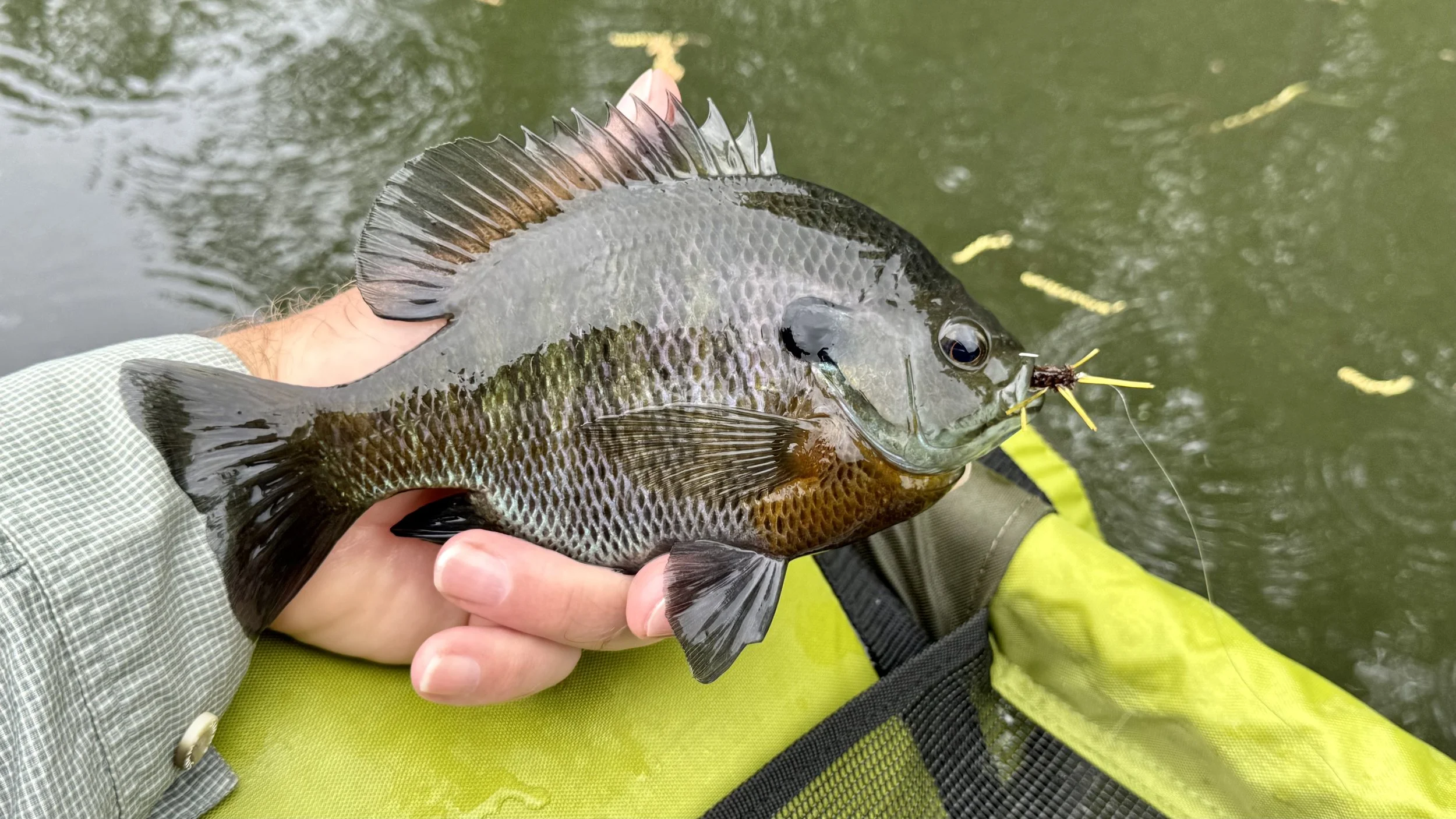
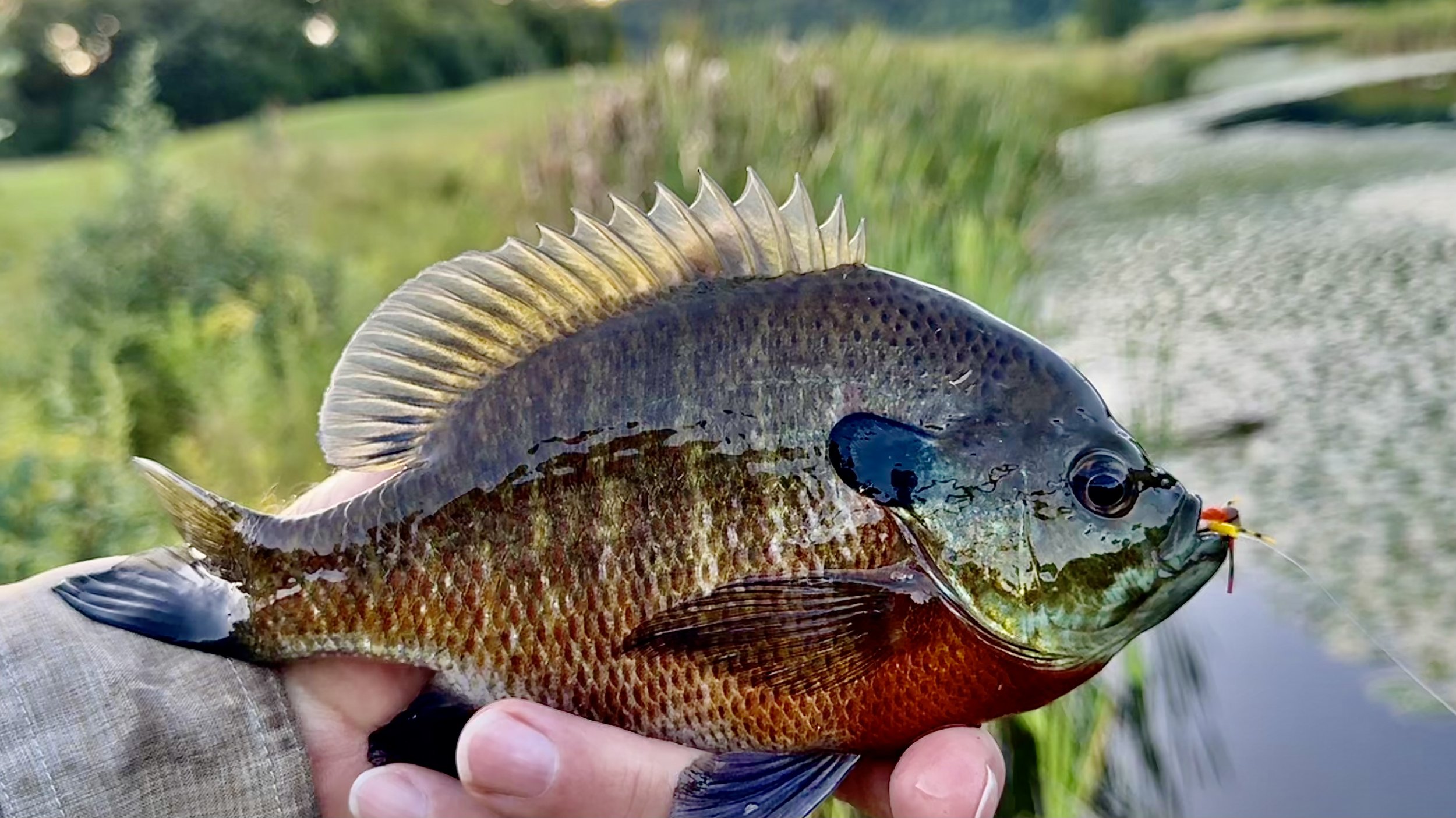
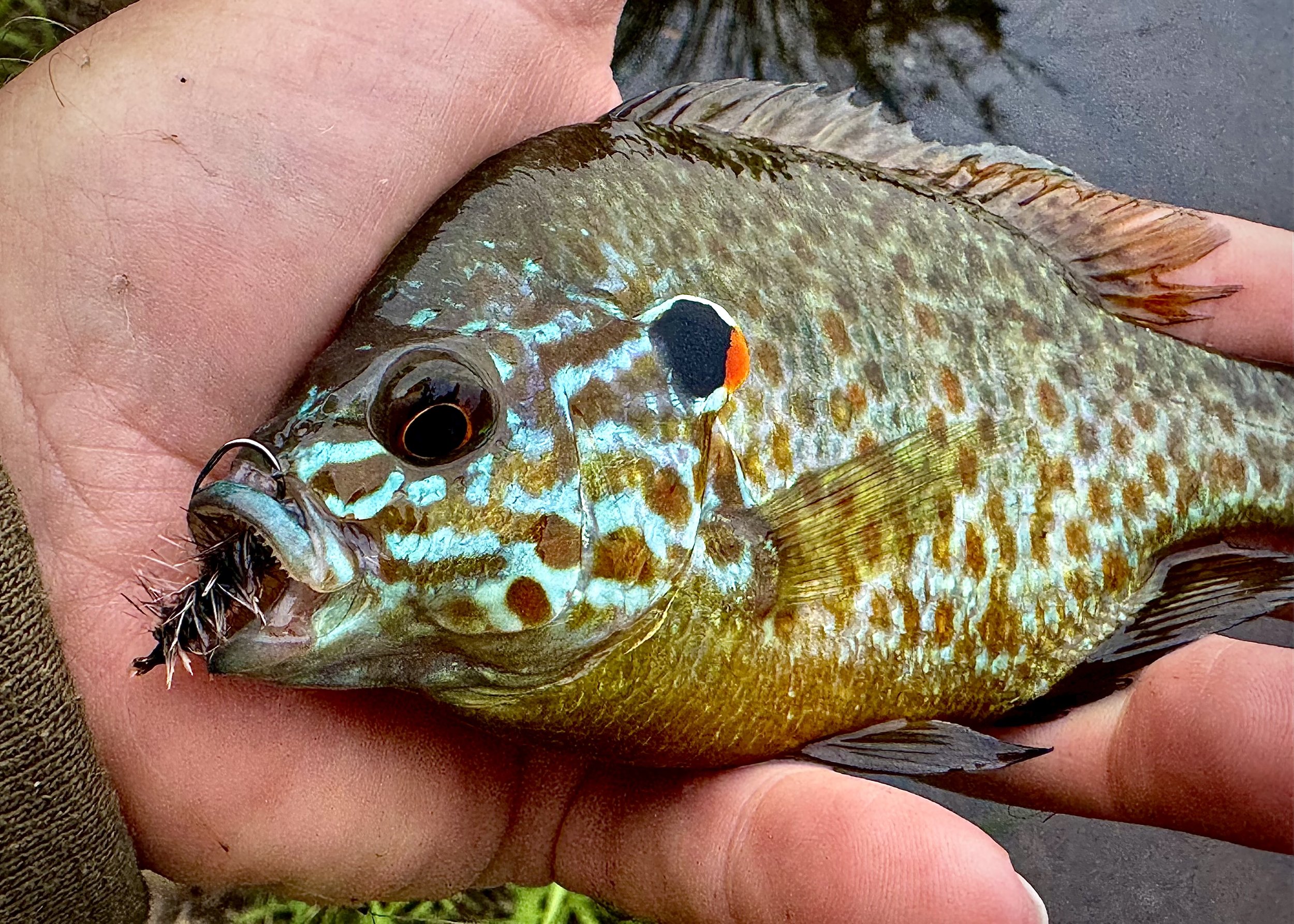
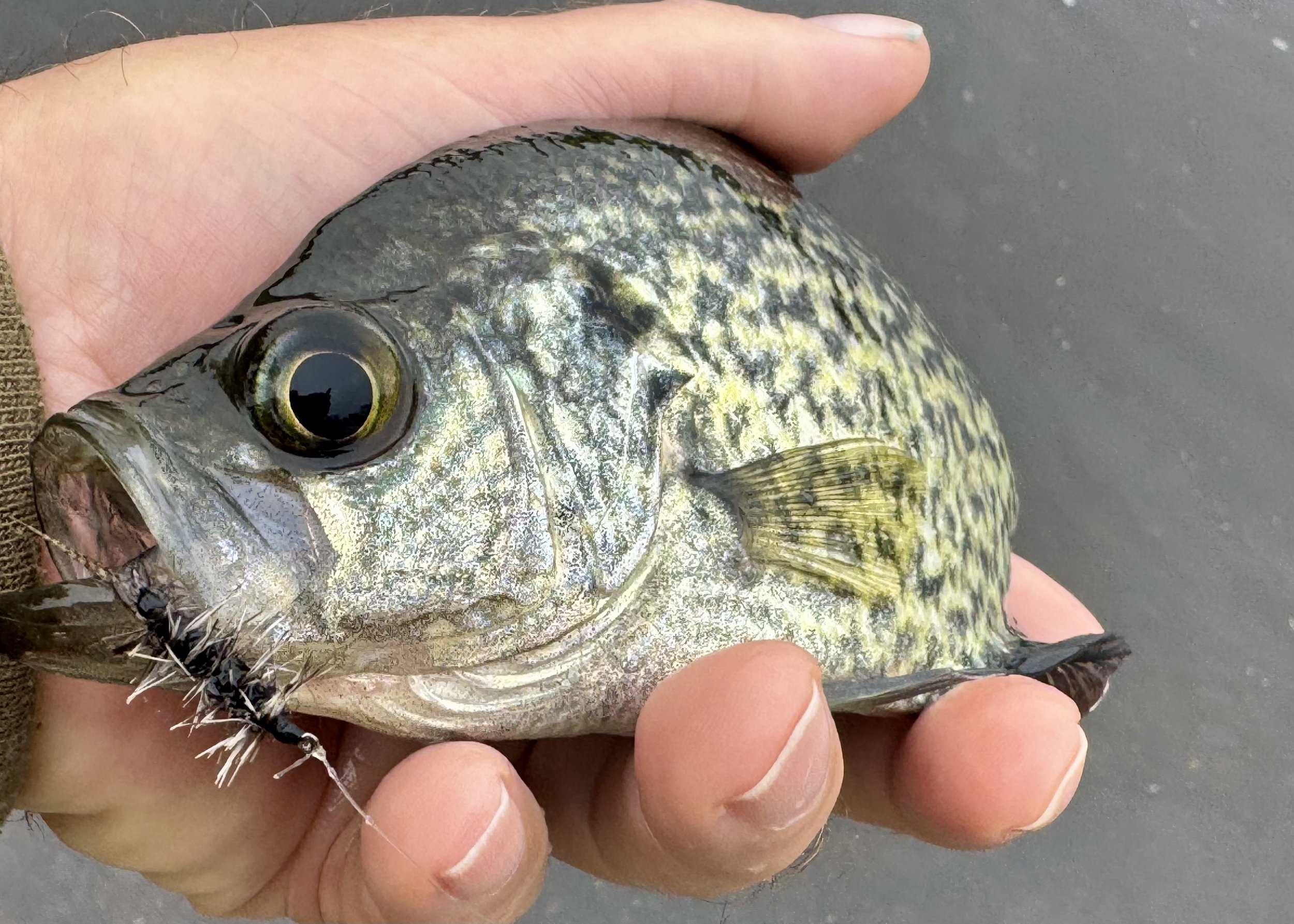
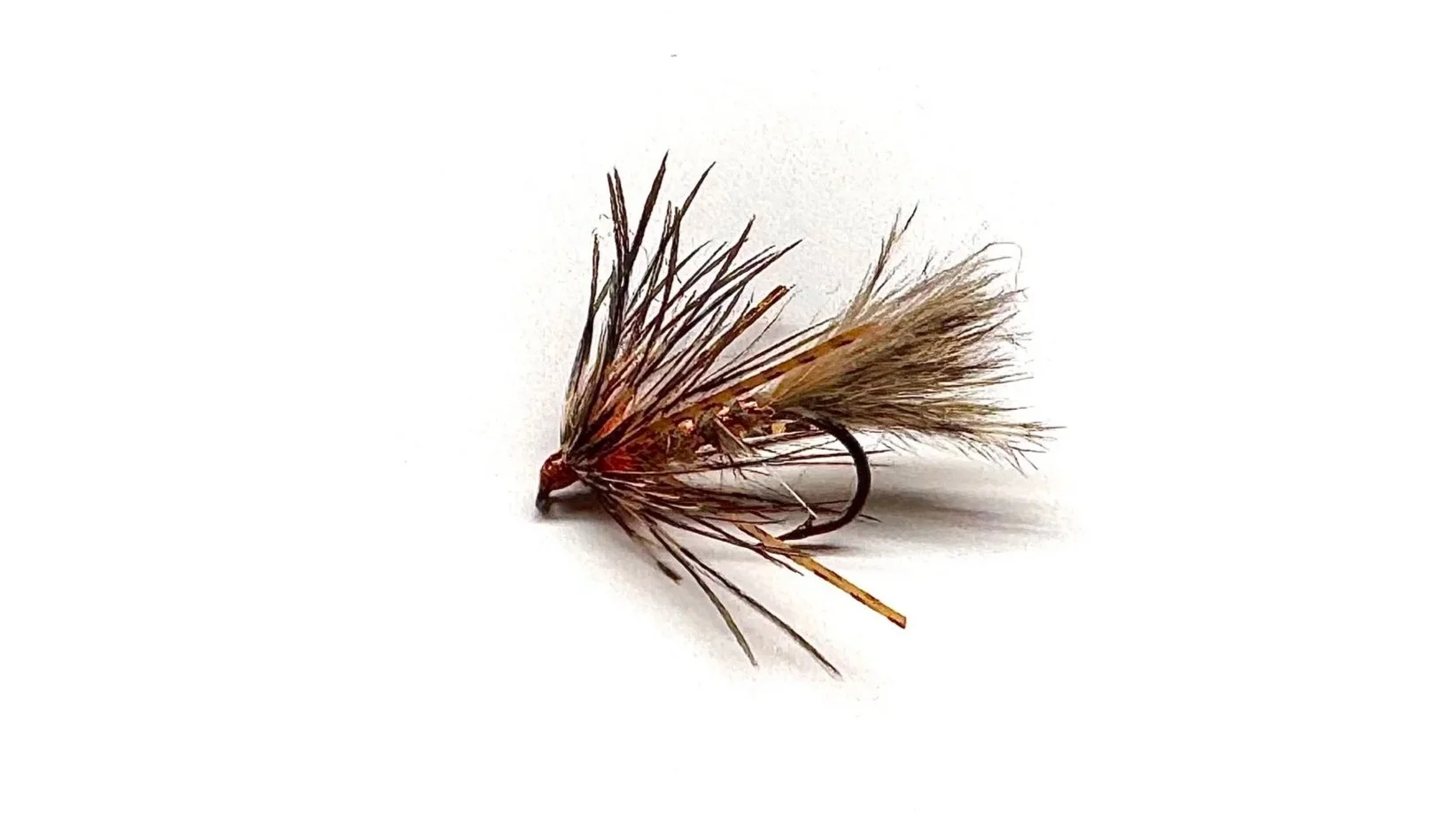
Soft hackle wet flies are hands down my favorite panfish patterns when fishing below the surface. Traditionally tied soft hackles are extremely effective, so it may seem unnecessary to change them. However,  sometimes making a thoughtful adjustment—like adding rubber legs—can actually improve an already successful pattern. I do not believe in changing flies for the sake of novelty. Instead, my purpose is to explore whether rubber legs make the pattern more effective. Read on...
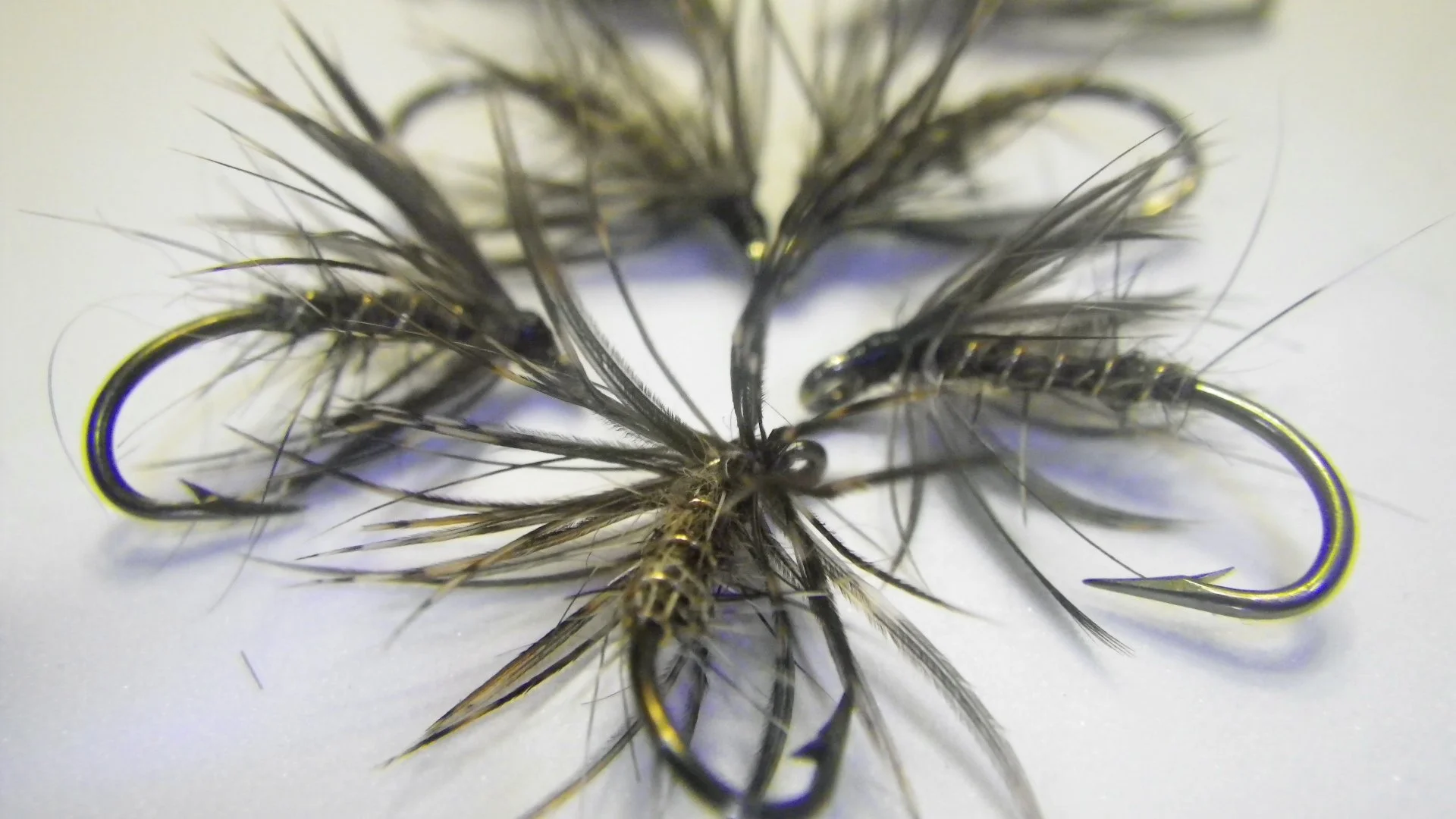
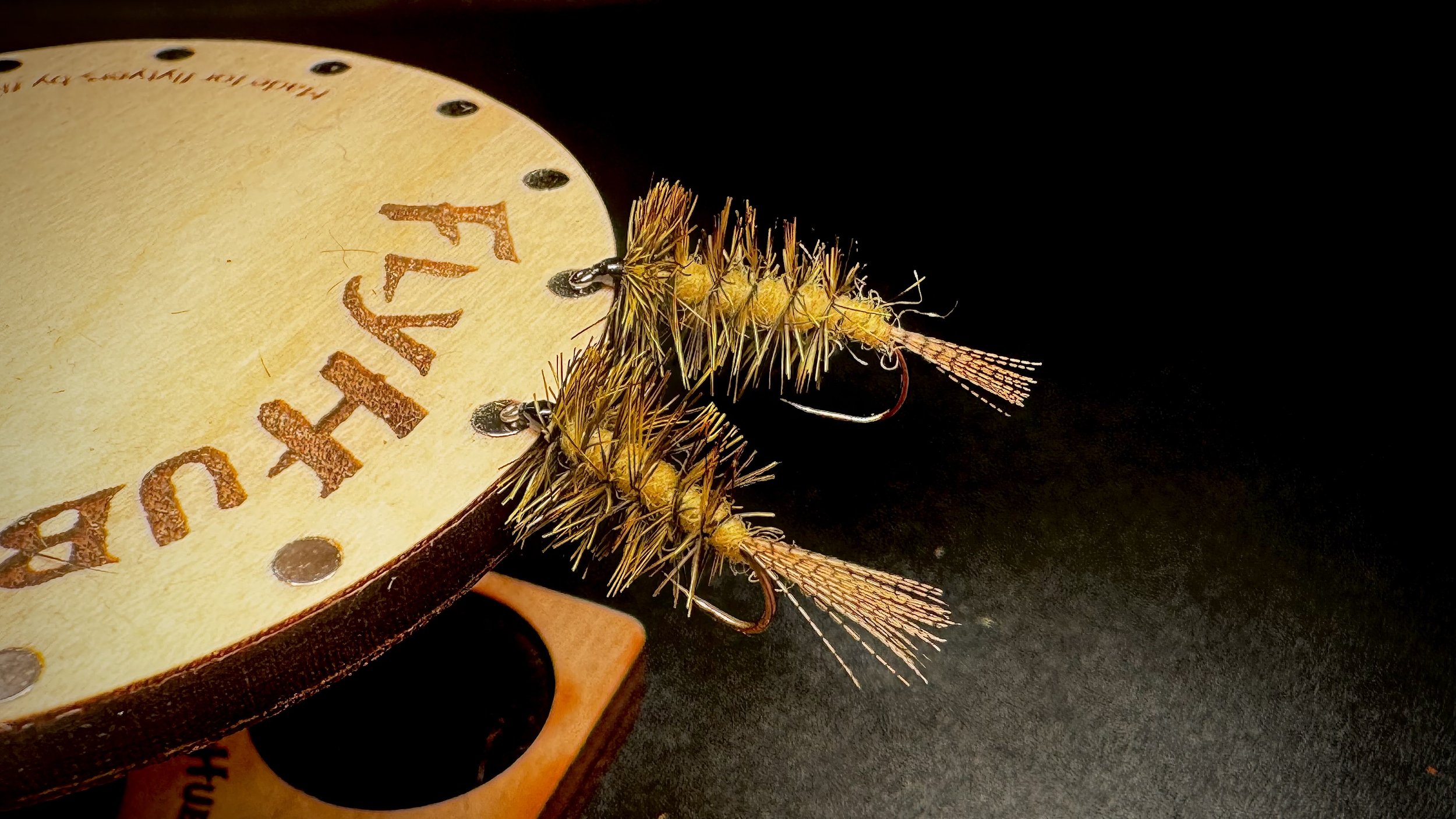
Traditionally tied Hare’s Ear Soft Hackles

A Break From Tradition

Knotted pheasant tail legs have been used on soft hackle flies for decades, adding movement and bugginess that hackle and dubbing alone cannot. The downside: knotted pheasant tail fibers are among the most delicate materials I've worked with, and the legs are time-consuming to make. Although finished flies look great, the legs often break after a fish or two.  
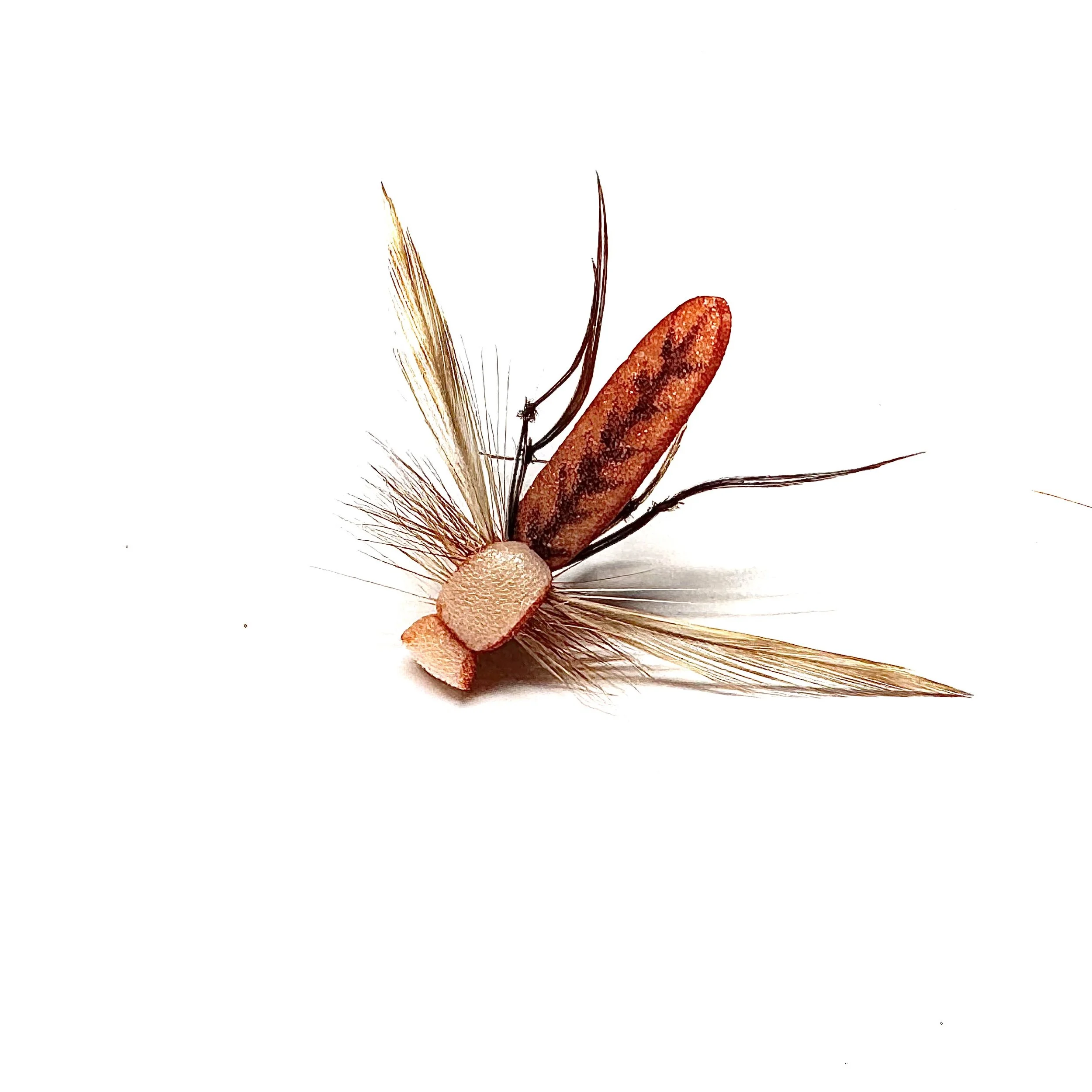
An adult cranefly pattern tied with knotted pheasant tail legs

Fixing The Problem

Looking for a more durable solution, I adopted a technique I used on another fly that used knotted pheasant tail fiber legs - the Crane Fly, also called Daddy Long Legs by our friends across the pond. Craneflies are one of my favorite summertime topwater panfish flies. The big, gangly bugs are common in my area, and I often encounter them on the water. The knotted pheasant legs are an essential aspect of this pattern, so I go through the trouble of adding them. However, they suffer the same problems as knotted pheasant tail legs on soft hackle wet flies. They are too damn fragile and don't last long. Once the fly loses its legs, it continues to work, but I get more looks and fewer refusals when the legs are present.
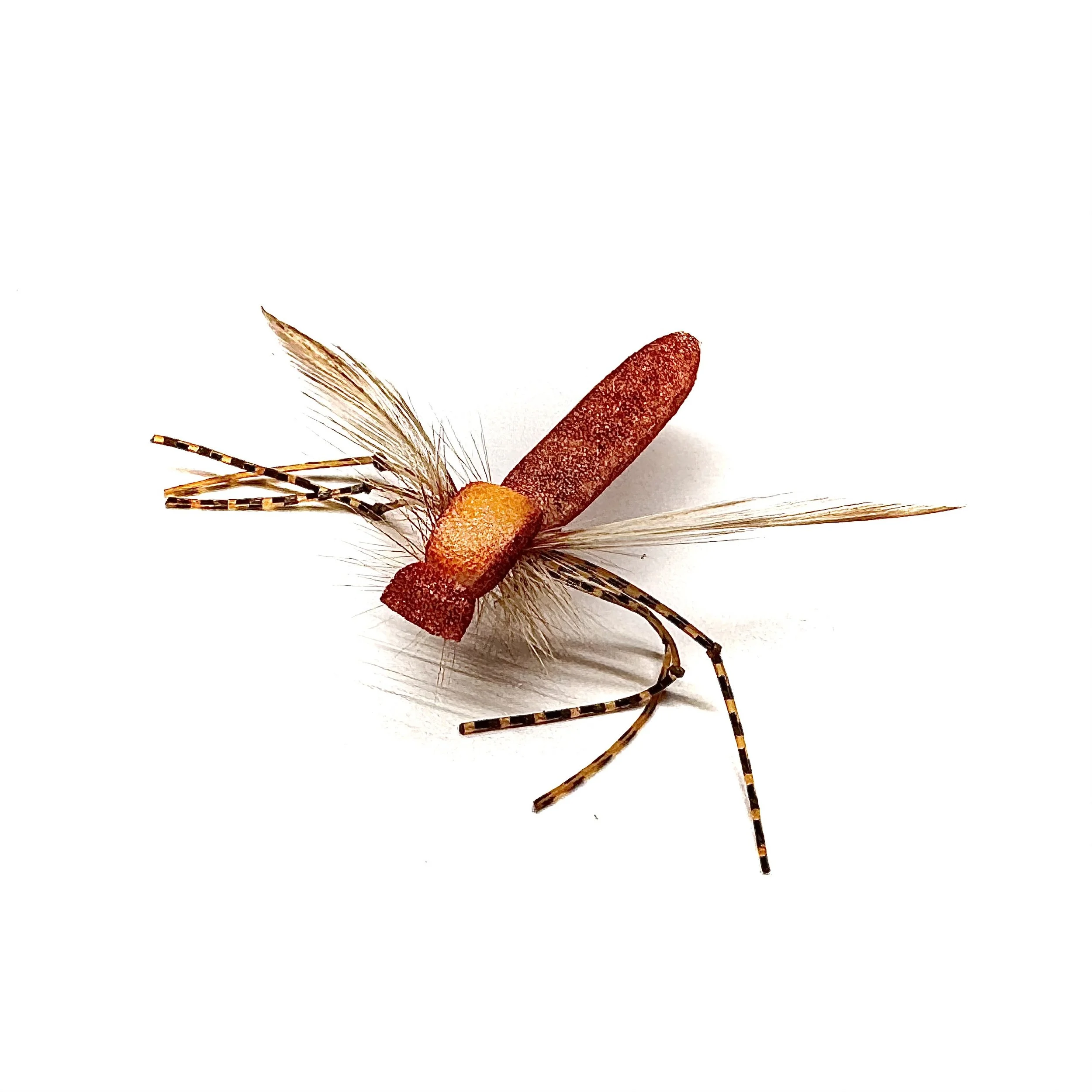
A adult cranefly tied with knotted silicon legs

Synthetic vs. Natural

I received samples of Hareline's Micro Grizzly Flutter Legs, which are thin, barred silicon legs ideal for small flies. Replacing the knotted pheasant tail legs on craneflies with this material made tying easier, and the legs are far more durable while preserving the multi-joint look.
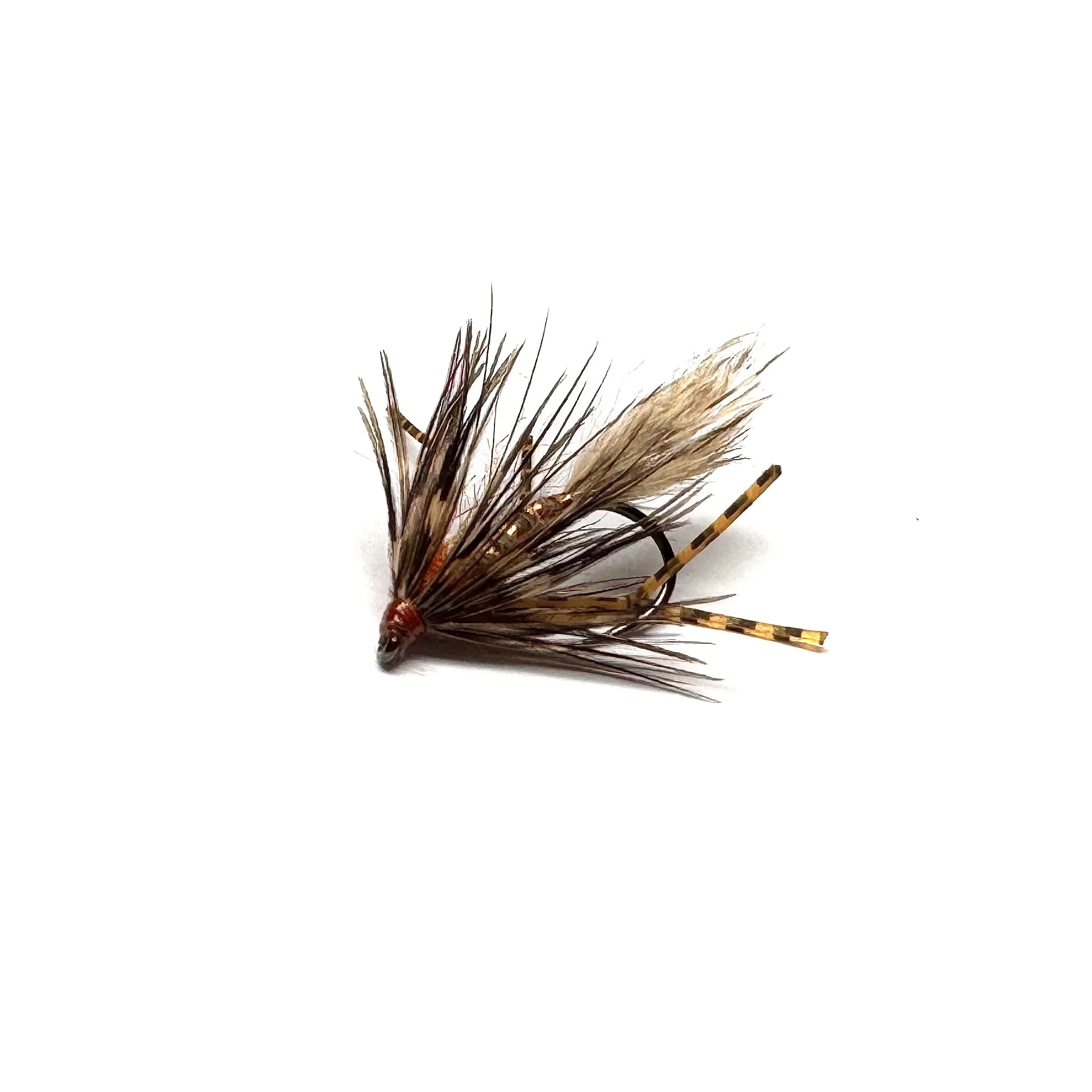
Early versions of this pattern used knotted silicon legs

I next used micro-silicon legs to replace knotted pheasant tail in my soft hackle patterns. They worked well, offering better movement when the fly is pulled through water. Unlike knotted pheasant legs that collapse during retrieves, silicon legs stay active, enhancing the fly's appeal.

The K.I.S.S. Principle

My friend and fellow fly tier Lou Digena follows the K.I.S.S. (Keep It Simple, Stupid) principle in many of his flies, emphasizing that unnecessary complexity should be avoided—most systems work best when simple rather than complicated.
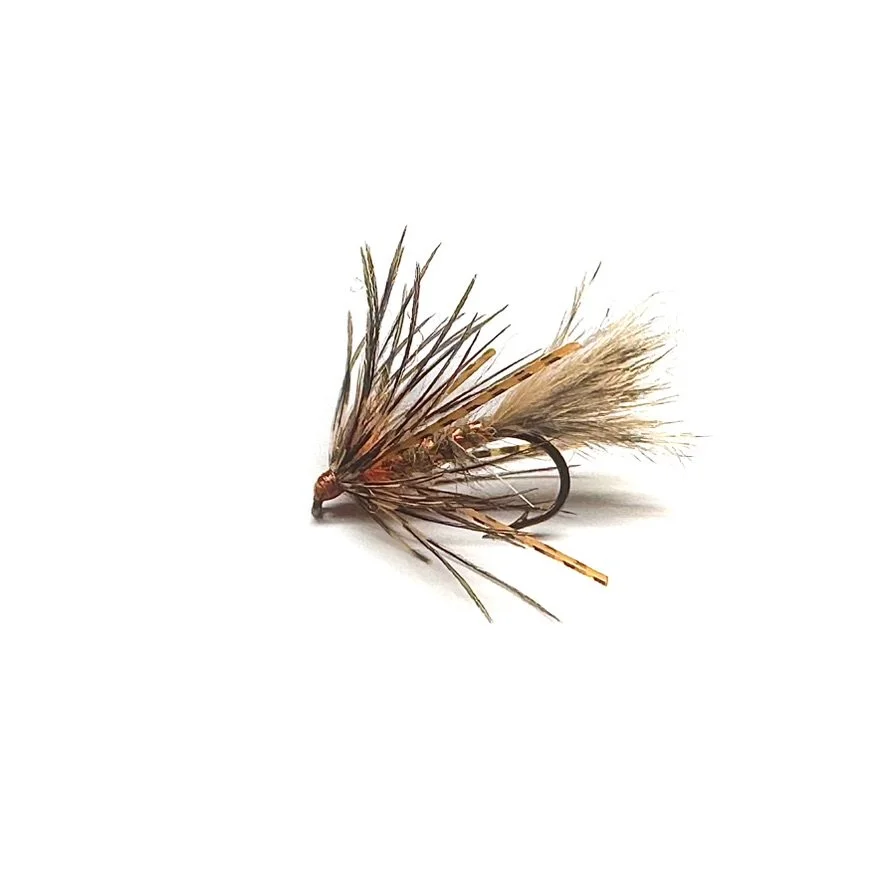
Eliminating the knots in the leg material made tying easier and did not reduce its effectiveness

Following this principle, I removed knots from the silicon legs. The fly still produced as well, so I was happy to skip the extra step of preparing knotted rubber legs.

Why Complicate Things By Adding Legs In The First Place?

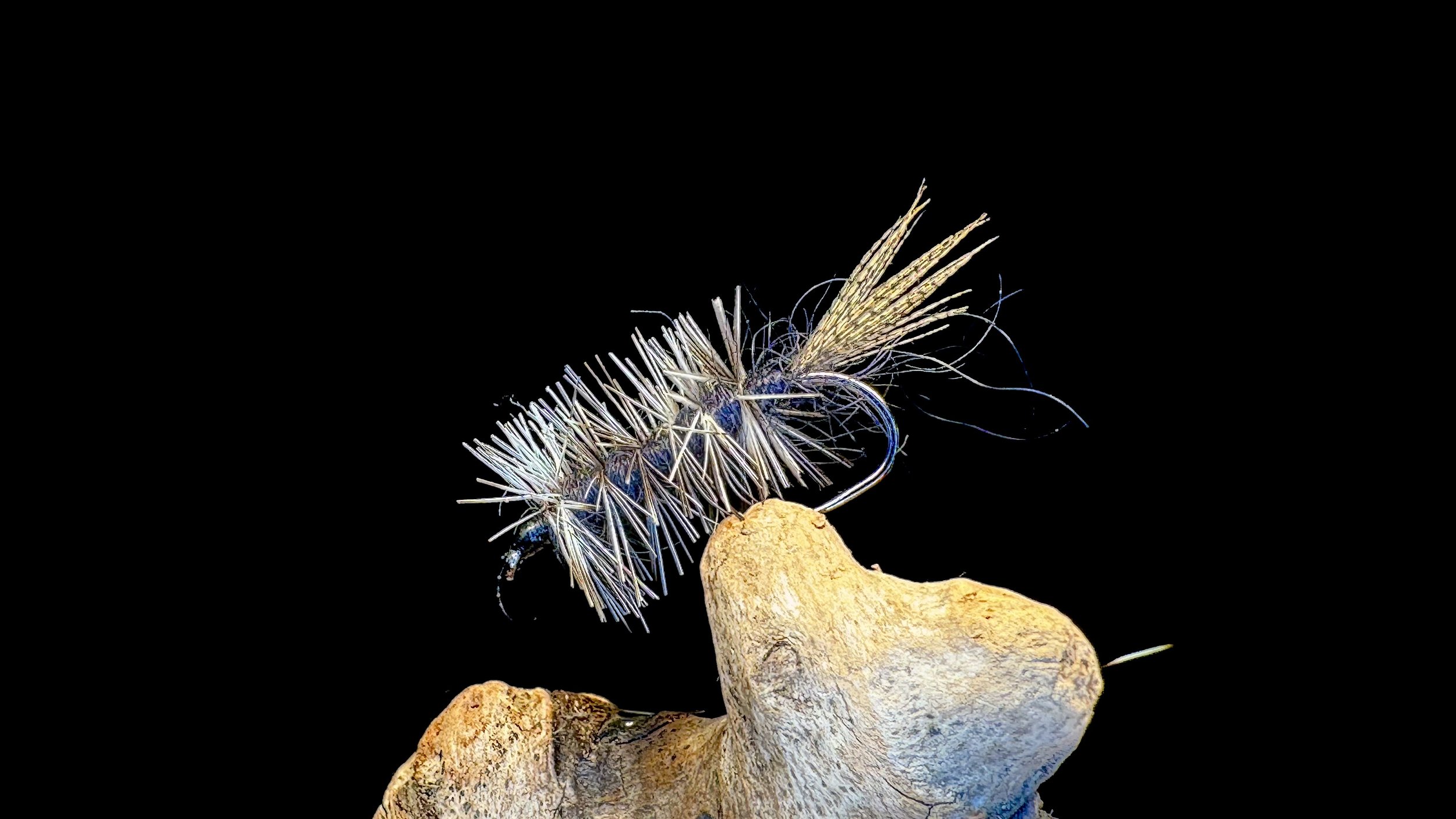
Why even bother adding legs to an already successful fly? A traditional soft hackle is extremely productive for panfish, so it's fair to question if adding silicon legs is necessary. My thought was that adding silicon legs could make it more effective. This addition is not for novelty but for genuine performance improvement.

Panfish love rubber legs. The movement from added legs is irresistible, explaining why many panfish flies include them. Legs on soft hackles improve action and help prop up the hackle fibers when retrieved, giving the fly a more noticeable profile in stained waters.

The legs also extend the life of the fly. Hackle fibers are delicate and often get damaged. Rubber legs provide consistent movement and profile even after the hackle fibers are worn away, maintaining the fly's effectiveness. One could argue that the K.I.S.S. Principle may warrant eliminating the feather hackle completely. Maybe that is true, but I am not ready to go there…yet.
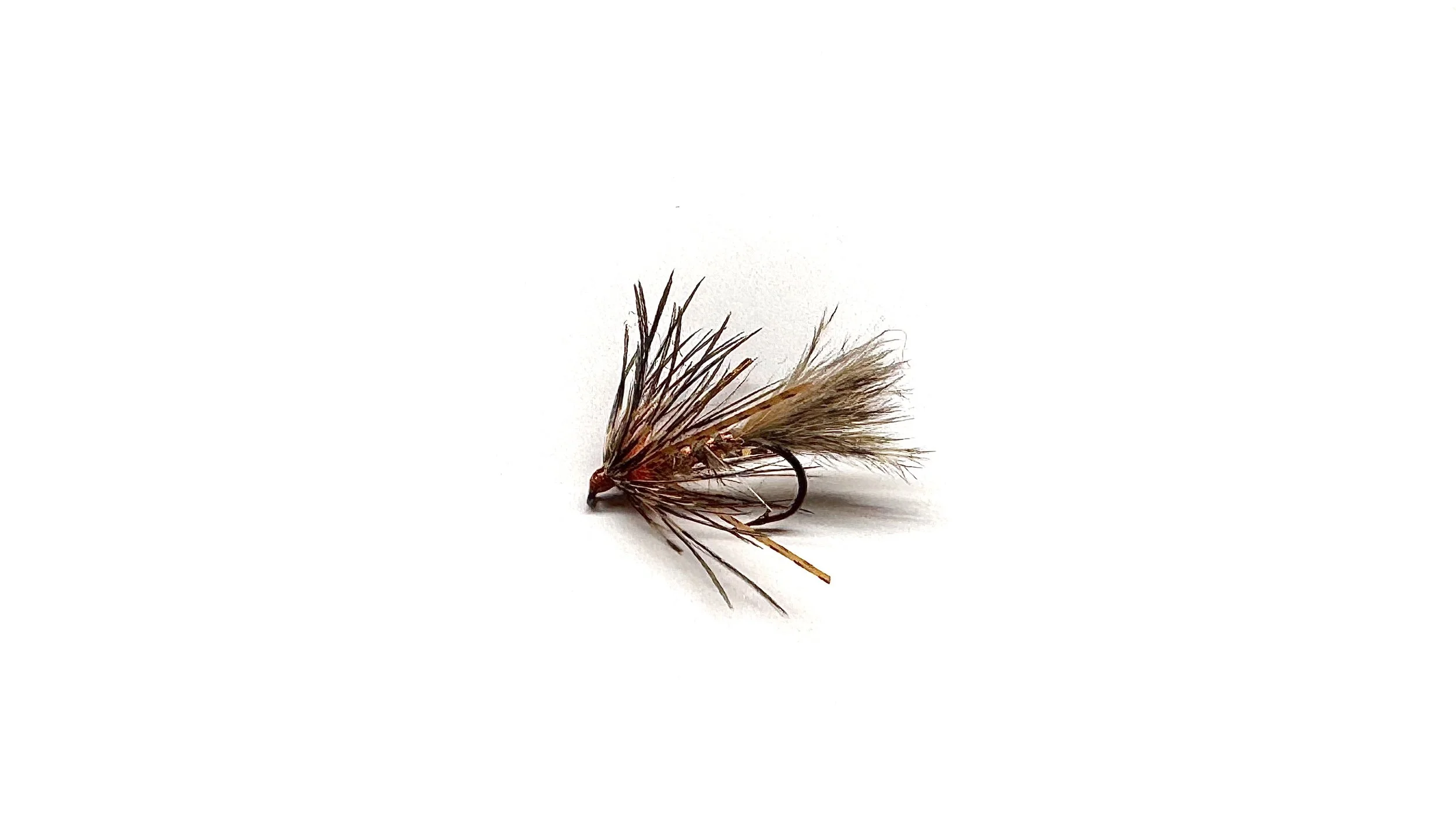
The Soft Hackle Hare’s Ear

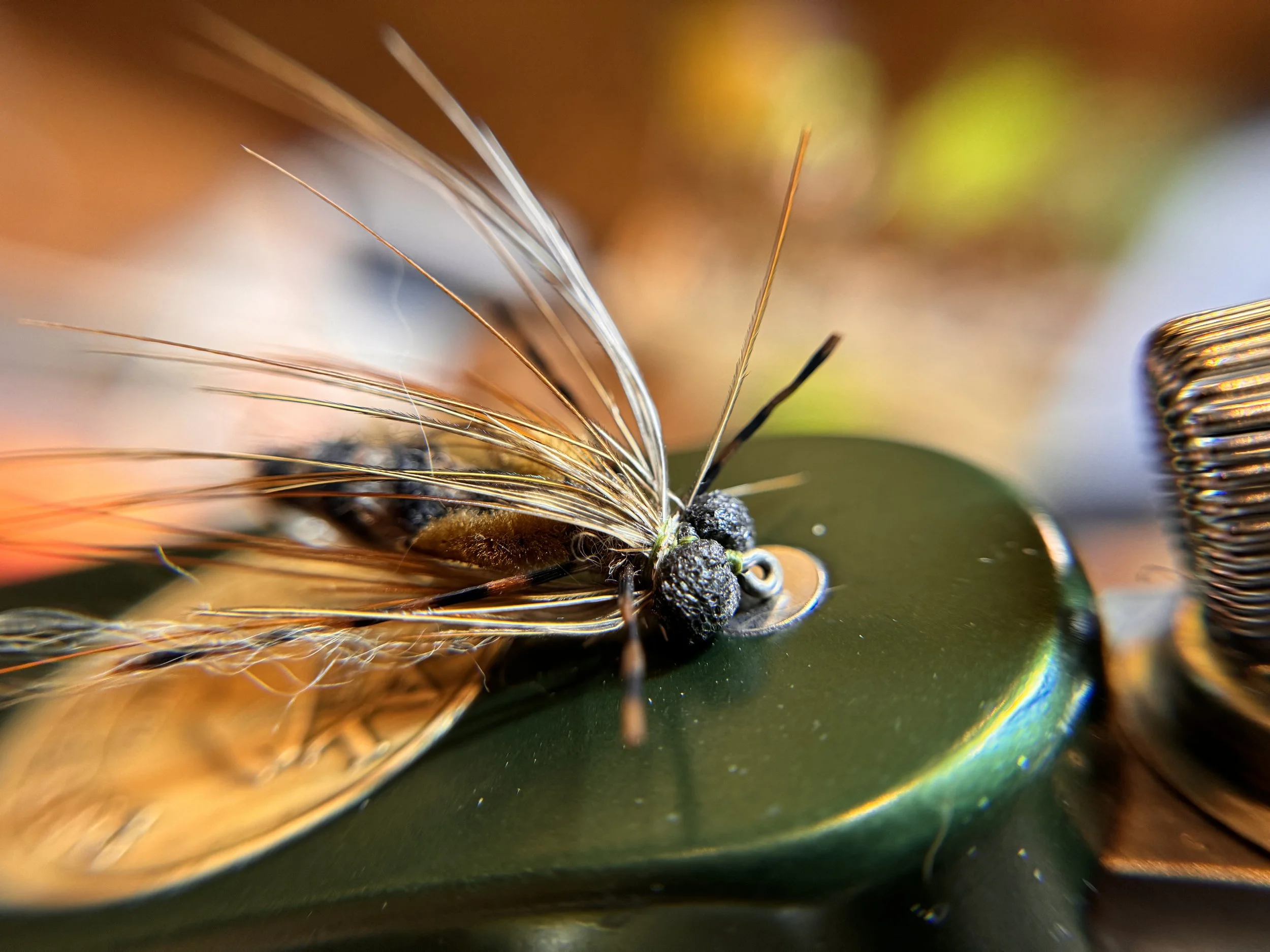
One of my favorite soft hackle patterns for panfish is the Hare’s Ear.  When fishing the fly in warm water, I change it up a little. I swap the dark thorax of the traditional version for a bright orange one.  This provides a subtle bit of color that I feel attracts more fish.  It has been well documented that panfish have an affinity for bright colors. This was the first wet fly I added rubber legs to.  These days, I seldom tie them without adding fine rubber legs. Feel free to experiment with adding fine rubber/silicon legs to your favorite wet fly pattern.

Tie This Fly

Decide for yourself

Tie a few up and see if you notice an improvement over traditionally tied soft hackles. The core argument here is whether a simple addition—such as silicon legs—can enhance a classic pattern. Decide for yourself if this extra material is worth your time and effort on panfish wet flies.


In Fly Tying, Panfish Flies Tags The Rubber Leg Soft Hackle
5 Comments

The Virginia Fly Fishing & Wine Festival

January 7, 2026 Panfish On The Fly

My first show of the year is also one of my favorites. It is the Virginia Fly Fishing and Wine Festival. This show combines fly fishing with wine, beer and spirit tastings.

Read more
In Fly Tying Demonstration, Appearances, Fly Fishing Shows Tags The Virginia Fly Fishing & Wine Festival
Comment

The Dog Days Of Summer

August 14, 2025 Panfish On The Fly

The Dog Days Of Summer

Bluegills and other panfish are easy pickings on their spawning beds in the spring. That is how they get their reputation as being pushovers. Fly selection is not critical, and poor presentations will often still yield results. However, springtime doesn't last forever, and catching a trophy panfish can be challenging when the spawning season ends. While trophy-sized bluegills often let down their guard when focused on keeping their bloodline going, they did not get that big by accident. Outside of the spawning season, big bluegills can be a challenging quarry to chase with a fly rod.

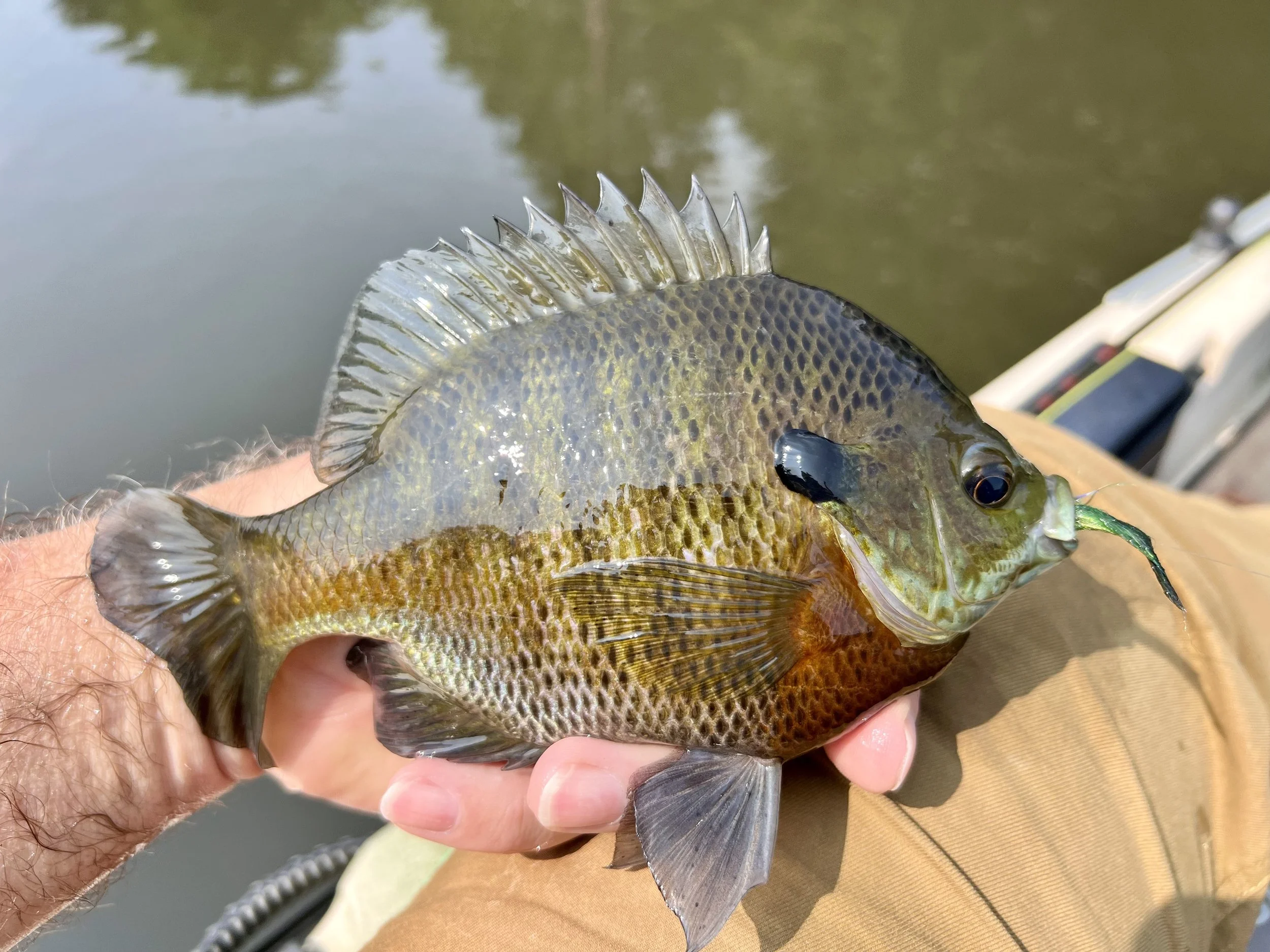
A bluegill this size will put a smile on your face and a serious bend in your fly rod!

Few anglers don't smile ear to ear when fighting big bluegill on a light fly rod. These scrappy fighters know how to use their saucer-shaped bodies to full advantage and never seem to give up. So if you want to keep that three or four-weight fly rod bent to the cork this summer, here is how to do it.

A nice bluegill, caught by fishing a nymph in deep water

To Catch The You Have To Find Them - Go Deep

As the water warms and the shallows become choked with weeds, larger bluegills seek deeper water as the season progresses. They find relief from the blazing sun, stable water conditions with cooler water, and abundant food in deeper water. The largest panfish spend most of their time in deeper water, only entering the shallows to spawn. These fish can be found on the outside edges of weed beds, transition areas (changes in bottom composition), and deep water structures such as creek beds, drop-offs, sunken timber, rock piles, and artificial fish reefs.

Using weighted flies or intermediate /sinking fly lines will help you reach fish holding in deeper water. Try subsurface patterns like small streamers, wet flies, and nymphs. I prefer short, level leaders and unweighted flies when using sinking lines. Short leaders and unweighted flies keep the fly at the same depth as the fly line and can improve strike detection.

Fly line manufacturers don't typically make sinking fly lines for three and four-weight rods. Fishing with sinking fly lines is one of those times I will break out that five-weight for panfish fishing. You can find sink tip, intermediate, and full sinking lines for a five-weight, and big panfish will still put a respectable bend in these stouter rods.

A floating dragon fly nymph, like the one pictured here, fished on a sinking line can be deadly.

Targeting fish in deep water with a fly rod is one of fly fishing's more difficult challenges. Getting your fly down to the fish and detecting the light hit of a bluegill inhaling your fly is no easy task. Here are a few tips for fishing deep water:

  • Maintain a direct connection between you and the fly. Keep as much slack out of your line as possible - Keep your rod tip low to (or just under) the water's surface while retrieving the fly. By doing this, you will eliminate any excess slack line and be able to detect strikes better.

  • Watch your leader/line like a hawk. Often, you can detect the take of a fish by watching your line where it enters the water. Look for anything unusual and set the hook when you see something. You will be surprised how often you end up hooking a fish despite never feeling a thing. Practice this, and after a while, you will develop a "sixth sense" for visually detecting the take of a fish

  • Practice casting sinking lines. Sink tips, intermediate, and full sinking fly lines are cast differently from your standard weight-forward or double-taper fly line. Familiarize yourself with the differences in advance, so you are not flailing around on the water, trying to deliver your fly to the fish!

  • Alternatively, you can fish your subsurface patterns under an indicator. This common stream practice also works well in still water for presenting flies to fish holding in deeper water. Use a sliding indicator system to make casting easier when fishing deeper water. Balanced fly patterns are preferred when fishing under an indicator, as they offer a more natural profile

Leaving the bank behind will help you to access fish holding in deeper water.

Leave The Shoreline Behind

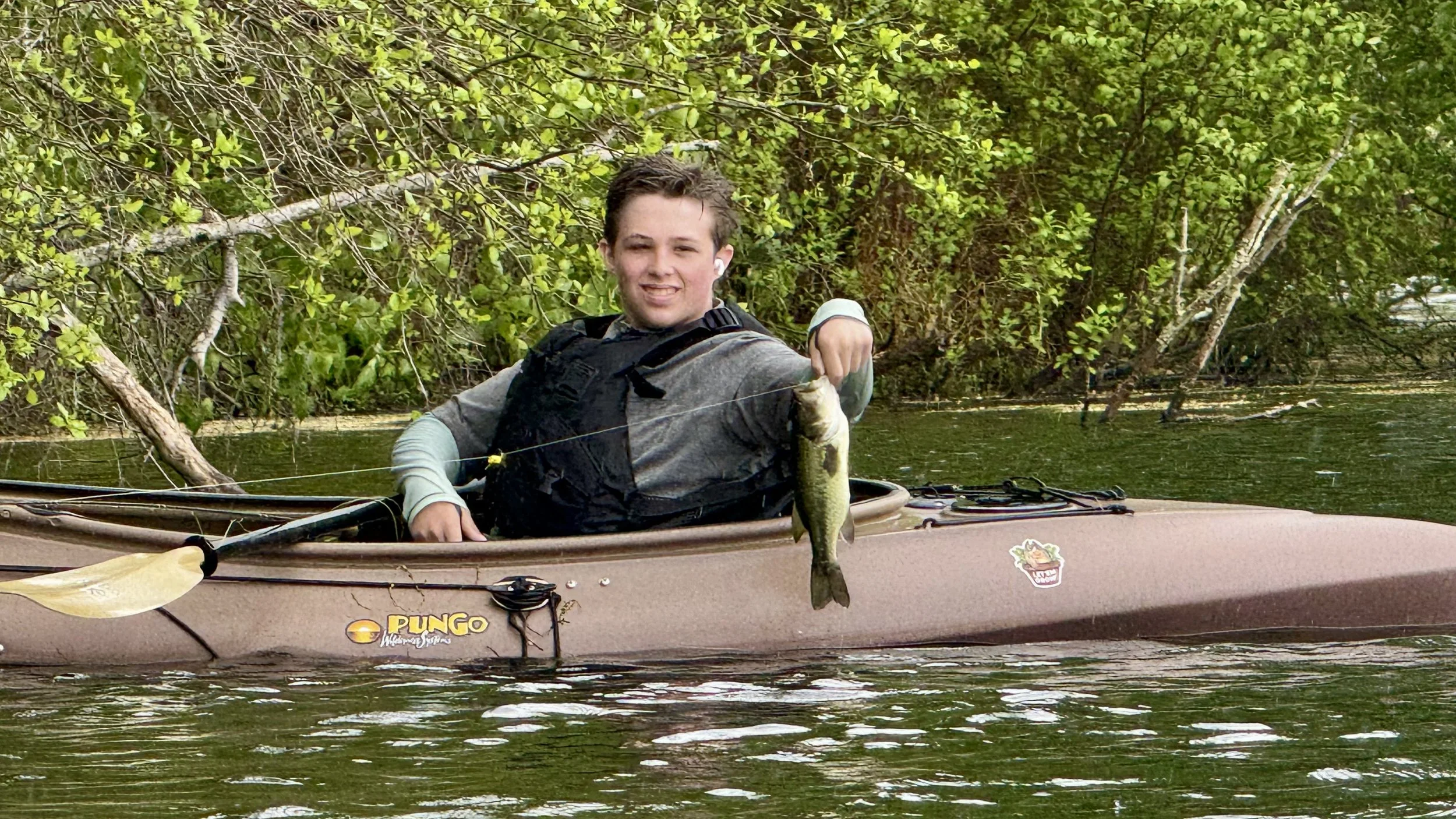
Unfortunately, we often must get off the bank to fish deep water effectively. Fishing from watercraft will give you better access to fish-holding water. It does not have to be fancy; a float tube, canoe, kayak, or johnboat will do the job.

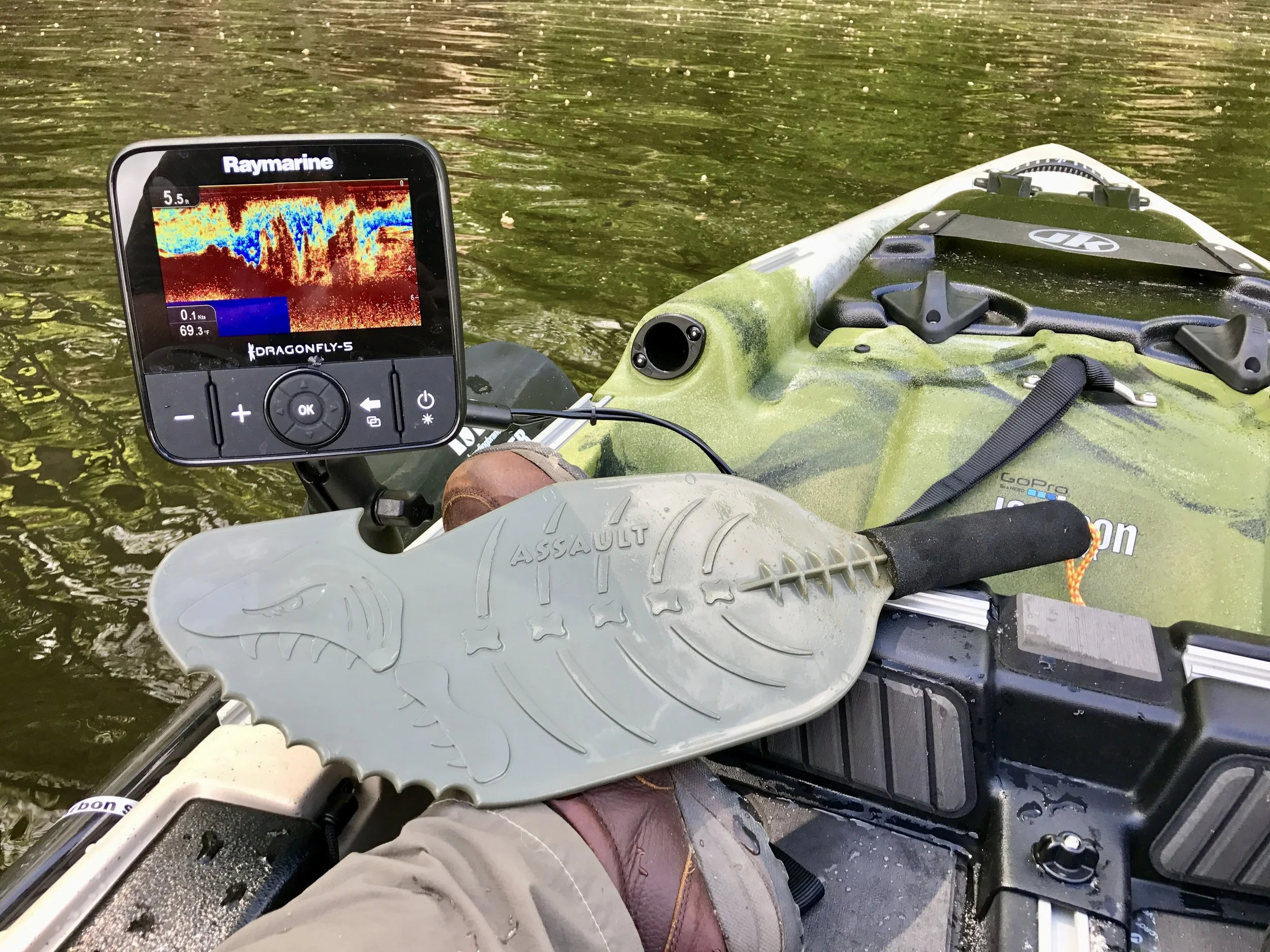
A fish finder is a great tool for locating both fish and structures as well as giving both water temperature and depth readings.

Better Fishing Through Technology

On more than one occasion, I have received snide remarks from other anglers when they observe the expensive fish finder mounted on my kayak, especially when fishing a tiny farm pond. The fish finder's primary use is to locate deepwater fish and structure. Electronics take the guesswork out of finding fish and structure in deeper water.

The squirrel tail wing and rubber legs help slow the sink rate of the Brim Killer.

Slow Your Sink Rate

In the natural world, the things that fish eat seldom plummet rapidly towards the bottom. A fly that slowly descends through the water column does a better job imitating a fish's natural food than one that sinks quickly. Often, a fish will take a slowly sinking fly while ignoring those that sink quickly. If your heavily weighted flies are not doing the trick, fish a lightly weighted pattern that falls gradually. Slow down your presentation and watch that line for takes while the fly is sinking.

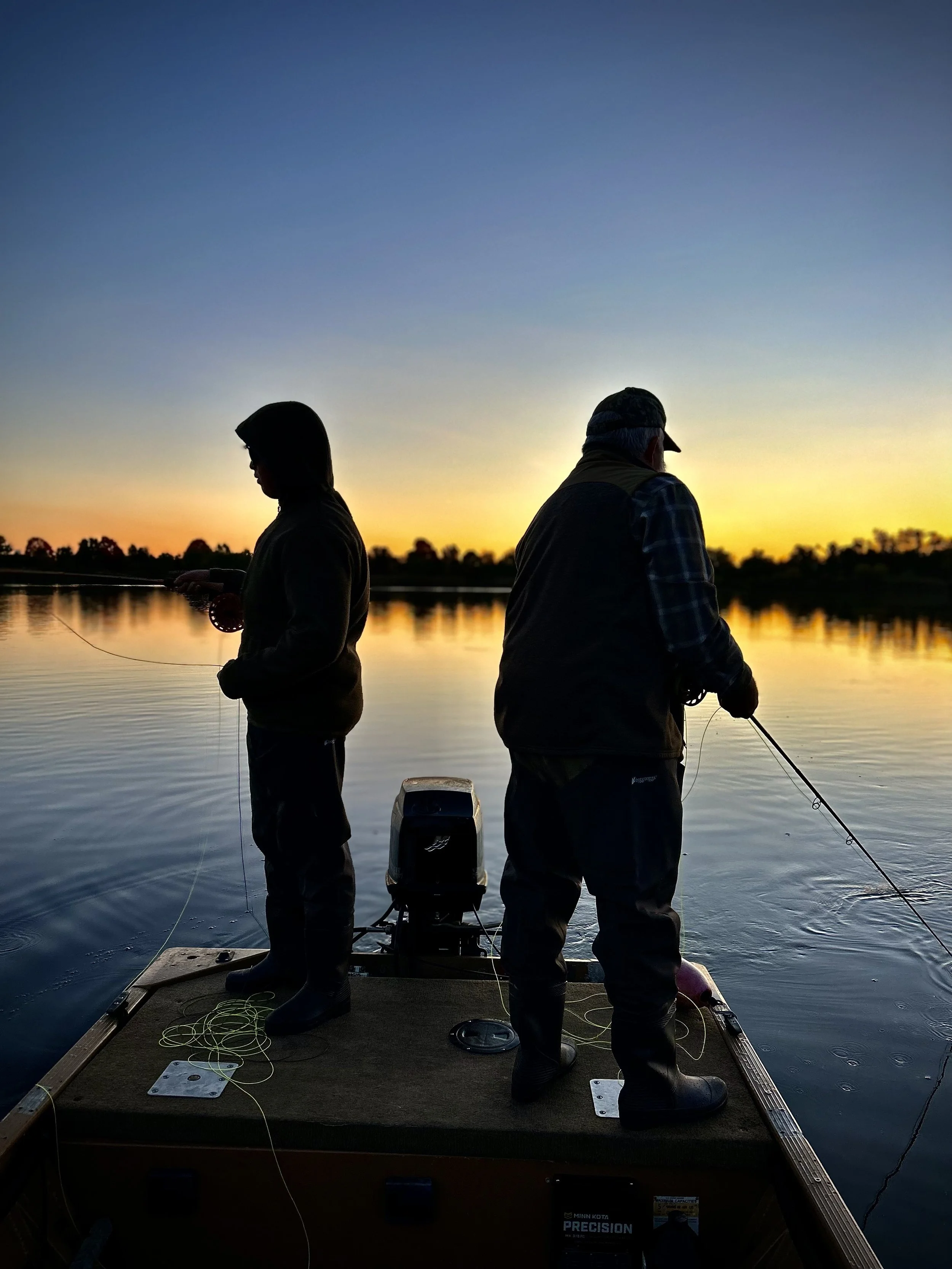
Fishing at dawn or dusk is a great way to beat the summer heat.

Fish At The Right Time Of Day

It has been said that the best time to go fishing is any time you can. I have never caught a fish from my couch! During the dog days of summer, fish can be sluggish and reluctant to take a fly in the heat of the day. Concentrate your effects early and late in the day. Get on the water before dawn or fish during the last few hours of the day. The fish will be more active during these times of the day, and you may even get some surface activity if you want to give those poppers a workout. If you can't get up early or stay out late, try to fish on cloudy days. The fish will be more active if they can find some relief from the blazing summer sun.

This bass took a nymph suspended below a topwater foam bug fished near a submerged fallen tree.

Try A Popper-Dropper Combo

We all like to fish topwater patterns for the exciting takes. Unless you are fishing early or late in the day, using a topwater fly may not be the best course of action. However, you can present two options simultaneously by suspending a subsurface fly like a nymph, wet fly, or small streamer beneath a topwater bug. Suspending a fly beneath a surface pattern allows you to fish effectively over subsurface weed beds without fouling your flies in the vegetation on every cast. Strike detection is also easier since an "indicator" floats above your subsurface fly.

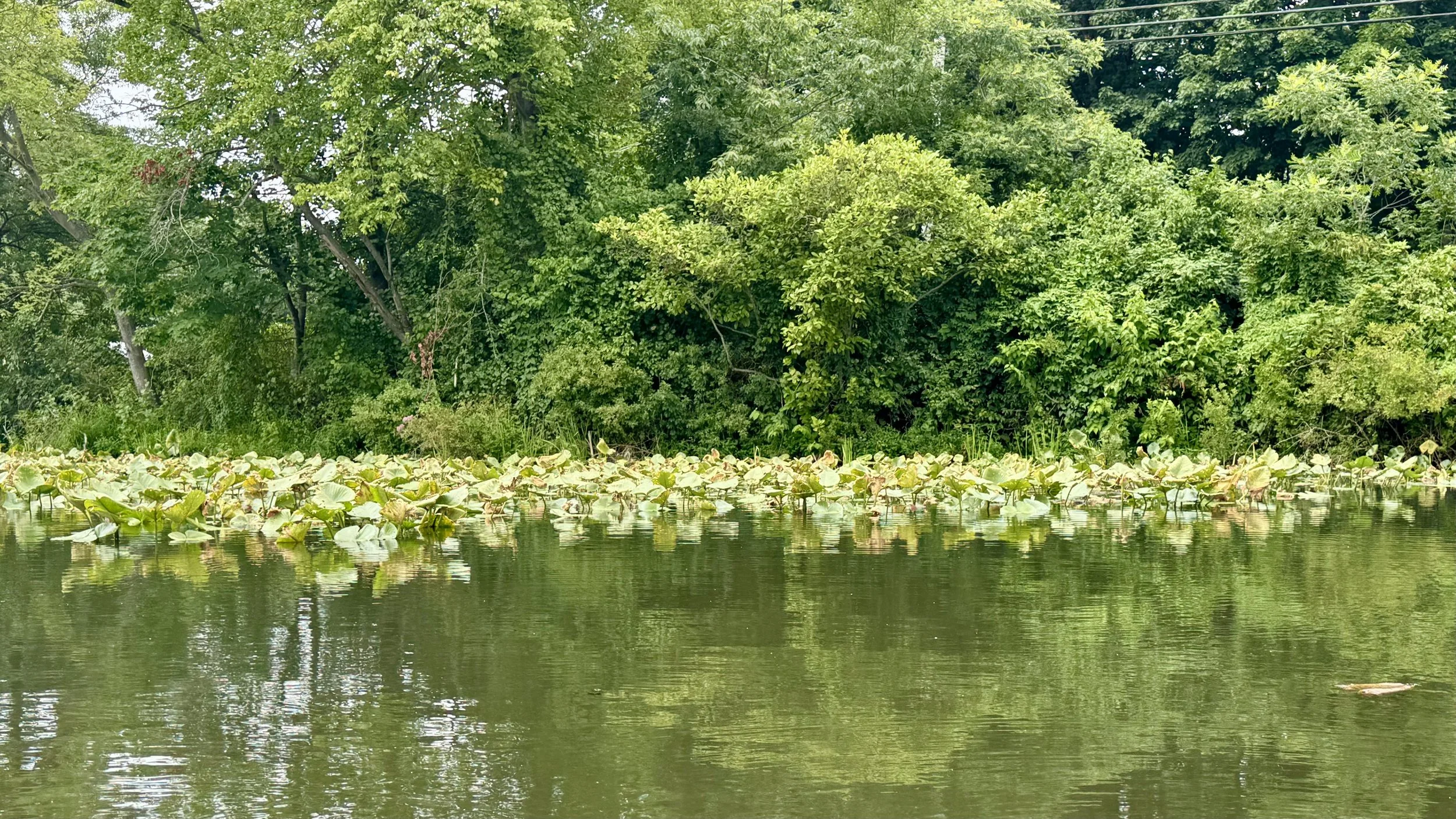
Water lillies provide both shade and food for many fish species, especially panfish and bass. Those edges are perfect for popper/dropper rigs or a floating dragonfly nymph fished on a sinking line.

Get Down In The Weeds

During the summer, aquatic weeds can grow right up to the water's surface, making fishing difficult. These weed beds, especially the edges, are prime big bluegill habitat. Fish these areas with nymphs, wets, and small streamers. Try popper/dropper combos or fish under an indicator to present your flies just above the vegetation. A favorite fishing method for these edges is casting a floating dragonfly nymph on a long leader with a sinking line. The floating fly swimming just above the weeds or lake bottom is irresistible to big panfish.

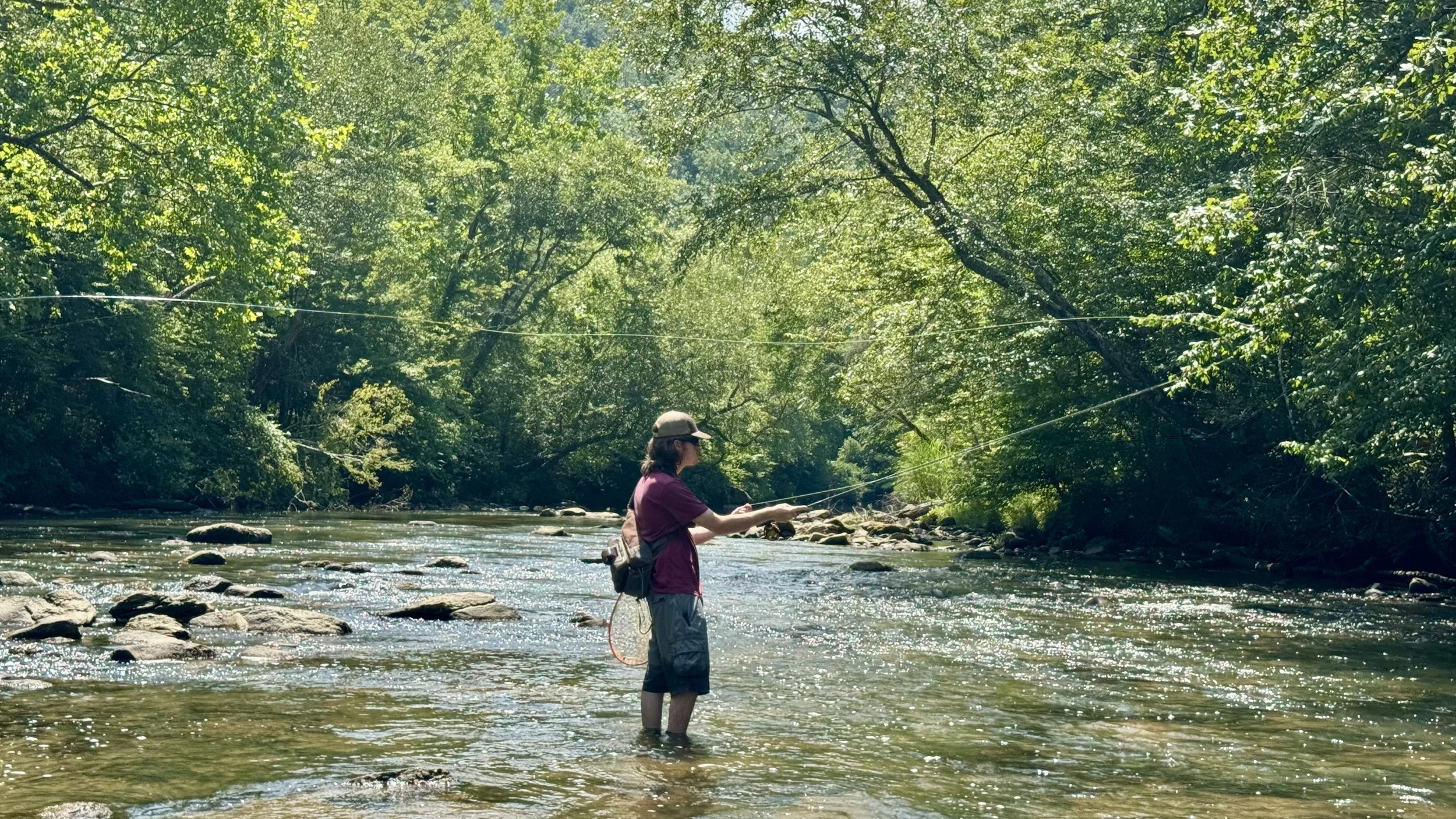
Wet wading creeks and streams is a great way to cool off and discover new waters to fish.

Try New Waters

If you have trouble locating big panfish on large lakes and reservoirs, try fishing smaller lakes and ponds. In comparison, the fish will still be occupying deep water, but that deep water may only be 4 -8 feet deep in a pond instead of 20-30 feet deep in a larger body of water. Fish in these smaller bodies of water will be much easier to target with a fly rod. With fewer places to hide, you will locate fish quickly.

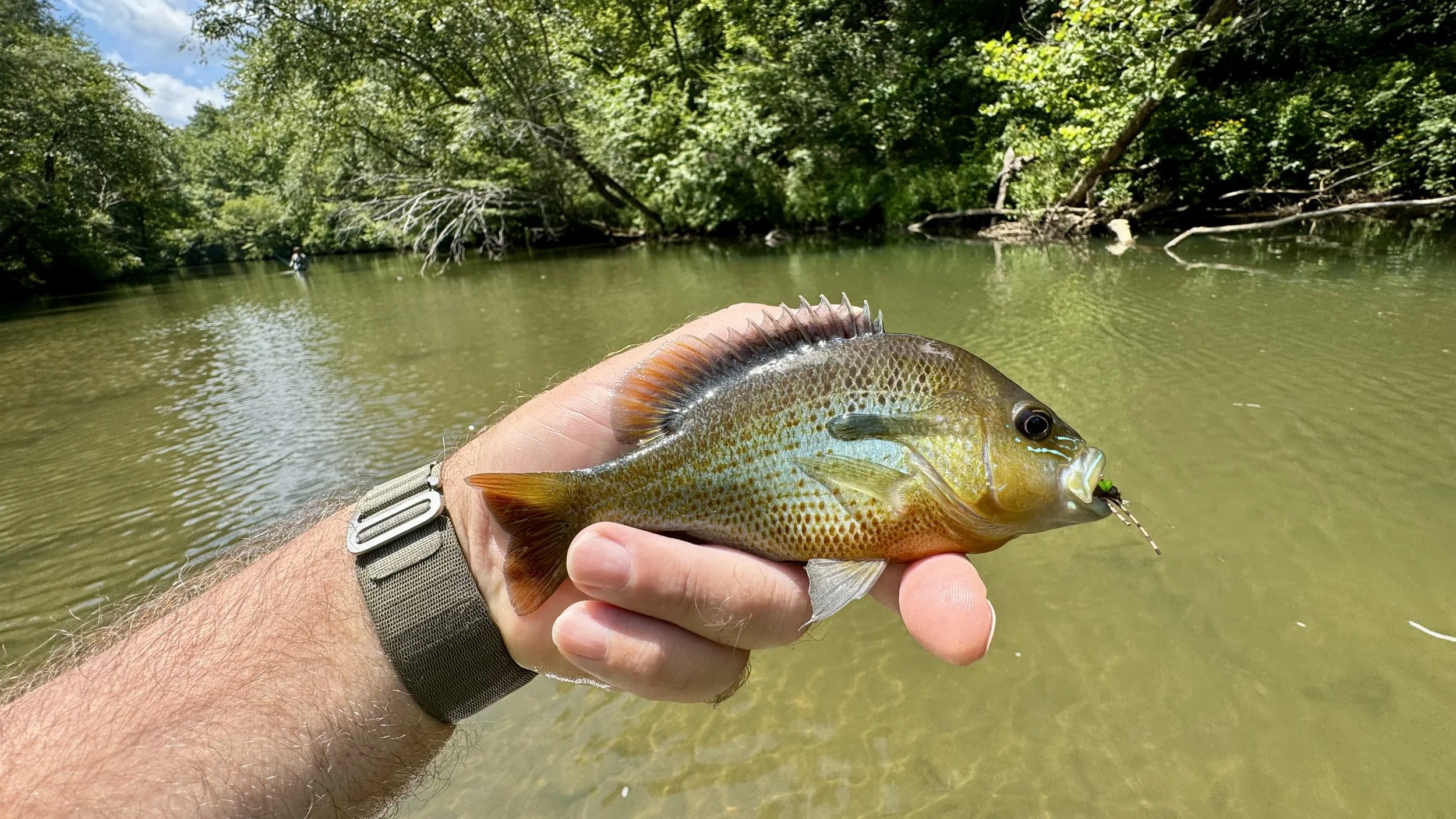
Many species of panfish, like this redbreast sunfish, thrive in moving waters.

A favorite method of fishing during the height of summer is wet wading creeks and rivers. Wet wading streams is a comfortable way to spend a hot summer day. Moving water is often cooler and contains more dissolved oxygen than still waters, which means you can often find good fishing during the hours when lakes and ponds seem to go dormant.

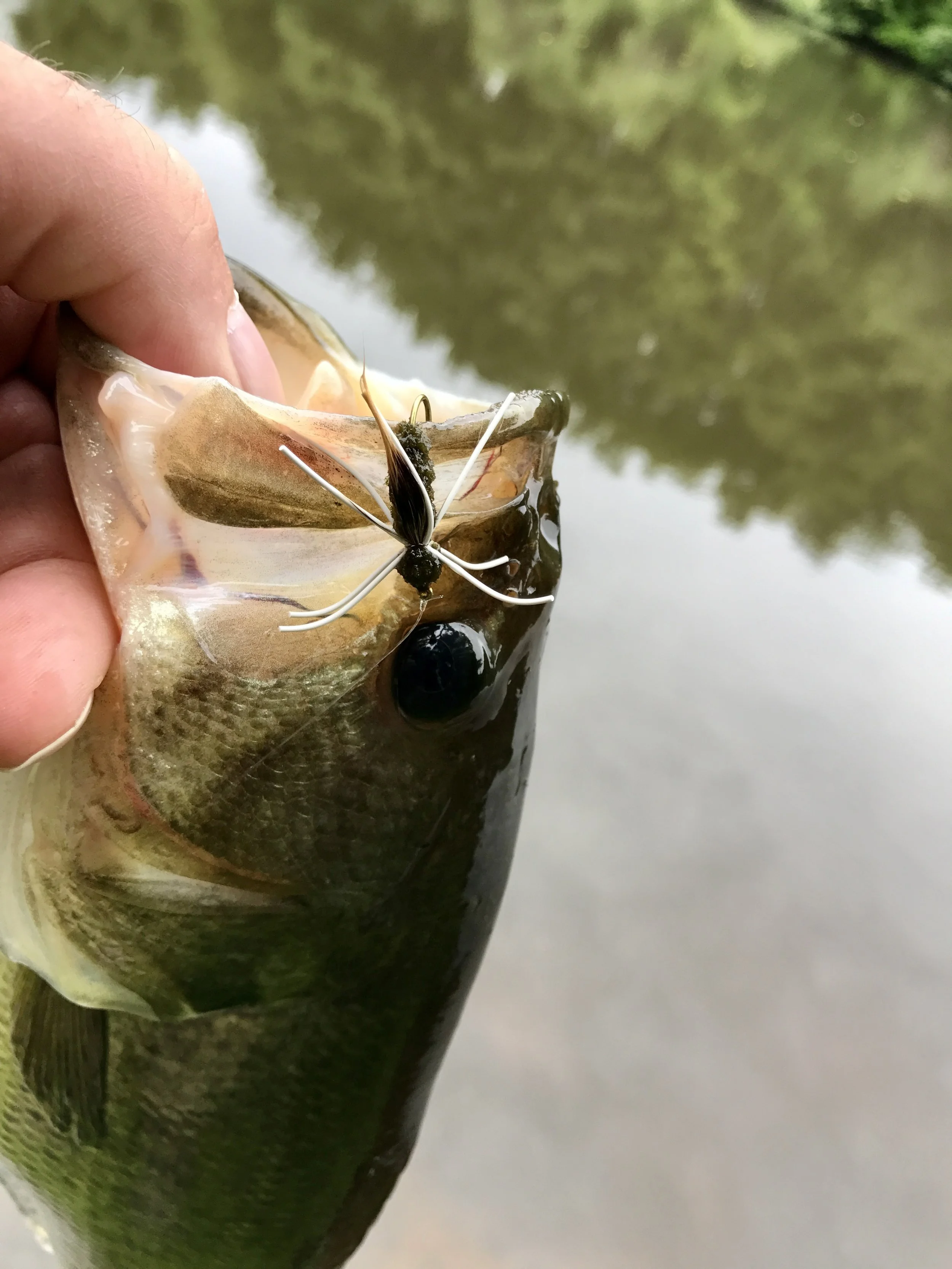
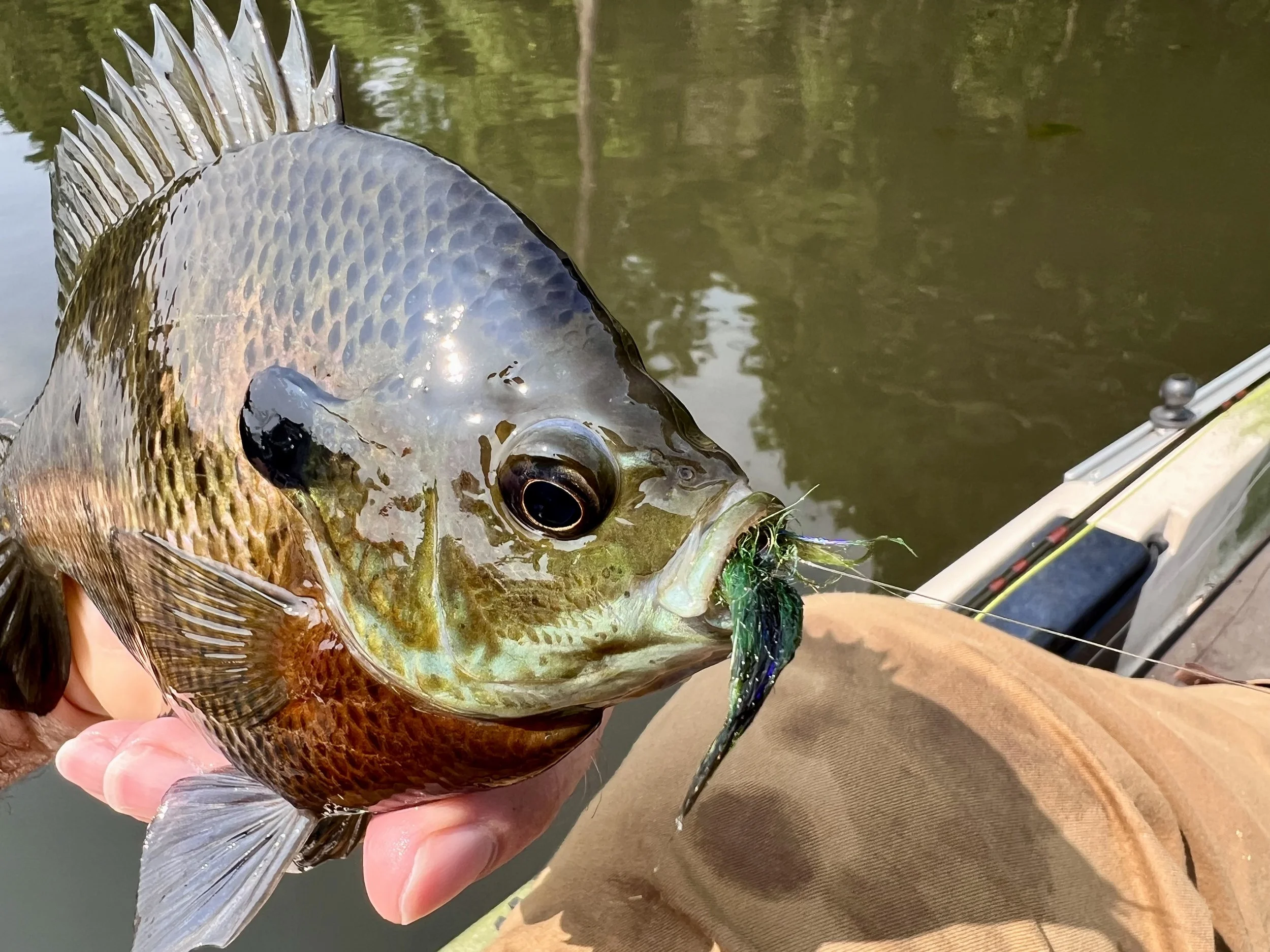
This bluegill has a size four streamer intended for bass stuffed into its mouth!

Go Big Or Go Home

A large panfish will have no problem eating a size six fly. I often catch big bluegills when fishing for bass on size four flies, sometimes as large as two! Many prey items that panfish rely on for food are larger at this time of year. These prey items include dragonfly larvae, leeches, crayfish, and young fish and minnows. Large nymphs, wet flies, and small streamers will produce the largest panfish. As a bonus, these flies also attract the attention of larger predators like bass.

Do you have a tip for summertime panfish on the fly? We'd love to hear it. Leave a comment below!

In Fishing, Fly Fishing
4 Comments

Hoppers and Panfish

July 1, 2025 Panfish On The Fly

When folks discuss hoppers and fly fishing, the conversation almost always revolves around trout. But what about panfish? Are they just as crazy over these giant bugs as their sexy cold-water cousins? The answer is yes! The fact isgrasshoppers turn fish on, whether it's a monster brown trout or a big fat bluegill.

Read more
In Fly Fishing, Fishing Tags hoppers, Summer fishing
Comment

The CK Nymph

June 10, 2025 Panfish On The Fly

Chuck Kraft’s “wonder” nymph is just at home on a trout stream as on a bluegill pond. It is a large, buggy general attractor style nymph that can imitate a stonefly, hellgrammite, cased caddis, large mayfly nymph, caterpillar, sunken terrestrial, small baitfish, leech, crayfish, dragonfly nymph, or any number of things that find their way into a fish’s diet.

Chuck Kraft developed the fly in 1961 and has been catching fish with it ever since. Its popularity has waned with the introduction of newer, sexier patterns, so it may not be on the radar of many anglers new to fly fishing. In addition to his fly tying, Chuck guided on the rivers of Virginia for twenty-five years. He guided now-famous anglers like Bob Clouser, Lefty Kreh, and Flip Pallot, to name a few. I had the opportunity to speak with him several times at fly fishing shows in New Jersey. To say he was confident in his flies was an understatement! Chuck developed many fly patterns, such as the popular Kreelex Streamer, a fly designed to emulate a Panther Martin spinner. However, it was the CK nymph that put him on my radar many years ago.

A black CK Nymph. For extra bugginess I brushed out the wool body.

At first glance, the CK nymph looks like a wooly worm, one of the oldest fly patterns in existence. A 1971 article in Field & Stream about this fly said that Chuck “gets burned up when people make the comparison .” Regardless of Chuck’s thoughts on the matter I see a wooly worm variation when I look at this fly. Like that early fly pattern, the CK nymph is just as deadly.

A size 12 and 10 yellow CK Nymph tied with Semperfli Dirty Bug Yarn and yellow grizzly hackle. One of my favorite colors for panfish. It is also a great trout pattern, as it likely imitates a golden stonefly

The fly is tied on a 3x long nymph/streamer hook sizes 8-14 and features a black wool body, a lemon wood duck flank feather tail, and a clipped grizzly hackle. The lemon wood duck tail and clipped hackle set it apart from a wooly worm. The fly is weighted with 025 lead wire (fifteen wraps, to be precise). In addition to black, he tied the fly in several other colors, including grey, olive, and yellow. For an extra-heavy nymph, you can add a bead. Wool is not as popular a tying material as it once was. You can substitute fine chenille or peacock herl if wool is not in your tying supplies. Semperfli’s Dirty Bug Yarn is the perfect modern alternative to the wool yarn in this pattern, and it is available in many more colors. I am also particularly fond of the peacock herl version, as that material has magical fish-attracting properties. I have been using Semperfli’s synthetic peacock herl when tying the fly for panfish, as it is virtually indestructible.

A bombproof version tied with 2mm Semperfli Synthetic PeacockHerl. This fly will stand up to dozens of fish.

One of the things I love about this pattern is that it helps me use lower quality or oversized grizzly dry fly hackle. An inexpensive webby hackle is preferred for this pattern. Since the hackle will be clipped, it is a great way to use up those larger feathers that always get left behind on all necks. Chuck is particular about the number of wraps of hackle on the body, that is, five evenly spaced wraps on the body and two in front of it as a collar.

Chuck also had an interesting spin on the use of fly-tying thread. He tied all of his flies using white thread, which is easy to see and preserves the colors of any body material used. When the fly is finished, he colors the head with a Sharpie marker in any color desired.

Fishing the fly in moving water is pretty straightforward. Cast it into riffles and runs where insects like stoneflies and hellgrammites call home. The weighted nymph tumbles along the bottom, where it is gobbled up by fish looking for an easy meal. In still water, I retrieve it with a slow hand twist or short strips.

A slow steady hand twist retrieve enticed this small crappie to hit.

Chuck passed away on March 9, 2020, but he left behind a treasure trove of effective fly patterns. He was an innovator in a now popular material called ultra suede. He would hand-cut various shapes to create his flies and sold the pre-cut tails commercially. He was also offered a variety of bug and popper bodies hand-carved out of cork. My fly boxes still contain some of his carved topwater patterns. If you want to see the man himself tie up a CK nymph, you can watch a video of Chuck tying his famous nymph on YouTube.

In Fly Tying, Fly Fishing, Panfish Flies Tags CK Nymph, Fly Tying, nymphs
2 Comments
← Newer Posts Older Posts →
Summary Block
This block is invalid. Please check the block settings and try again.
Featured
Aenean eu leo Quam
Aenean eu leo Quam

Quisque iaculis facilisis lacinia. Mauris euismod pellentesque tellus sit amet mollis.

Read more →

FAQ AND CUSTOMER SERVICE

Contact Us

About

Book a Presentation

Calendar of Events


© Copyright 2026 Panfish On The Fly    All Rights Reserved

SUBSCRIBE TO OUR NEWSLETTER

Are you interested in learning how to tie a new warm water pattern each month? Do you want to know when new products arrive in the shop? Do you want access to special discounts and sales? Then SIGN UP now!

Subscribe

Sign up with your email address to receive news and updates.

We respect your privacy.

Thank you!