• Home
    • Clearance Sale
    • Norvise
    • Fly Tying Kits
    • Fly Tying Materials
    • Hooks & Shanks
    • Tools & Fly Boxes
    • Gift Cards
    • Clothing
    • Commercially Tied Flies
    • Small Batch Flies
  • Guided Trips
  • Fly Tying Lessons
  • Book A Presentation
  • Blog
  • Calendar of Events
  • Podcasts
  • Contact Us
  • Fly Patterns
    • Our Story
    • About Bart Lombardo
  • Newsletter
  • Sign In My Account
Menu

Panfish On The Fly

PO Box 174
Clarksburg, NJ 08510
(609) 529-1729
Fly Fishing for America's Favorite Fish

Your Custom Text Here

Panfish On The Fly

  • Home
  • Shop
    • Clearance Sale
    • Norvise
    • Fly Tying Kits
    • Fly Tying Materials
    • Hooks & Shanks
    • Tools & Fly Boxes
    • Gift Cards
    • Clothing
    • Commercially Tied Flies
    • Small Batch Flies
  • Guided Trips
  • Fly Tying Lessons
  • Book A Presentation
  • Blog
  • Calendar of Events
  • Podcasts
  • Contact Us
  • Fly Patterns
  • About
    • Our Story
    • About Bart Lombardo
  • Newsletter
  • Sign In My Account

A Break From Tradition - The Rubber Leg Soft Hackle

February 20, 2026 Panfish On The Fly

A break from tradition - The Rubber Leg Soft Hackle

A Proven Pattern - Why Change It?

Soft hackle wet flies are hands down my favorite panfish patterns when fishing below the surface. Traditionally tied soft hackles are extremely effective, so it may seem unnecessary to change them. However,  sometimes making a thoughtful adjustment—like adding rubber legs—can actually improve an already successful pattern. I do not believe in changing flies for the sake of novelty. Instead, my purpose is to explore whether rubber legs make the pattern more effective. Read on...
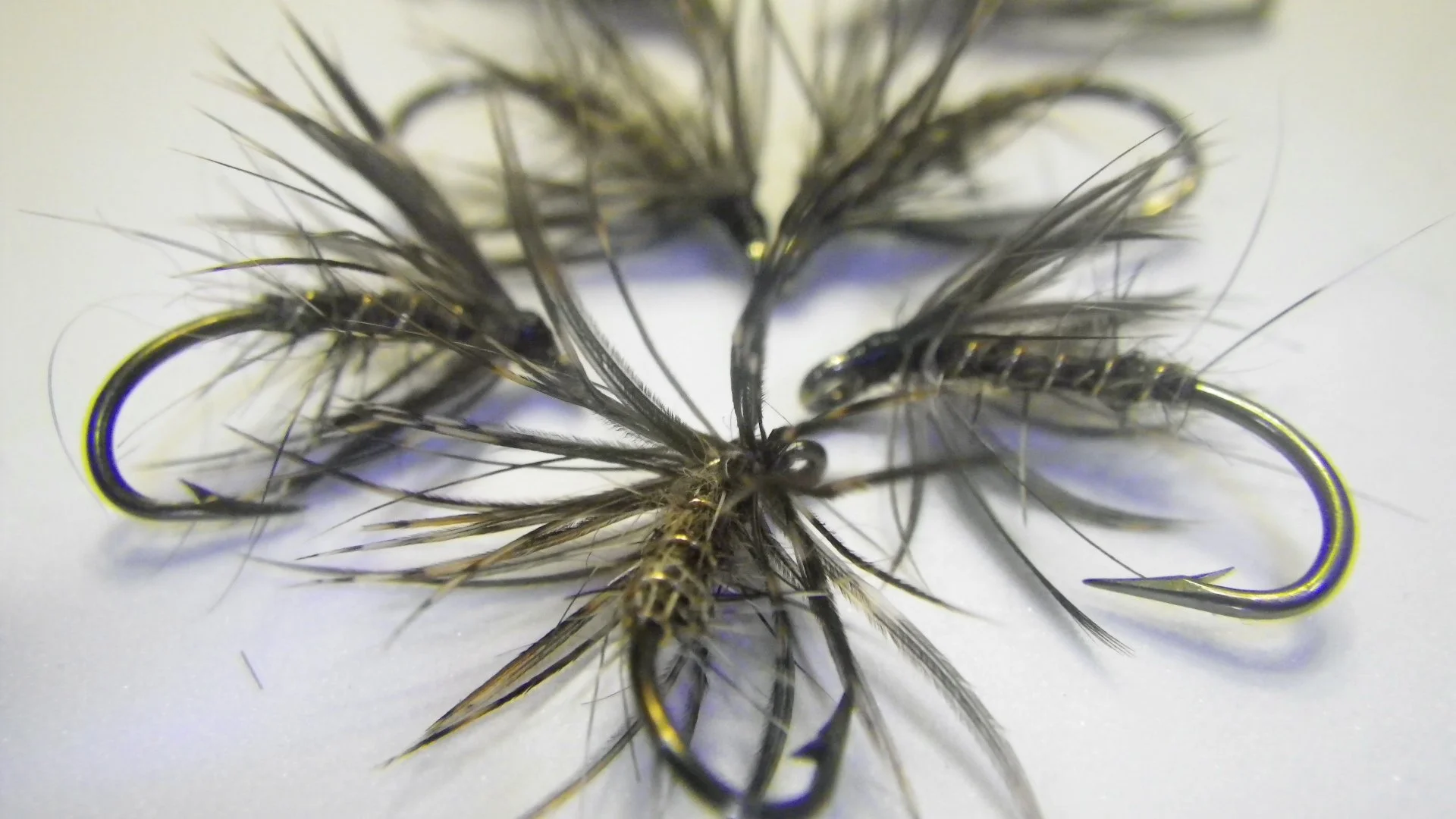
Traditionally tied Hare’s Ear Soft Hackles

A Break From Tradition

Knotted pheasant tail legs have been used on soft hackle flies for decades, adding movement and bugginess that hackle and dubbing alone cannot. The downside: knotted pheasant tail fibers are among the most delicate materials I've worked with, and the legs are time-consuming to make. Although finished flies look great, the legs often break after a fish or two.  
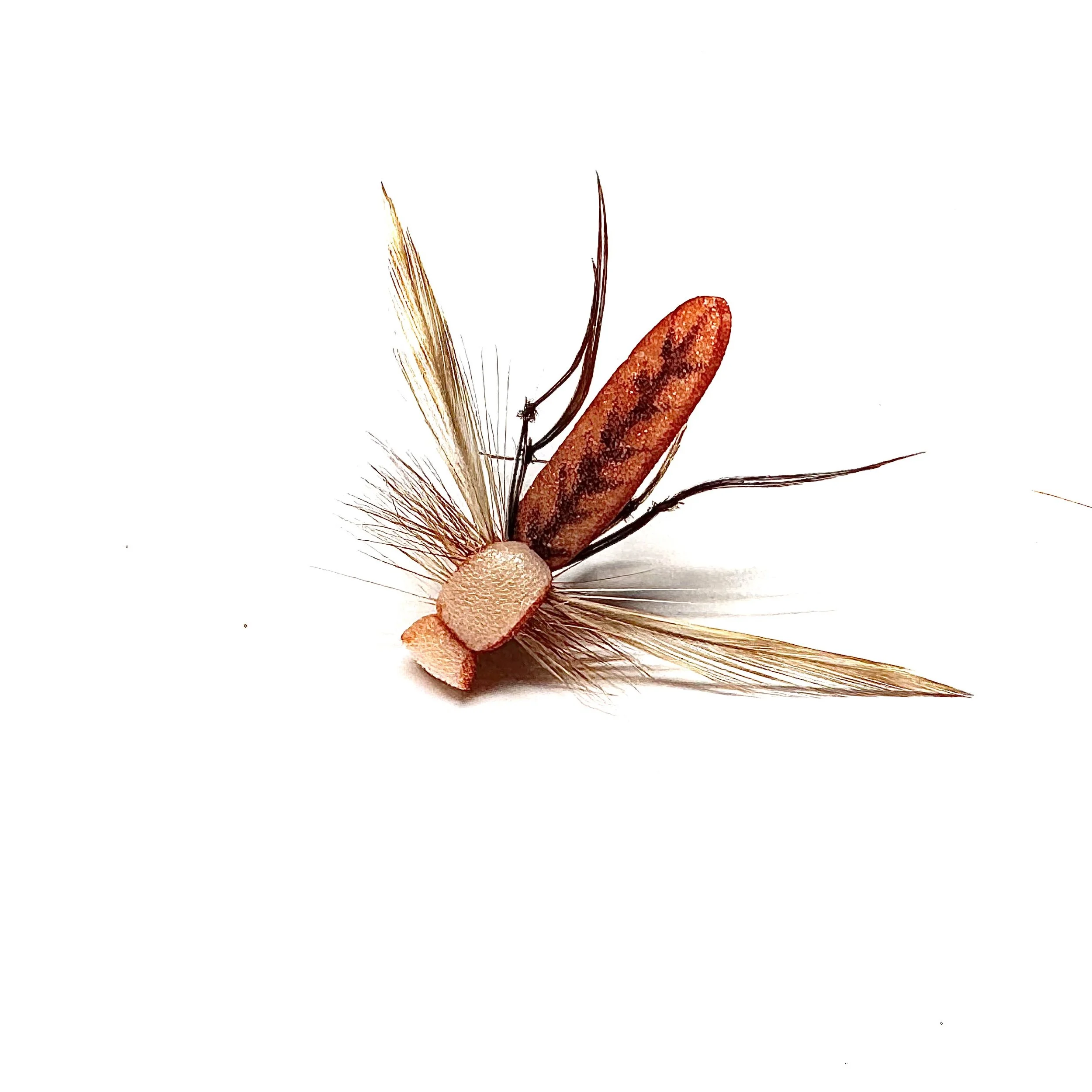
An adult cranefly pattern tied with knotted pheasant tail legs

Fixing The Problem

Looking for a more durable solution, I adopted a technique I used on another fly that used knotted pheasant tail fiber legs - the Crane Fly, also called Daddy Long Legs by our friends across the pond. Craneflies are one of my favorite summertime topwater panfish flies. The big, gangly bugs are common in my area, and I often encounter them on the water. The knotted pheasant legs are an essential aspect of this pattern, so I go through the trouble of adding them. However, they suffer the same problems as knotted pheasant tail legs on soft hackle wet flies. They are too damn fragile and don't last long. Once the fly loses its legs, it continues to work, but I get more looks and fewer refusals when the legs are present.
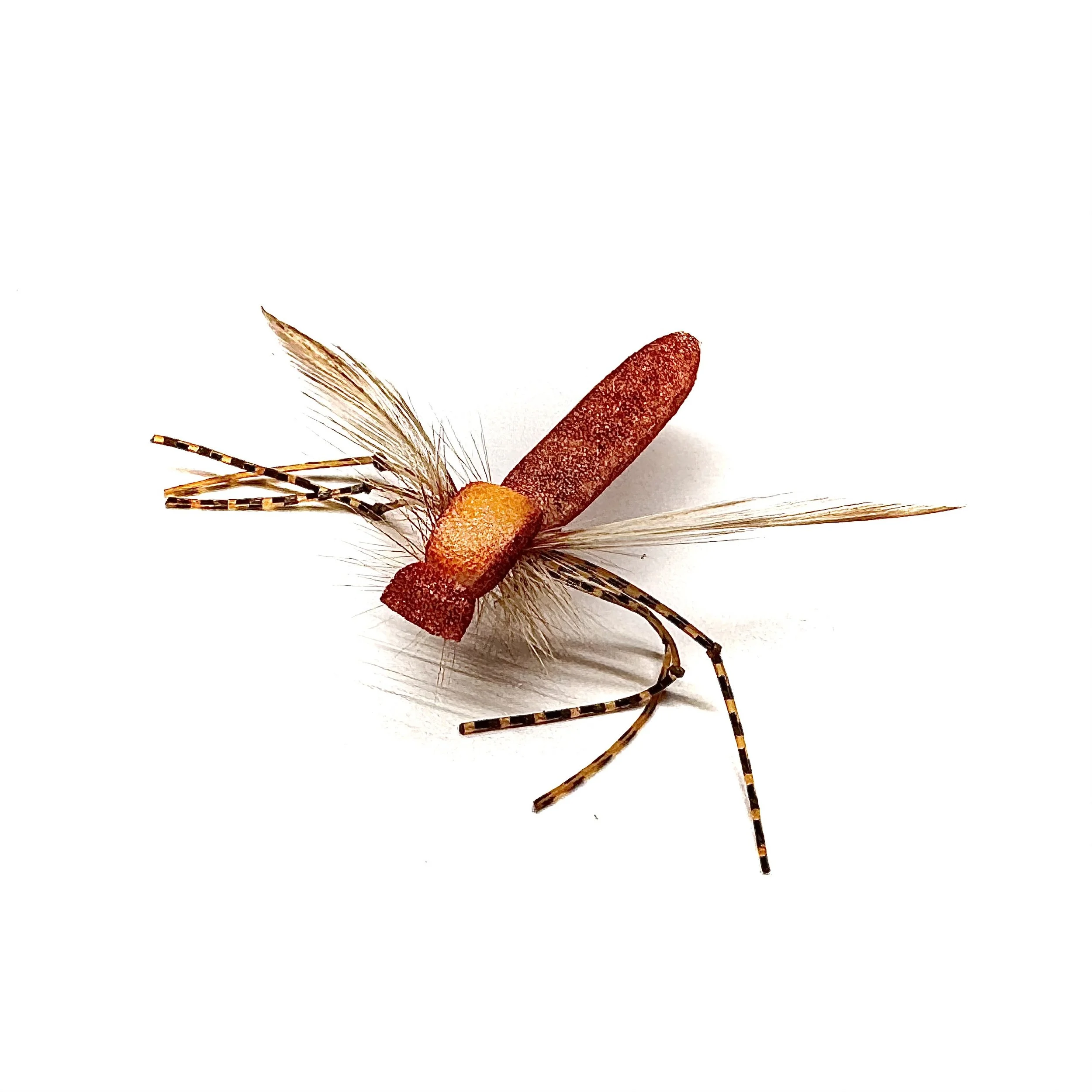
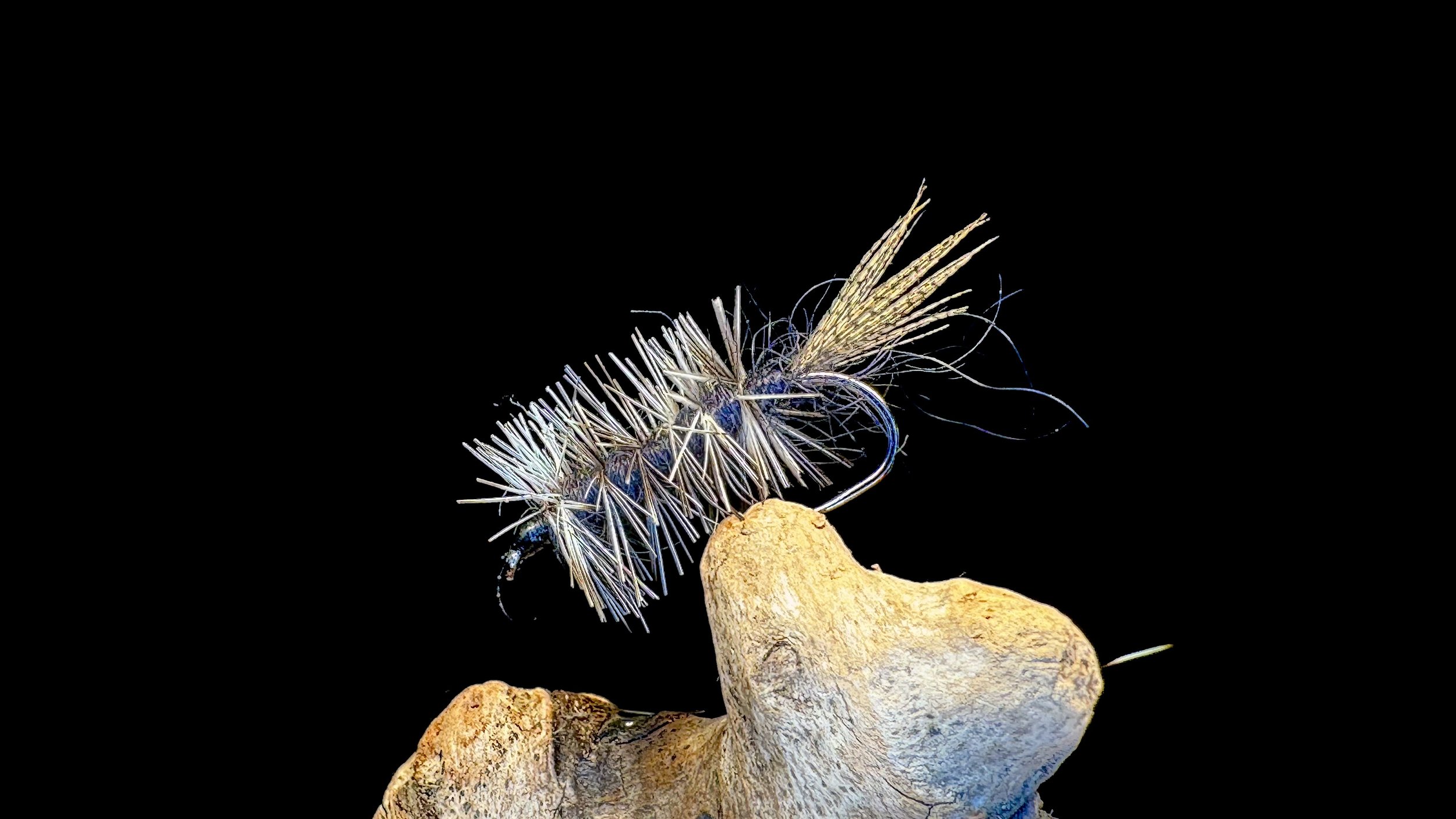
A adult cranefly tied with knotted silicon legs

Synthetic vs. Natural

I received samples of Hareline's Micro Grizzly Flutter Legs, which are thin, barred silicon legs ideal for small flies. Replacing the knotted pheasant tail legs on craneflies with this material made tying easier, and the legs are far more durable while preserving the multi-joint look.
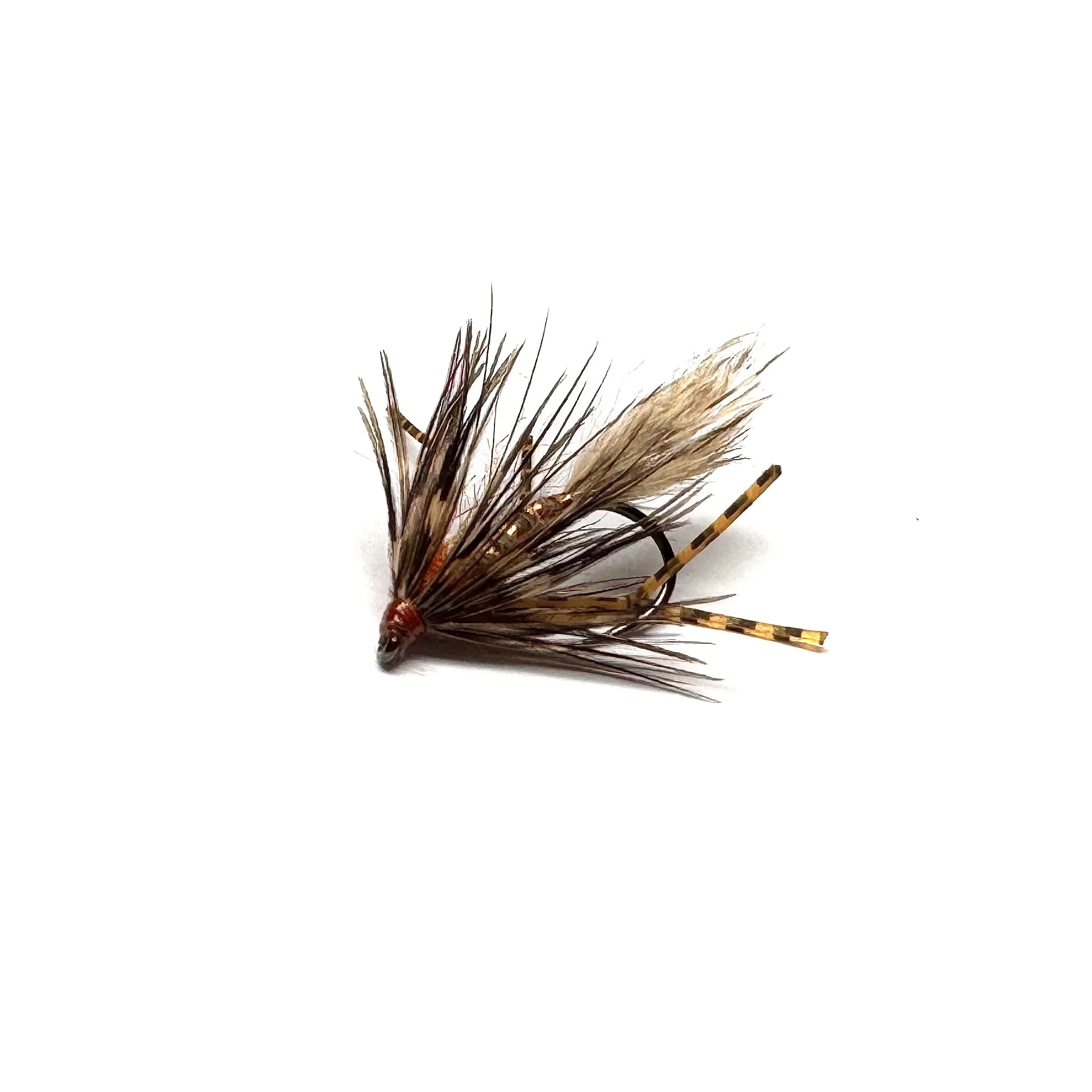
Early versions of this pattern used knotted silicon legs

I next used micro-silicon legs to replace knotted pheasant tail in my soft hackle patterns. They worked well, offering better movement when the fly is pulled through water. Unlike knotted pheasant legs that collapse during retrieves, silicon legs stay active, enhancing the fly's appeal.

The K.I.S.S. Principle

My friend and fellow fly tier Lou Digena follows the K.I.S.S. (Keep It Simple, Stupid) principle in many of his flies, emphasizing that unnecessary complexity should be avoided—most systems work best when simple rather than complicated.
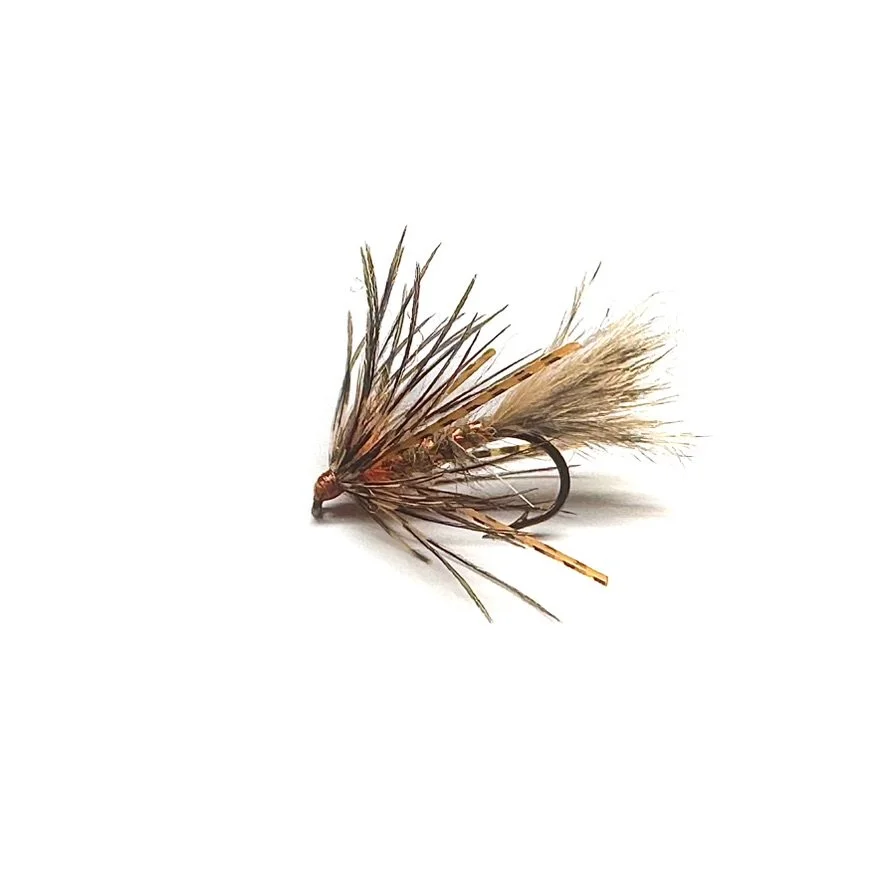
Eliminating the knots in the leg material made tying easier and did not reduce its effectiveness

Following this principle, I removed knots from the silicon legs. The fly still produced as well, so I was happy to skip the extra step of preparing knotted rubber legs.

Why Complicate Things By Adding Legs In The First Place?

Why even bother adding legs to an already successful fly? A traditional soft hackle is extremely productive for panfish, so it's fair to question if adding silicon legs is necessary. My thought was that adding silicon legs could make it more effective. This addition is not for novelty but for genuine performance improvement.

Panfish love rubber legs. The movement from added legs is irresistible, explaining why many panfish flies include them. Legs on soft hackles improve action and help prop up the hackle fibers when retrieved, giving the fly a more noticeable profile in stained waters.

The legs also extend the life of the fly. Hackle fibers are delicate and often get damaged. Rubber legs provide consistent movement and profile even after the hackle fibers are worn away, maintaining the fly's effectiveness. One could argue that the K.I.S.S. Principle may warrant eliminating the feather hackle completely. Maybe that is true, but I am not ready to go there…yet.
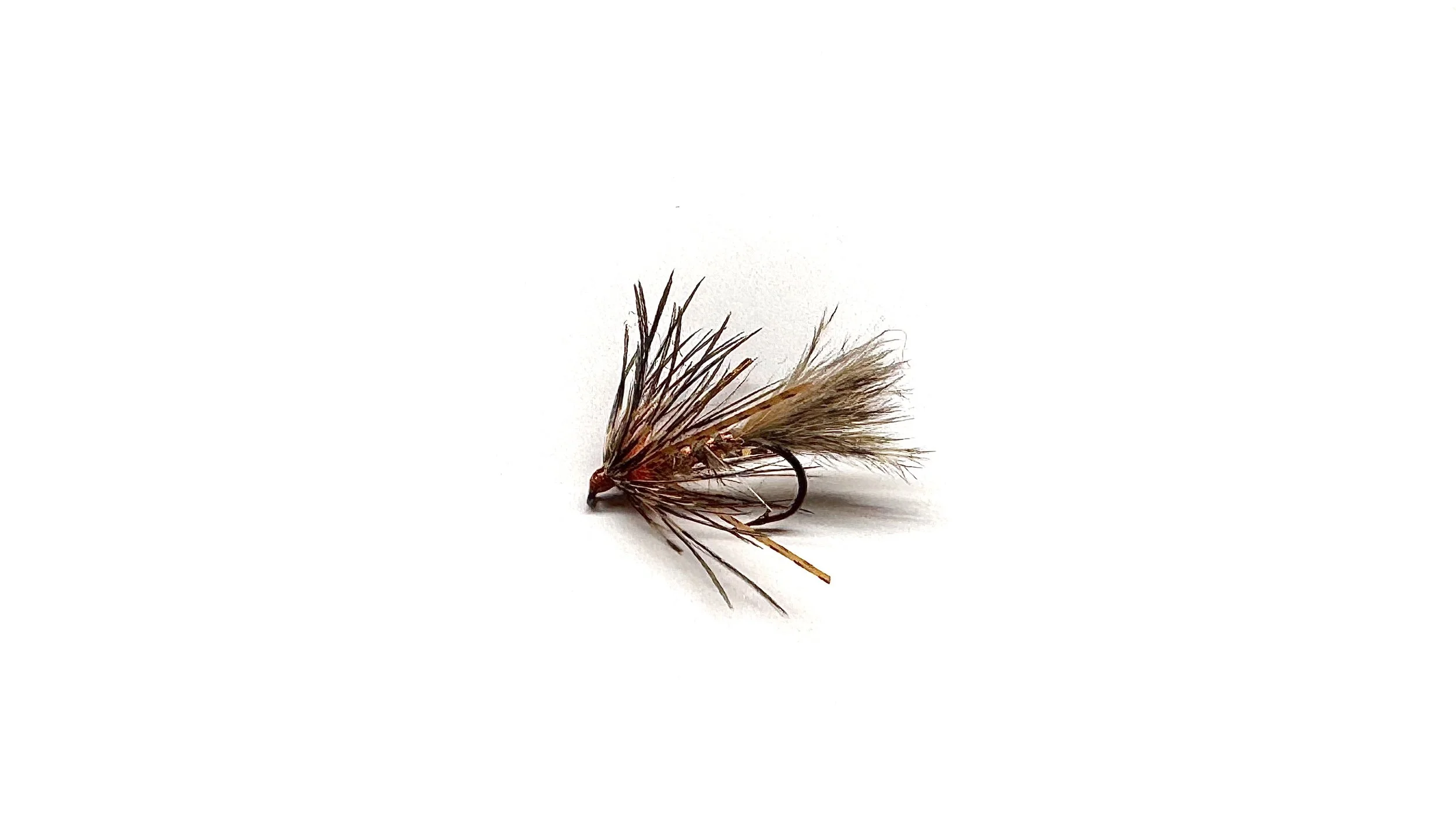
The Soft Hackle Hare’s Ear

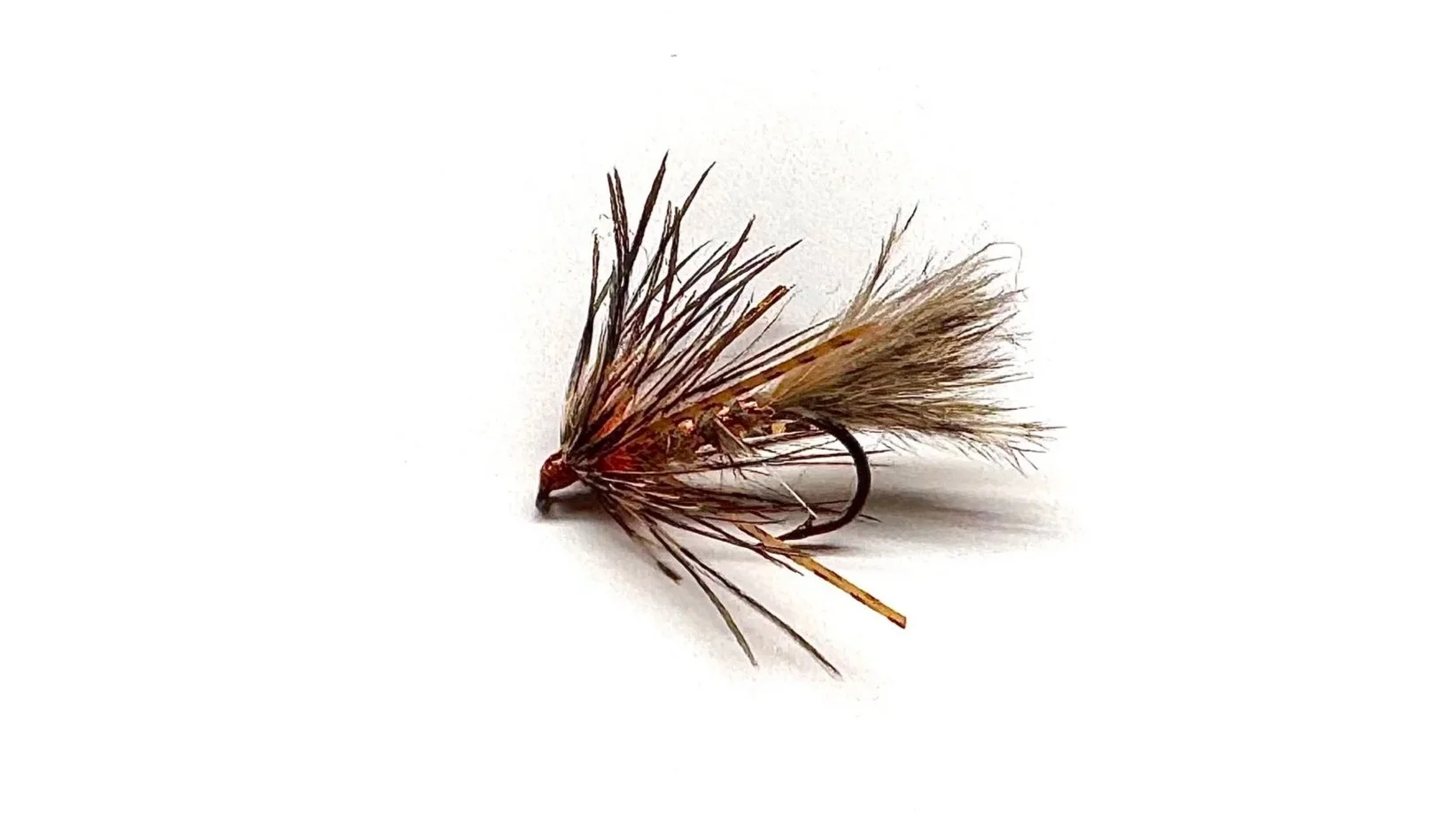
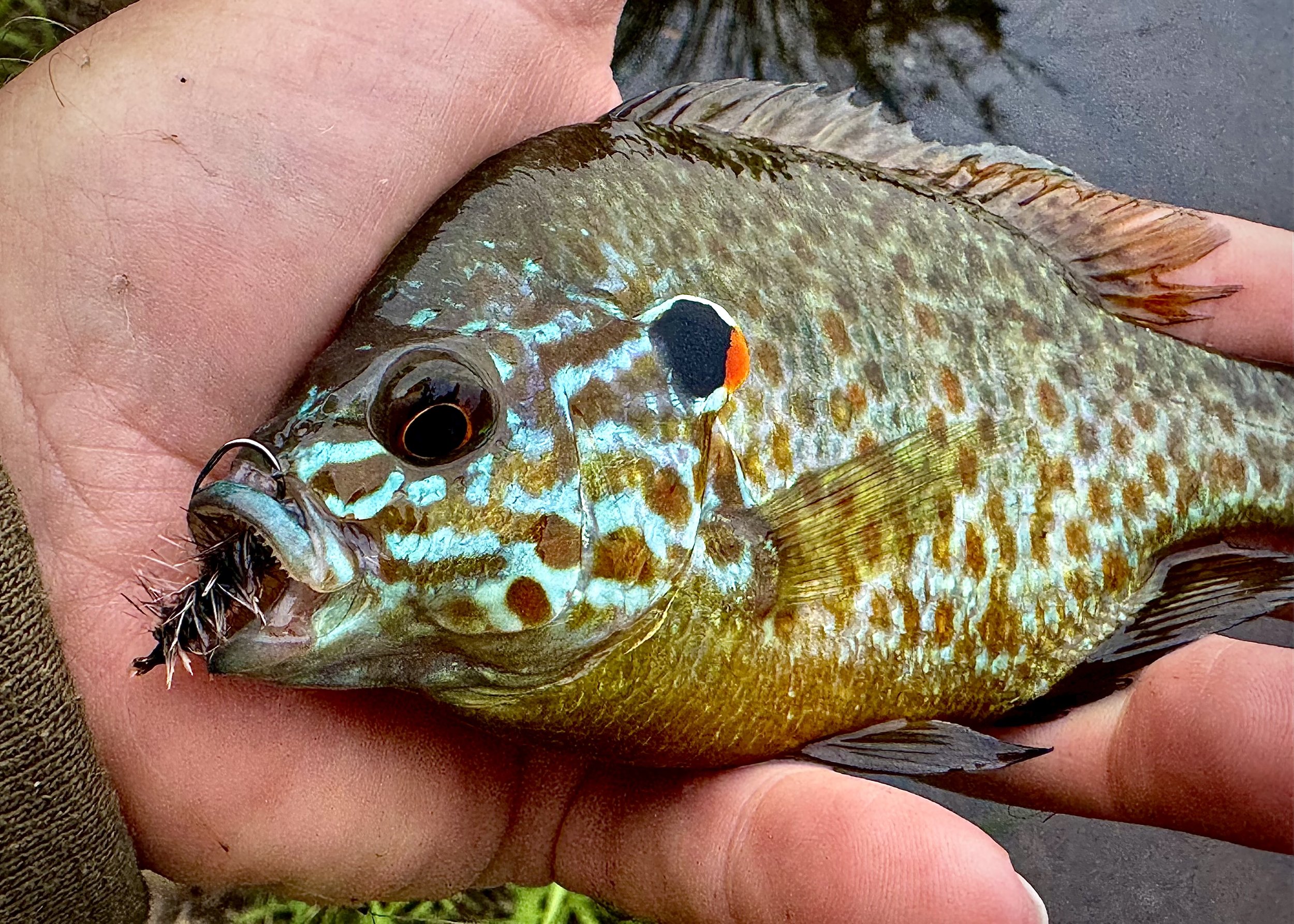
One of my favorite soft hackle patterns for panfish is the Hare’s Ear.  When fishing the fly in warm water, I change it up a little. I swap the dark thorax of the traditional version for a bright orange one.  This provides a subtle bit of color that I feel attracts more fish.  It has been well documented that panfish have an affinity for bright colors. This was the first wet fly I added rubber legs to.  These days, I seldom tie them without adding fine rubber legs. Feel free to experiment with adding fine rubber/silicon legs to your favorite wet fly pattern.

Tie This Fly

Decide for yourself

Tie a few up and see if you notice an improvement over traditionally tied soft hackles. The core argument here is whether a simple addition—such as silicon legs—can enhance a classic pattern. Decide for yourself if this extra material is worth your time and effort on panfish wet flies.
In Fly Tying, Panfish Flies Tags The Rubber Leg Soft Hackle
5 Comments

The CK Nymph

June 10, 2025 Panfish On The Fly

Chuck Kraft’s “wonder” nymph is just at home on a trout stream as on a bluegill pond. It is a large, buggy general attractor style nymph that can imitate a stonefly, hellgrammite, cased caddis, large mayfly nymph, caterpillar, sunken terrestrial, small baitfish, leech, crayfish, dragonfly nymph, or any number of things that find their way into a fish’s diet.

Chuck Kraft developed the fly in 1961 and has been catching fish with it ever since. Its popularity has waned with the introduction of newer, sexier patterns, so it may not be on the radar of many anglers new to fly fishing. In addition to his fly tying, Chuck guided on the rivers of Virginia for twenty-five years. He guided now-famous anglers like Bob Clouser, Lefty Kreh, and Flip Pallot, to name a few. I had the opportunity to speak with him several times at fly fishing shows in New Jersey. To say he was confident in his flies was an understatement! Chuck developed many fly patterns, such as the popular Kreelex Streamer, a fly designed to emulate a Panther Martin spinner. However, it was the CK nymph that put him on my radar many years ago.

A black CK Nymph. For extra bugginess I brushed out the wool body.

At first glance, the CK nymph looks like a wooly worm, one of the oldest fly patterns in existence. A 1971 article in Field & Stream about this fly said that Chuck “gets burned up when people make the comparison .” Regardless of Chuck’s thoughts on the matter I see a wooly worm variation when I look at this fly. Like that early fly pattern, the CK nymph is just as deadly.

A size 12 and 10 yellow CK Nymph tied with Semperfli Dirty Bug Yarn and yellow grizzly hackle. One of my favorite colors for panfish. It is also a great trout pattern, as it likely imitates a golden stonefly

The fly is tied on a 3x long nymph/streamer hook sizes 8-14 and features a black wool body, a lemon wood duck flank feather tail, and a clipped grizzly hackle. The lemon wood duck tail and clipped hackle set it apart from a wooly worm. The fly is weighted with 025 lead wire (fifteen wraps, to be precise). In addition to black, he tied the fly in several other colors, including grey, olive, and yellow. For an extra-heavy nymph, you can add a bead. Wool is not as popular a tying material as it once was. You can substitute fine chenille or peacock herl if wool is not in your tying supplies. Semperfli’s Dirty Bug Yarn is the perfect modern alternative to the wool yarn in this pattern, and it is available in many more colors. I am also particularly fond of the peacock herl version, as that material has magical fish-attracting properties. I have been using Semperfli’s synthetic peacock herl when tying the fly for panfish, as it is virtually indestructible.

A bombproof version tied with 2mm Semperfli Synthetic PeacockHerl. This fly will stand up to dozens of fish.

One of the things I love about this pattern is that it helps me use lower quality or oversized grizzly dry fly hackle. An inexpensive webby hackle is preferred for this pattern. Since the hackle will be clipped, it is a great way to use up those larger feathers that always get left behind on all necks. Chuck is particular about the number of wraps of hackle on the body, that is, five evenly spaced wraps on the body and two in front of it as a collar.

Chuck also had an interesting spin on the use of fly-tying thread. He tied all of his flies using white thread, which is easy to see and preserves the colors of any body material used. When the fly is finished, he colors the head with a Sharpie marker in any color desired.

Fishing the fly in moving water is pretty straightforward. Cast it into riffles and runs where insects like stoneflies and hellgrammites call home. The weighted nymph tumbles along the bottom, where it is gobbled up by fish looking for an easy meal. In still water, I retrieve it with a slow hand twist or short strips.

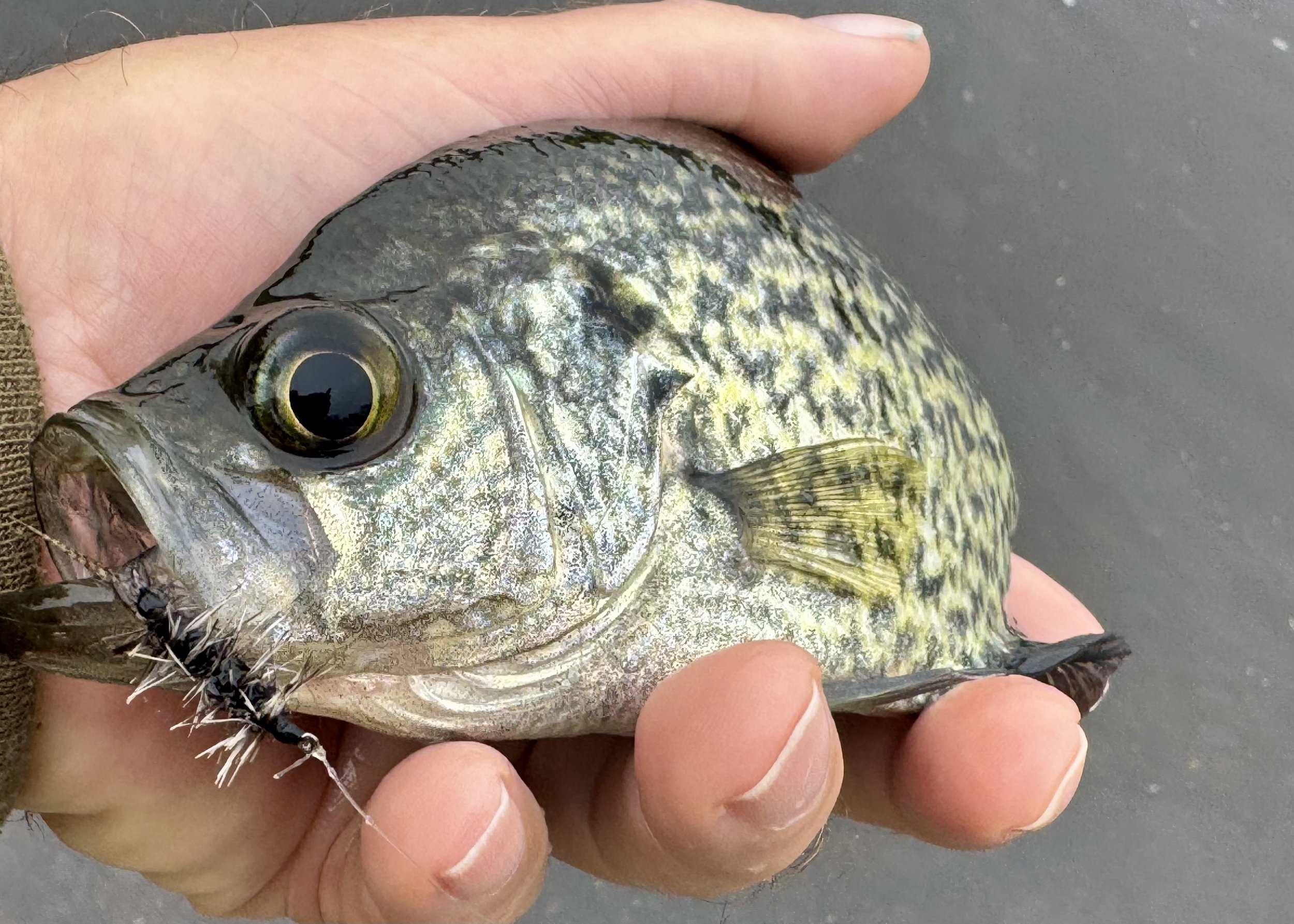
A slow steady hand twist retrieve enticed this small crappie to hit.

Chuck passed away on March 9, 2020, but he left behind a treasure trove of effective fly patterns. He was an innovator in a now popular material called ultra suede. He would hand-cut various shapes to create his flies and sold the pre-cut tails commercially. He was also offered a variety of bug and popper bodies hand-carved out of cork. My fly boxes still contain some of his carved topwater patterns. If you want to see the man himself tie up a CK nymph, you can watch a video of Chuck tying his famous nymph on YouTube.

In Fly Tying, Fly Fishing, Panfish Flies Tags CK Nymph, Fly Tying, nymphs
2 Comments

Red Butt House Fly

March 2, 2025 Panfish On The Fly

The Panfish Version of a fly originally designed for trout.

The Red Butt House Fly is a floating pattern that can imitate a wide range of terrestrial insects. The pattern is a spinoff of a trout fly I tied to imitate the common green bottle fly.

Read more
In Fly Tying, Panfish Flies Tags Red Butt House Fly, foam bugs, Flies
2 Comments

FAQ AND CUSTOMER SERVICE

Contact Us

About

Book a Presentation

Calendar of Events


© Copyright 2026 Panfish On The Fly    All Rights Reserved

SUBSCRIBE TO OUR NEWSLETTER

Are you interested in learning how to tie a new warm water pattern each month? Do you want to know when new products arrive in the shop? Do you want access to special discounts and sales? Then SIGN UP now!

Subscribe

Sign up with your email address to receive news and updates.

We respect your privacy.

Thank you!