• Home
    • Clearance Sale
    • Norvise
    • Fly Tying Kits
    • Fly Tying Materials
    • Hooks & Shanks
    • Tools & Fly Boxes
    • Gift Cards
    • Clothing
    • Commercially Tied Flies
    • Small Batch Flies
  • Guided Trips
  • Book A Presentation
  • Fly Tying Lessons
  • Blog
  • Calendar of Events
  • Podcasts
  • Contact Us
    • Our Story
    • About Bart Lombardo
  • Fly Patterns
  • Newsletter
  • Sign In My Account
Menu

Panfish On The Fly

PO Box 174
Clarksburg, NJ 08510
(609) 529-1729
Fly Fishing for America's Favorite Fish

Your Custom Text Here

Panfish On The Fly

  • Home
  • Shop
    • Clearance Sale
    • Norvise
    • Fly Tying Kits
    • Fly Tying Materials
    • Hooks & Shanks
    • Tools & Fly Boxes
    • Gift Cards
    • Clothing
    • Commercially Tied Flies
    • Small Batch Flies
  • Guided Trips
  • Book A Presentation
  • Fly Tying Lessons
  • Blog
  • Calendar of Events
  • Podcasts
  • Contact Us
  • About
    • Our Story
    • About Bart Lombardo
  • Fly Patterns
  • Newsletter
  • Sign In My Account

The Tenkara USA Hare's Ear Soft Hackle

September 8, 2026 Panfish On The Fly

Tenkara USA’s version of my Hare’s Ear Soft Hackle

Earlier in the year, Tenkara USA reached out and asked me to share one of my favorite flies for tenkara fishing. I selected a pattern that I use for trout and warm-water fish like carp and panfish. I originally tied the fly for trout; the Hare’s Ear Soft Hackle was meant to imitate a caddis pupa, but with a few tweaks, it turned out to work even better in warm water.
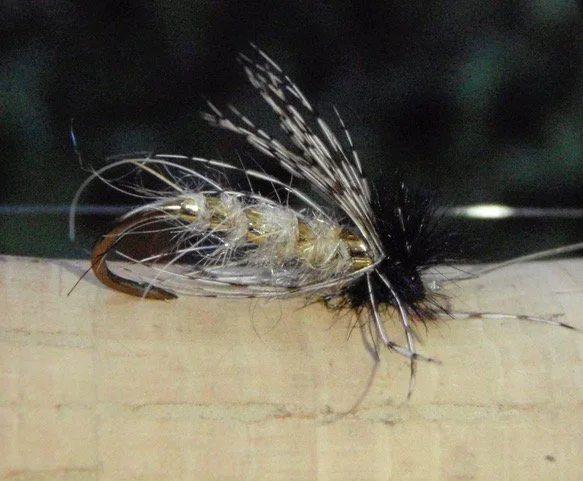
The original Hare’s Ear Soft hackle, still one of my favorite emerger patterns.

The first versions of this pattern were tied without bead chain eyes and used ostrich herl at the front of the fly instead of a darker shade of hare’s ear dubbing.  Fished in the film, this was a killer pattern for both emerging caddis and mayflies. By changing the color and size of the fly it could represent the emerging phase of both insects.
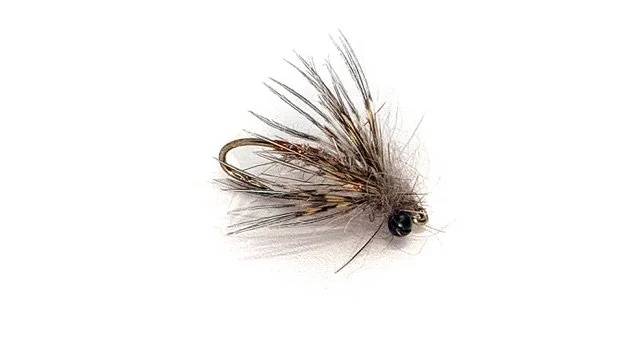
The Hare’s Ear Soft Hackle tied with bead chain eyes.

A large Hare’s Ear nymph is one of my favorite flies for carp. The Hare’s Ear Soft Hackle transformed into one of my favorite carp flies when I made a few modifications to it. I added the bead chain eyes to help the fly sink, since carp feed primarily on or near the bottom. Those bead chain (or mono) eyes also added to the fly’s attractiveness when fished as a caddis pupa as well. I also swapped out the black ostrich herl for a contrasting color of hare’s ear dubbing.  The dubbing gave the fly a buggier appearance, was easier to wrap around the eyes, and was far more durable than the ostrich herl. The use of dubbing also allowed me to add a hot spot to the fly, something I often do.
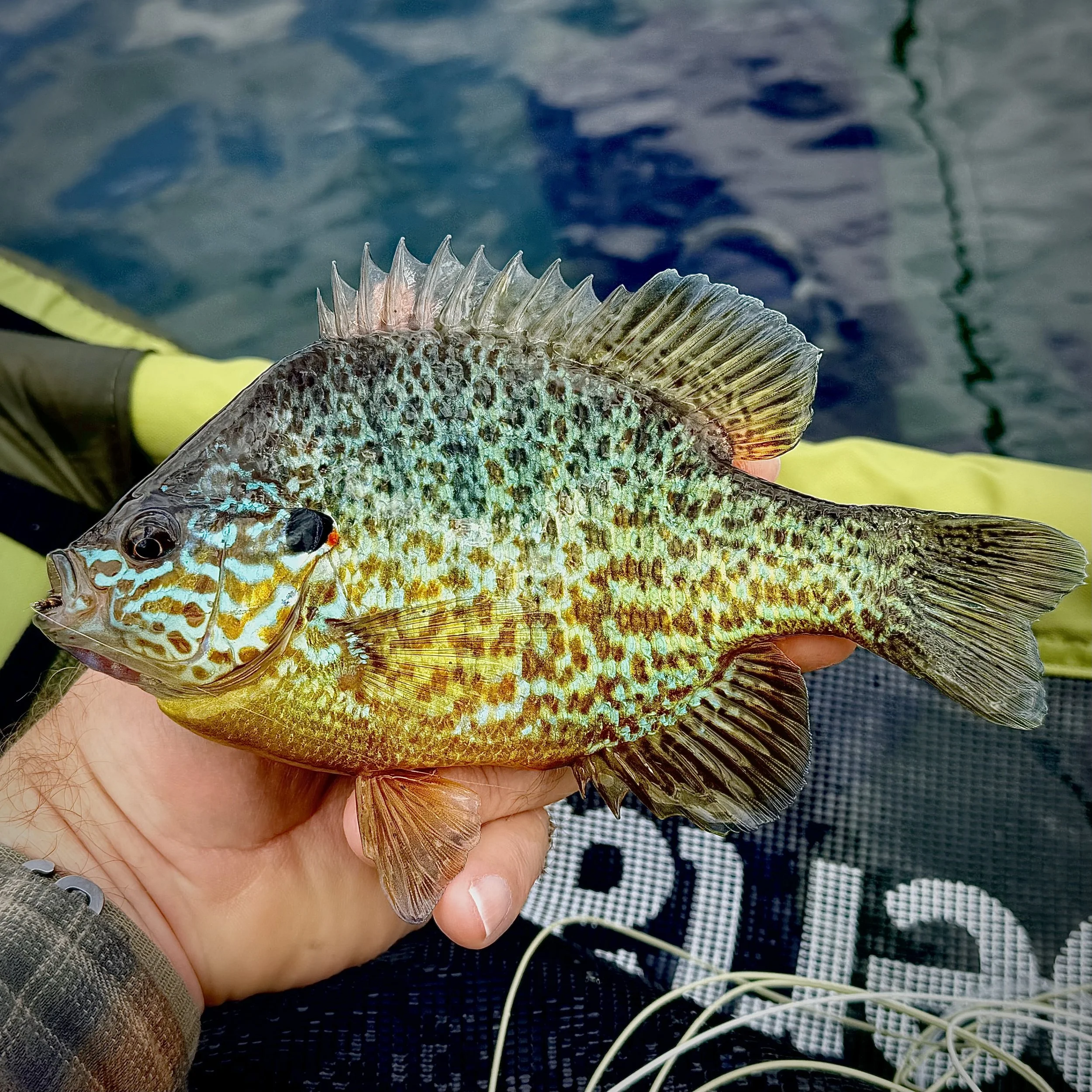
Sunfish likely take the Hare’s Ear Soft Hackle as a damselfly or dragonfly nymph.

While carp fishing, a big redbreast sunfish once charged in and grabbed the fly just as a carp moved in to investigate, and that’s when I realized I probably had a good panfish pattern on my hands as well. The bead chain version of the Hare’s Ear Soft Hackle has been very effective in warm water, probably because the prominent eyes make it look like a damselfly or dragonfly nymph. This fly has been a go-to in my warm water nymph box for years, whether fished on its own or as a dropper. This fly is quick and easy to tie, holds up well, and you can tie it in a range of different colors by swapping out the natural hare’s ear dubbing for your dubbing color of choice. Just be sure to use a dubbing with lots of guard hairs for a buggy appearance. My favorite colors are natural hare’s ear, olive, dark brown, and black.
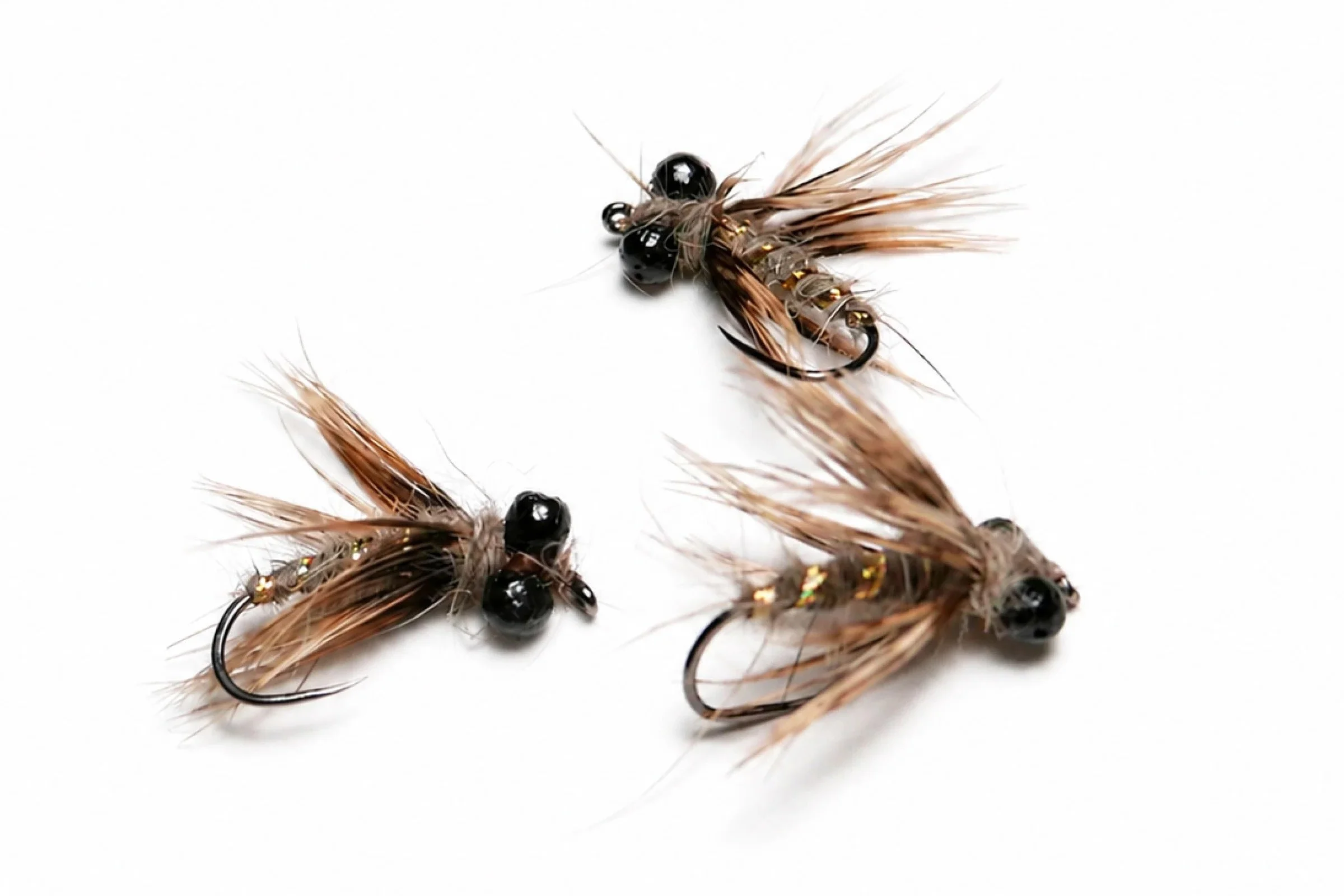
The Tenkara USA version of the pattern features larger bead chain eyes for a faster sink rate.

I picked this fly for Tenkara USA because it’s so versatile—it works just as well in warm or cold water. Most tenkara flies are meant to be fished below the surface, and this one is no exception. When the classic kebari style first came to the West, many people thought it was a dry fly, but it’s actually a wet fly, a wet fly designed to be fished with movement. Tenkara gear lets you add subtle movements to your fly, which really gets the fish’s attention. I don’t mean swinging or dragging the fly across the current, but giving it small twitches and pulses while it drifts naturally in moving water. In still water, I usually retrieve the fly with a pulsing retrieve, with slow sweeps of the rod, or use a hand-twist retrieve with a regular fly rod.
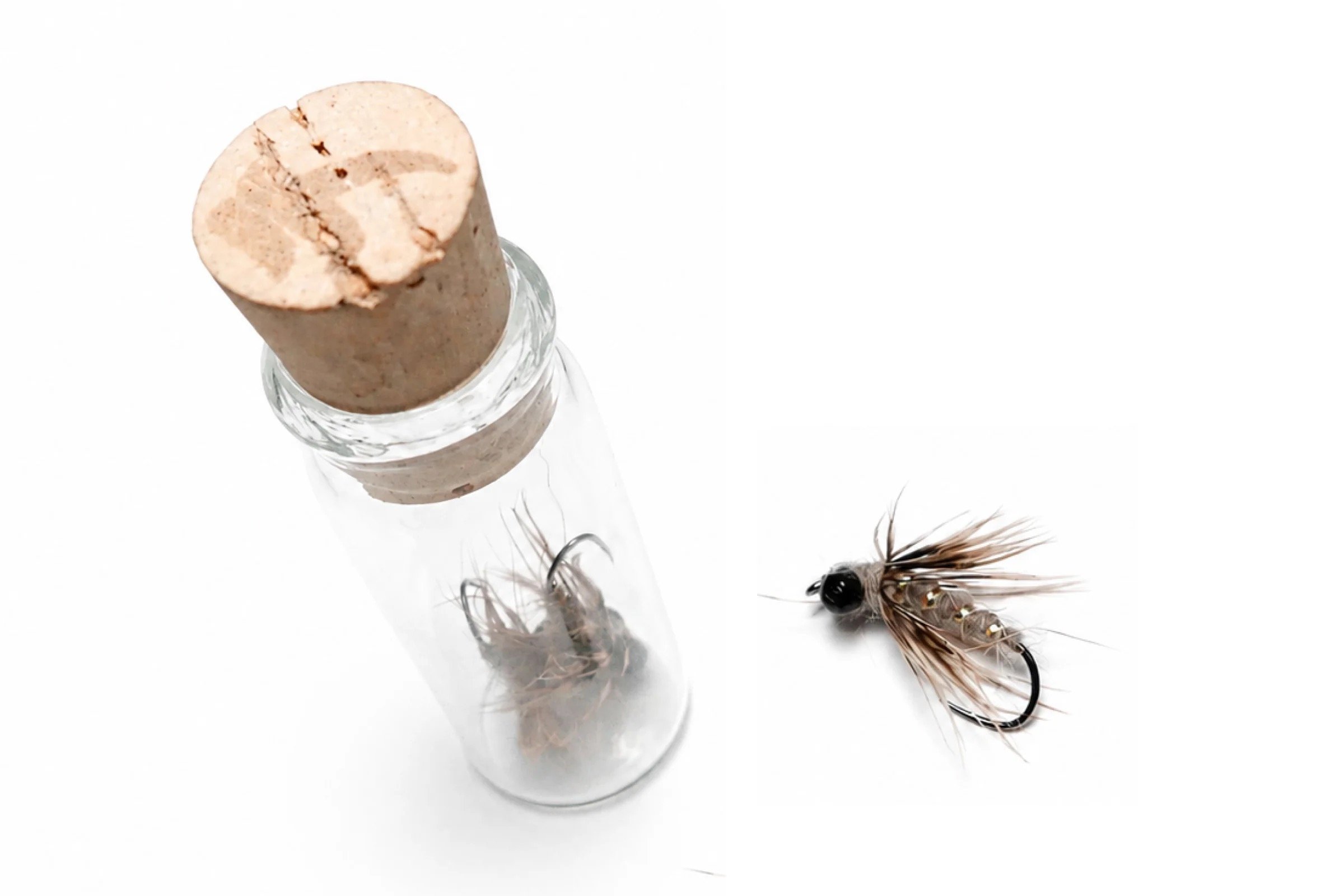
The flies sold by Tenkara USA are uniquely packaged.

This fly is now available for purchase on Tenkara USA’s website, but I’ve also included a recipe at the end of this post for anyone who likes to tie their own. When I look at my original emerger pattern and the version now offered by Tenkara USA, you can see how it changed from imitating a specific insect, like a caddis fly, to a more general pattern that could imitate many different things.
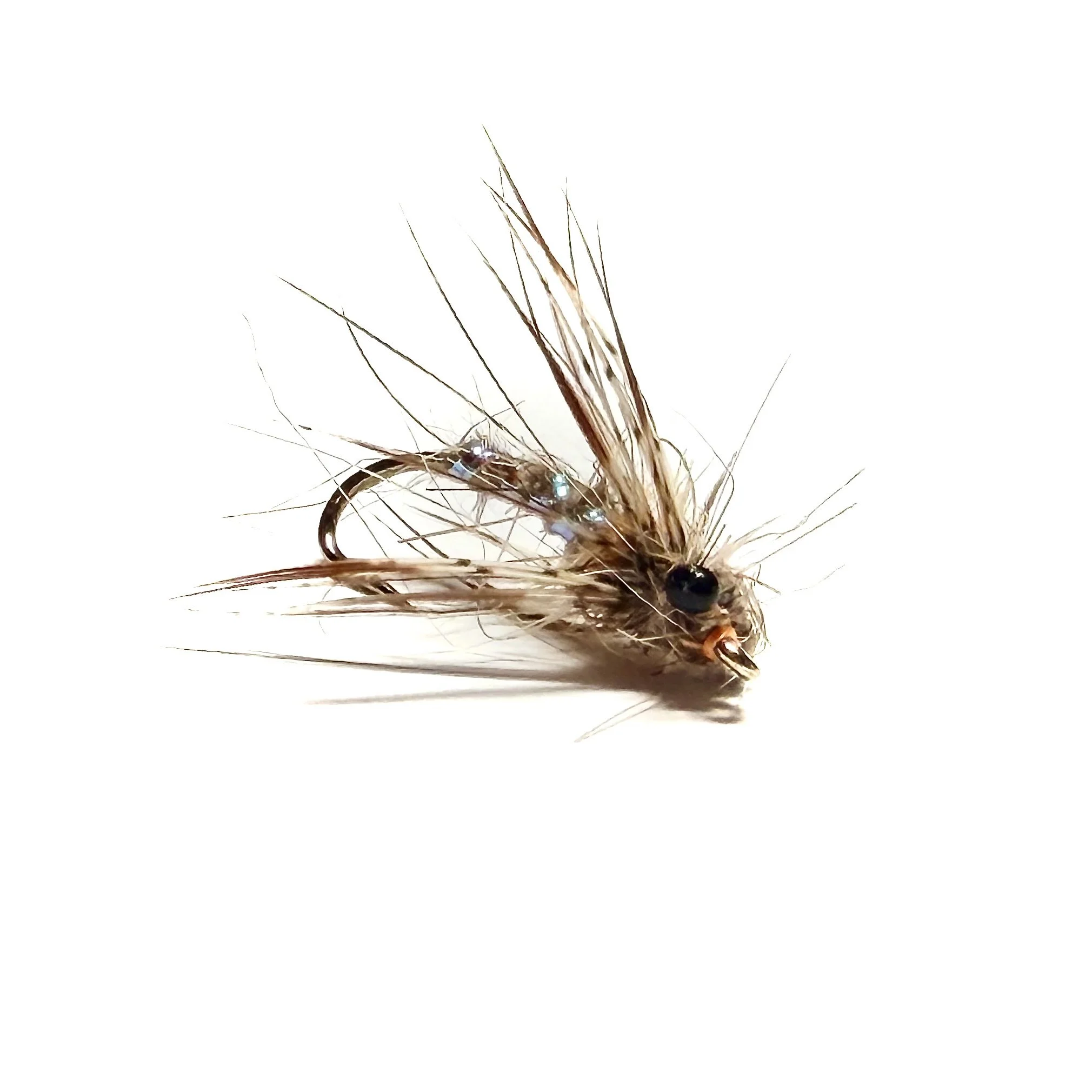
Purchase From Tenkara USA

Pattern Recipe:
Hook: Natural Bend Panfish Hook (size 8 or 10)
Thread:  8/0 Semperfli Classic Waxed
Ribbing:  Fine gold, copper, or holographic tinsel
Body:  Light hare’s ear dubbing
Hot Spot (optional):  Orange hare’s ear dubbing Hackle: Partridge, grouse, or hen
Thorax: Dark hare’s ear dubbing
Eyes: Mono or bead chain (mono for fishing the film/bead chain for sinking flies)
Head: Dark hare’s ear dubbing x-wrapped around eyes.
In Fly Fishing, Fishing, Fly Tying, Tenkara Tags Hare's Ear Softhackle
Comment

PJ's Bluegill Crusher

August 27, 2026 Panfish On The Fly

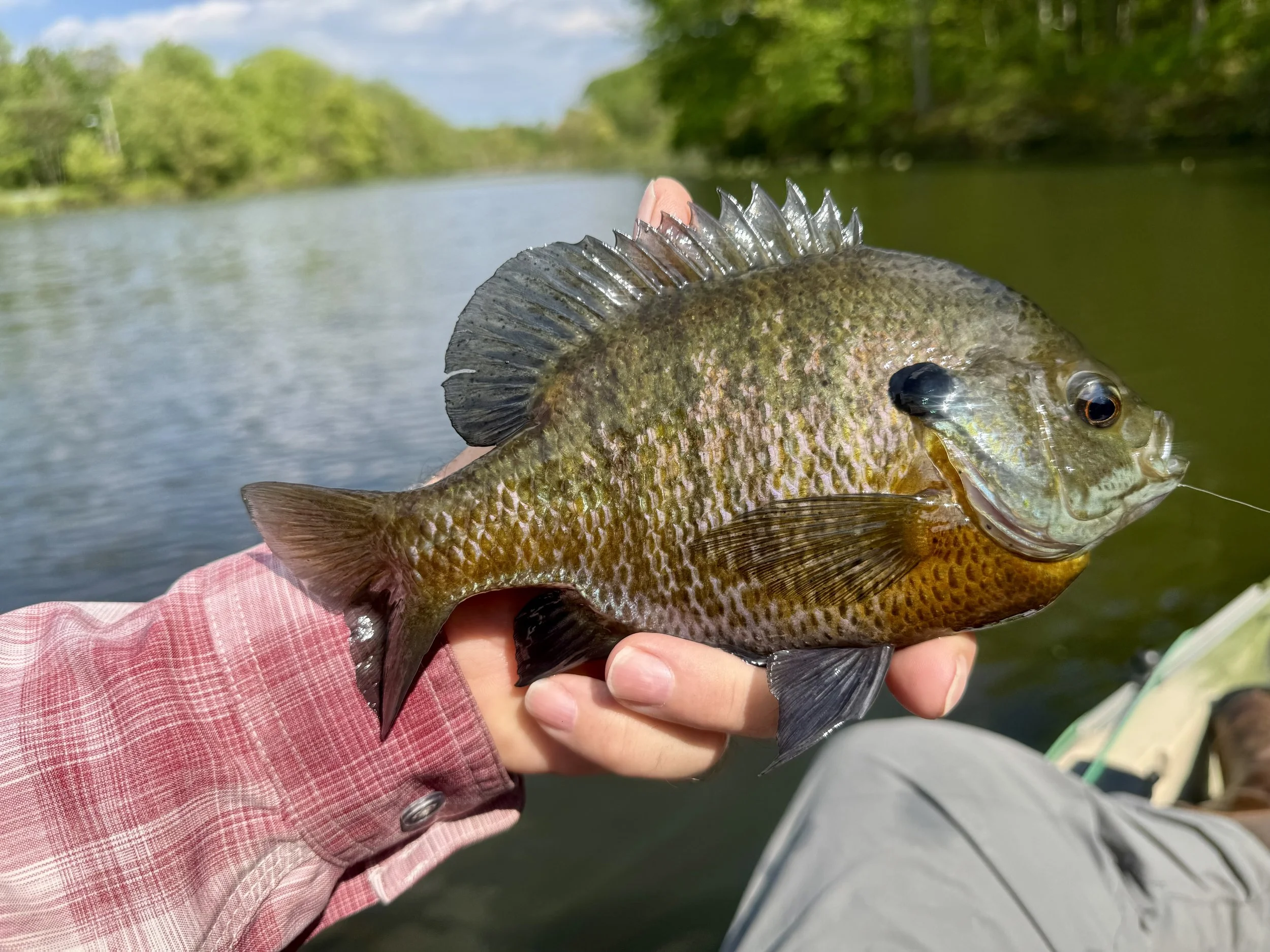
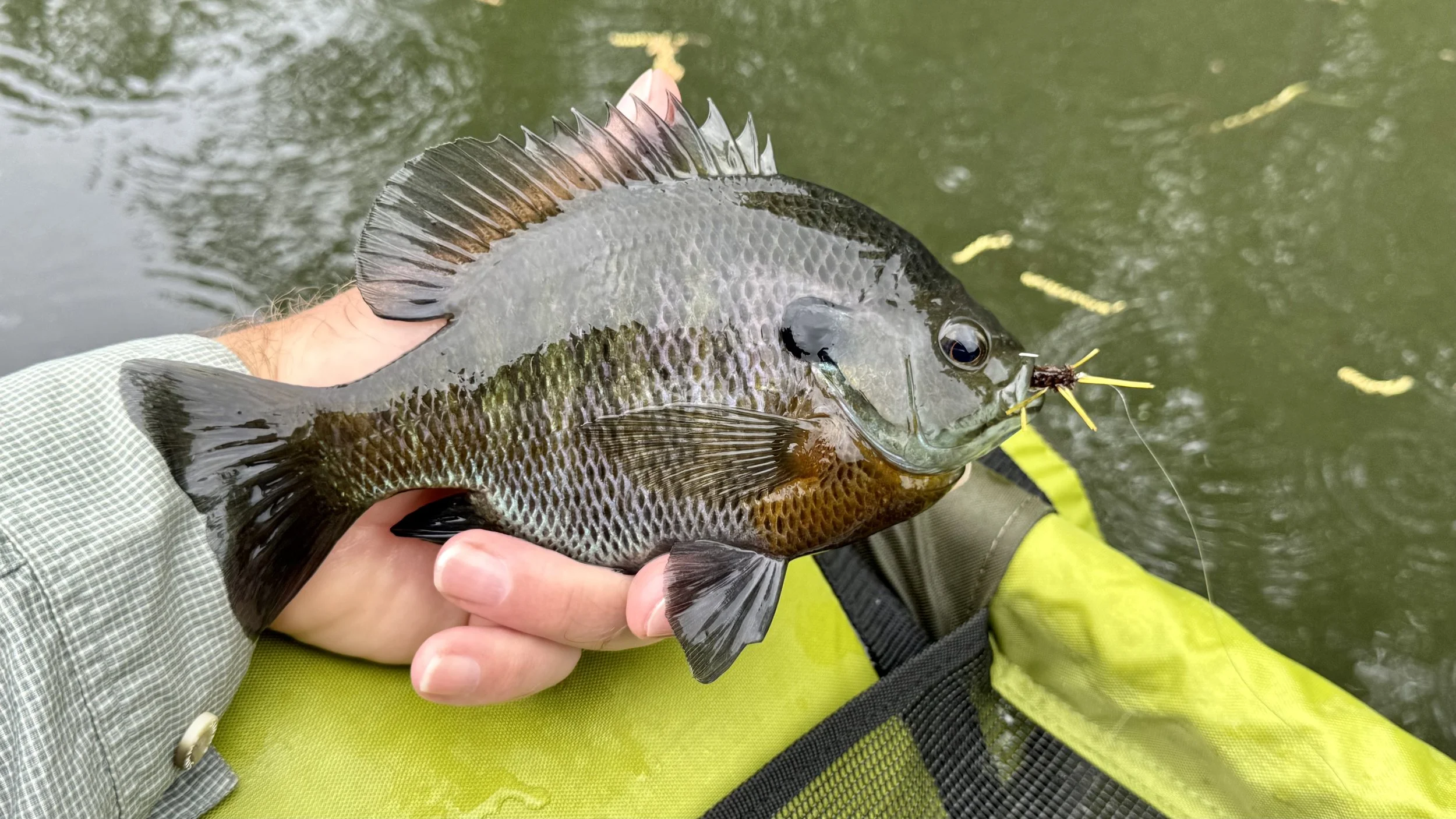
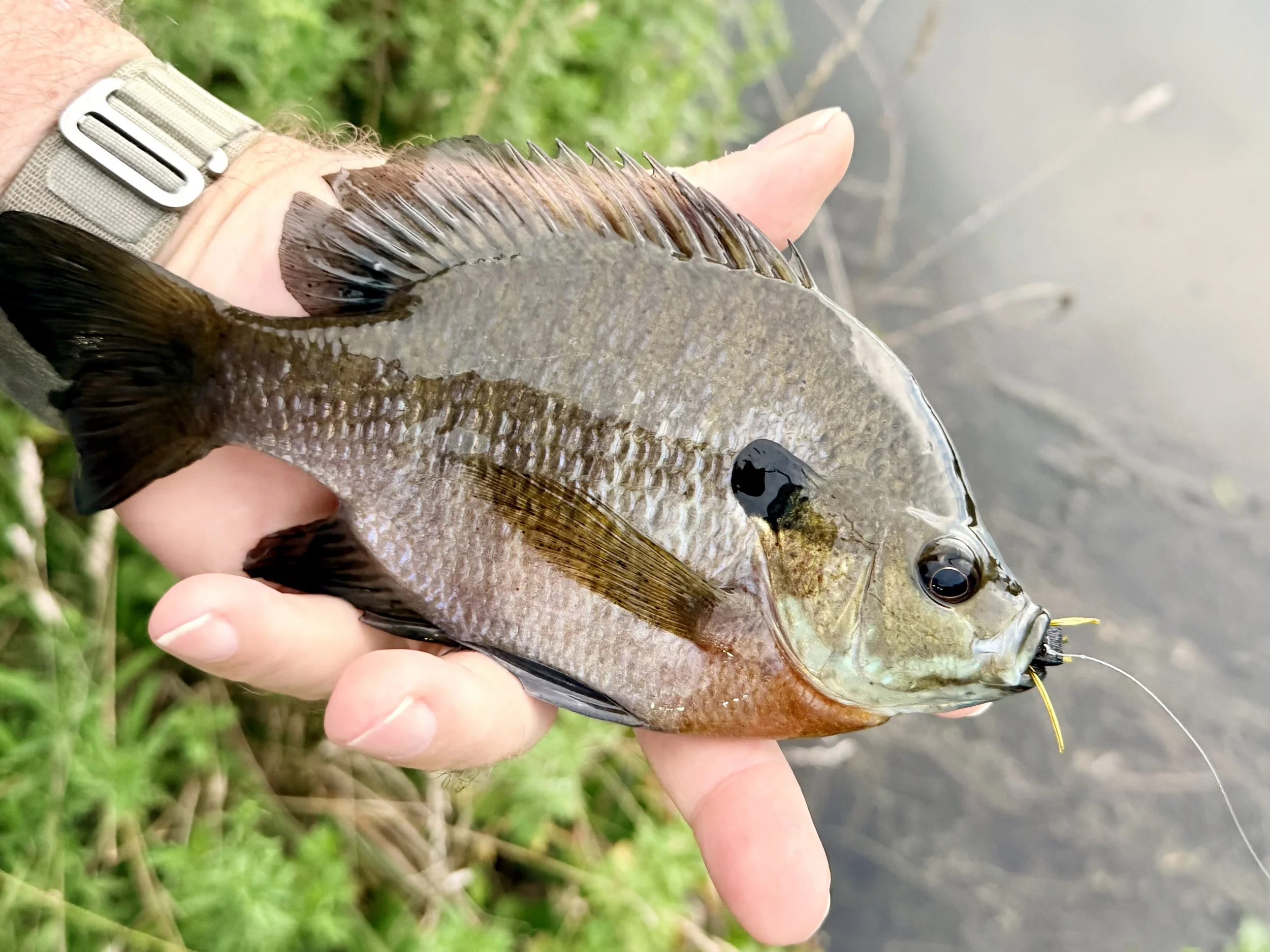
A chunky little bluegill caught on the Bluegill Crusher

I’m always looking for new panfish patterns to try, even though my fly boxes are already full of good flies. Most new patterns don’t work better than my old favorites, so why keep searching? It’s because I love tying flies just as much as fishing. When I’m at the vise, I think about where I’ll use the fly or remember past trips. Tying keeps me connected to my favorite hobby, especially when I can’t get out on the water.
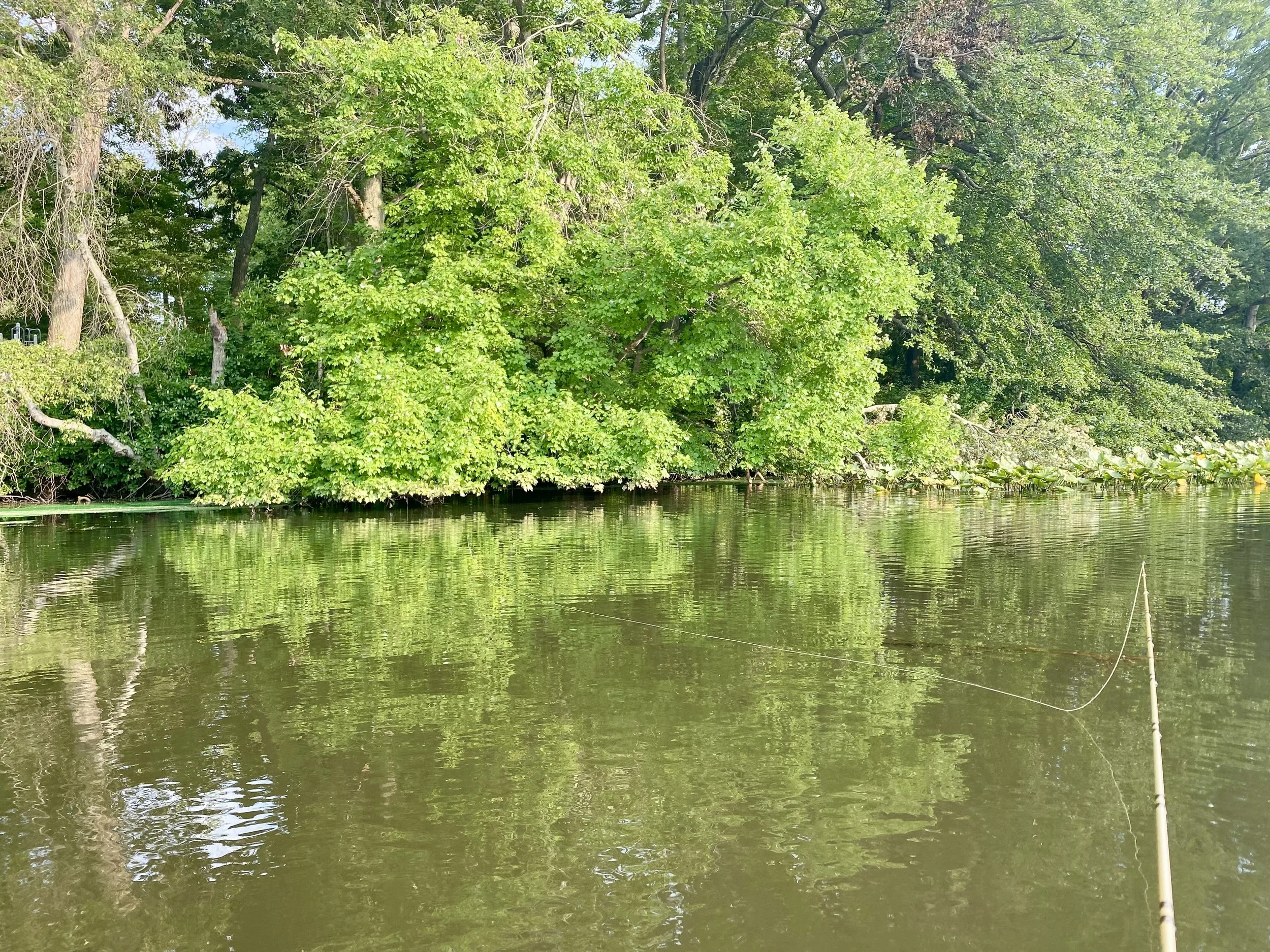
Low hanging branches over the water are a perfect place to present an ant or beetle pattern.

During the summer months, terrestrial insects become an important food source for panfish.  All manner of terrestrial insects find their way into the water.  Ants, beetles, caterpillars, spiders, and a host of other insects drop from trees and branches overhanging the water.  Windy days blow grasshoppers and other bugs out of bank-side vegetation.

Just this week, I went to a local lake and saw over a hundred bluegills and golden shiners feeding on the surface. At first, I couldn’t tell what they were eating. Then I noticed thousands of tiny winged termites emerging from the roots of a dead tree and blowing onto the water. These termites were about size 20. I don’t usually carry flies that small for panfish, but luckily sunfish aren’t as picky as trout. Almost any fly I cast into the feeding fish was eaten immediately.

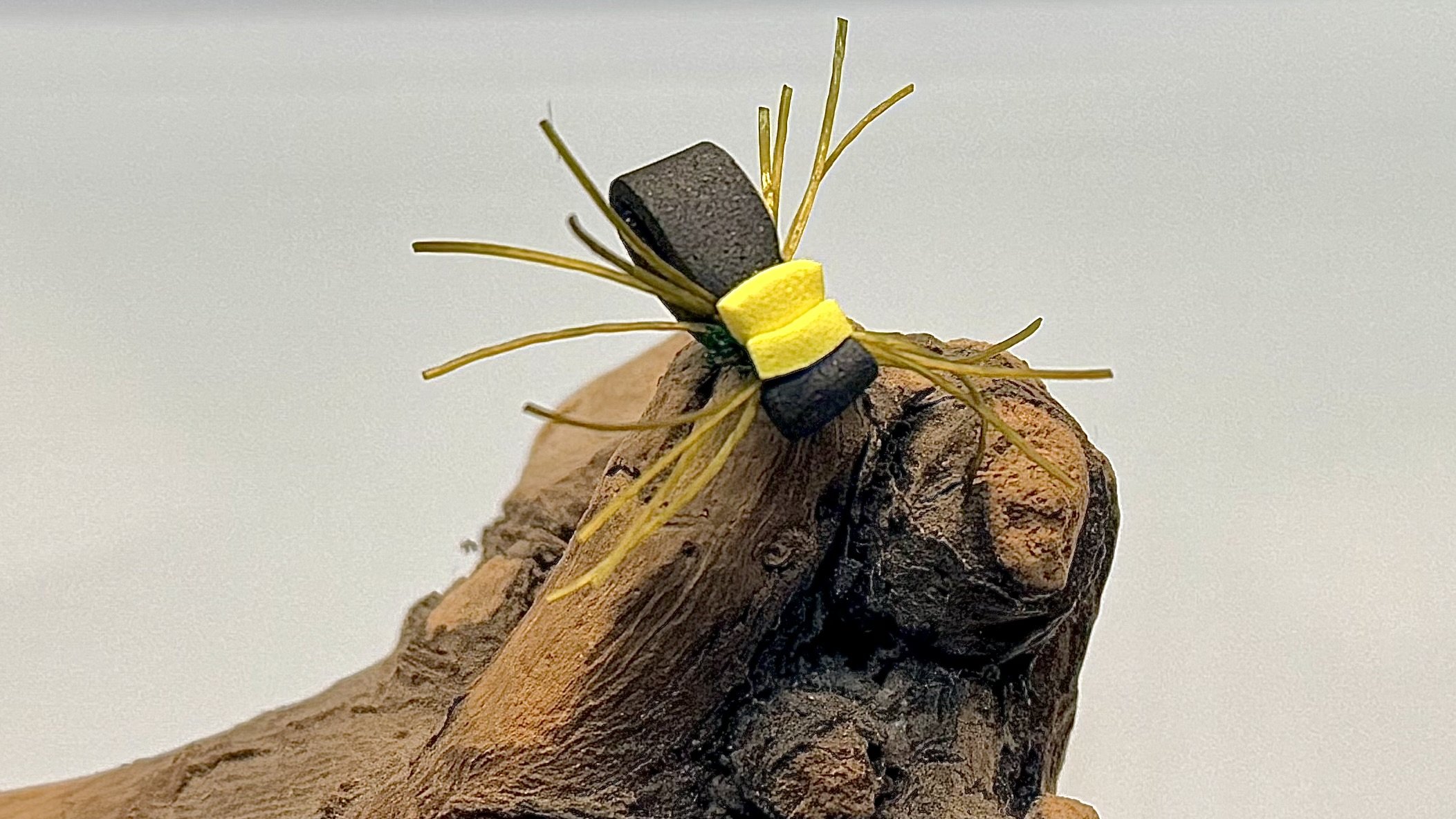
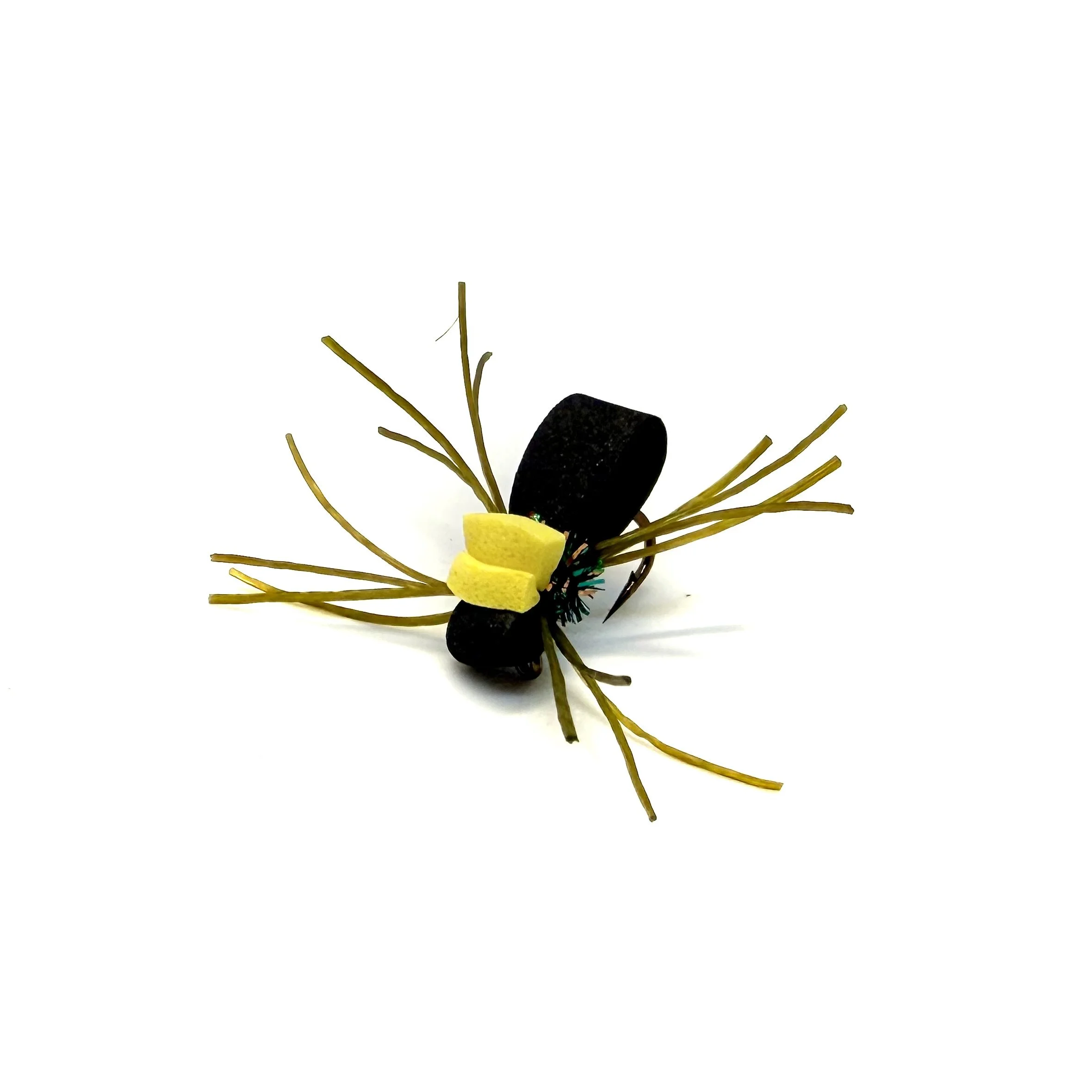
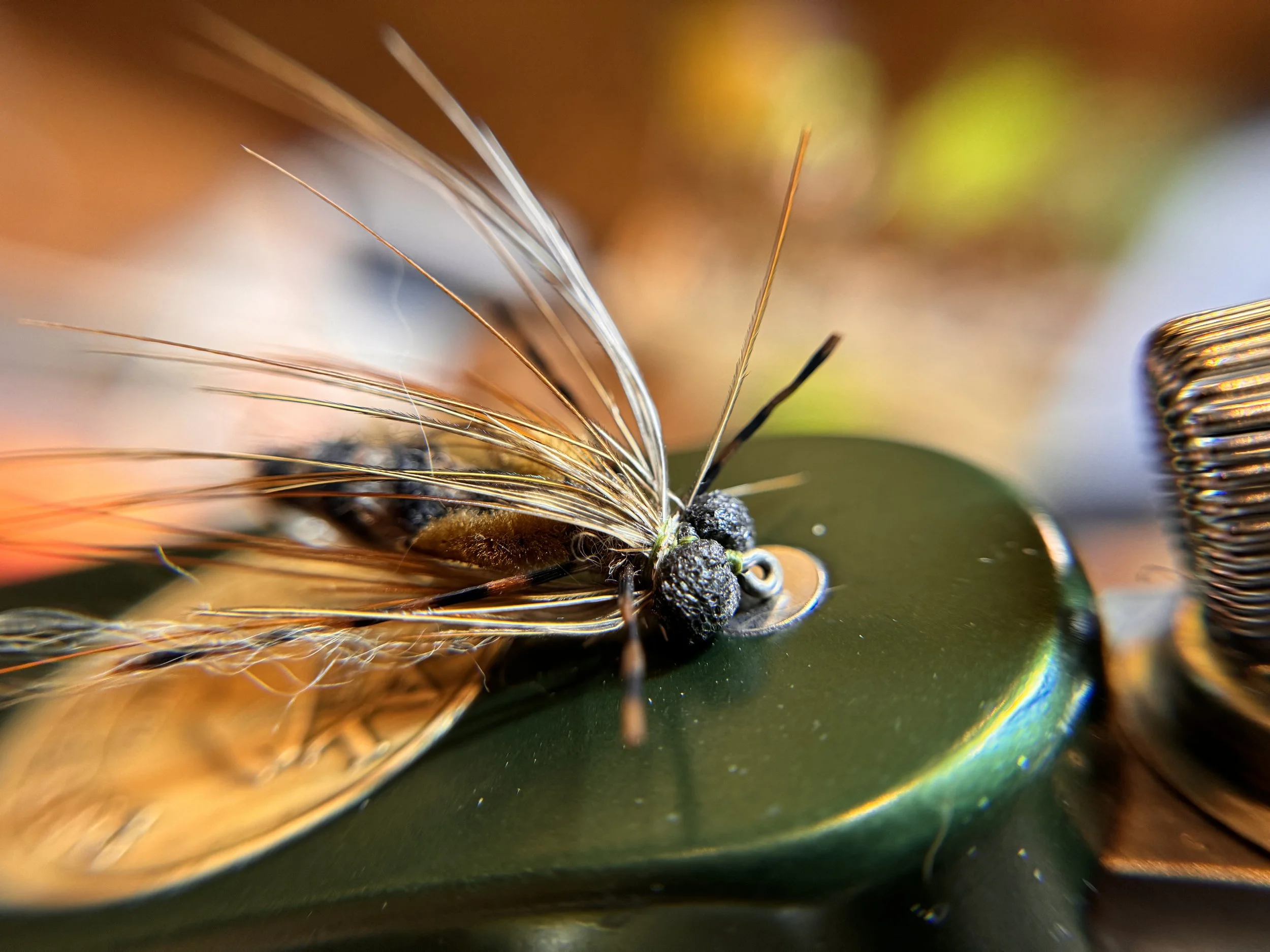
PJ’s Bluegill Crusher with a few added tweaks, such as swapping natural peacock with synthetic for durability and a sighter for visibility.

The fly I used that day was new to me. A few weeks ago, I was searching for new ant and beetle patterns and found one called PJ’s Bluegill Crusher. It’s a simple, easy fly to tie that looks a bit like both an ant and a beetle. You can use it when fish are feeding on either insect.

This fly uses just three materials besides the hook and thread: foam, fine rubber legs, and peacock herl. I made a few changes when tying it for panfish. The first thing I changed was the peacock herl. Natural peacock herl looks great, but it’s very fragile and comes apart after a few fish. The fly still worked well even when the herl wore off, so I’m not sure it’s needed. But the herl does help spread out the rubber legs, which might be why it’s included. To keep the original look but make the fly tougher, I used Semperfli’s synthetic peacock instead. Now the fly is much more durable.

Since small, dark flies like this can be hard to see on the water, I added a small, bright foam sighter on top. This makes the fly much easier to spot. I tied them in sizes 10 and 12, since I rarely make panfish flies smaller than that. It can be tough to remove tiny flies from a sunfish’s mouth, so I prefer larger flies or patterns like the Triangle Bug, which are harder for fish to swallow.

For size 10 flies, I used Hareline 3mm foam. For sizes 12 to 16, I switched to 2mm foam, and for the smallest flies, I used 1mm foam. Evazote-style foam works great for this pattern because it floats all day and is very tough.

For the legs, I use fine span flex material, which comes in different brands and thicknesses. I pick the thinnest for small flies and standard for sizes 10 and 12. It’s a bit harder to work with than regular rubber or silicone legs, but it moves better in the water. Since it’s so thin, I can use more legs without making the fly bulky. I put 4-5 legs on each side.. I figure if the usual four legs are good, eight to ten are even better!

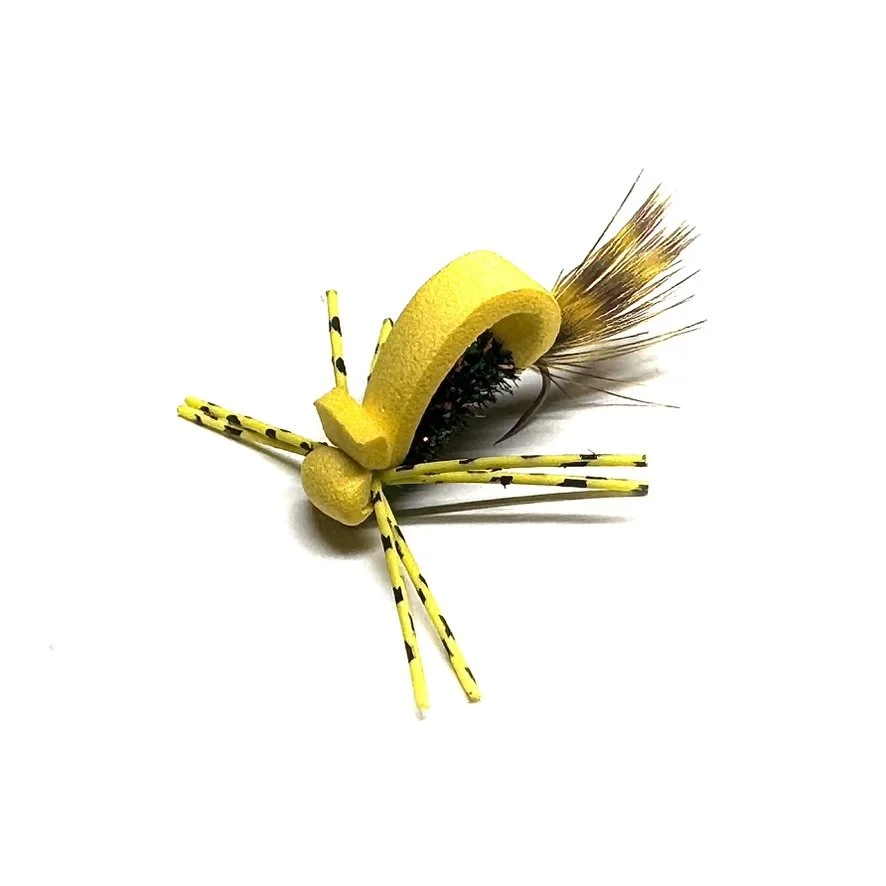
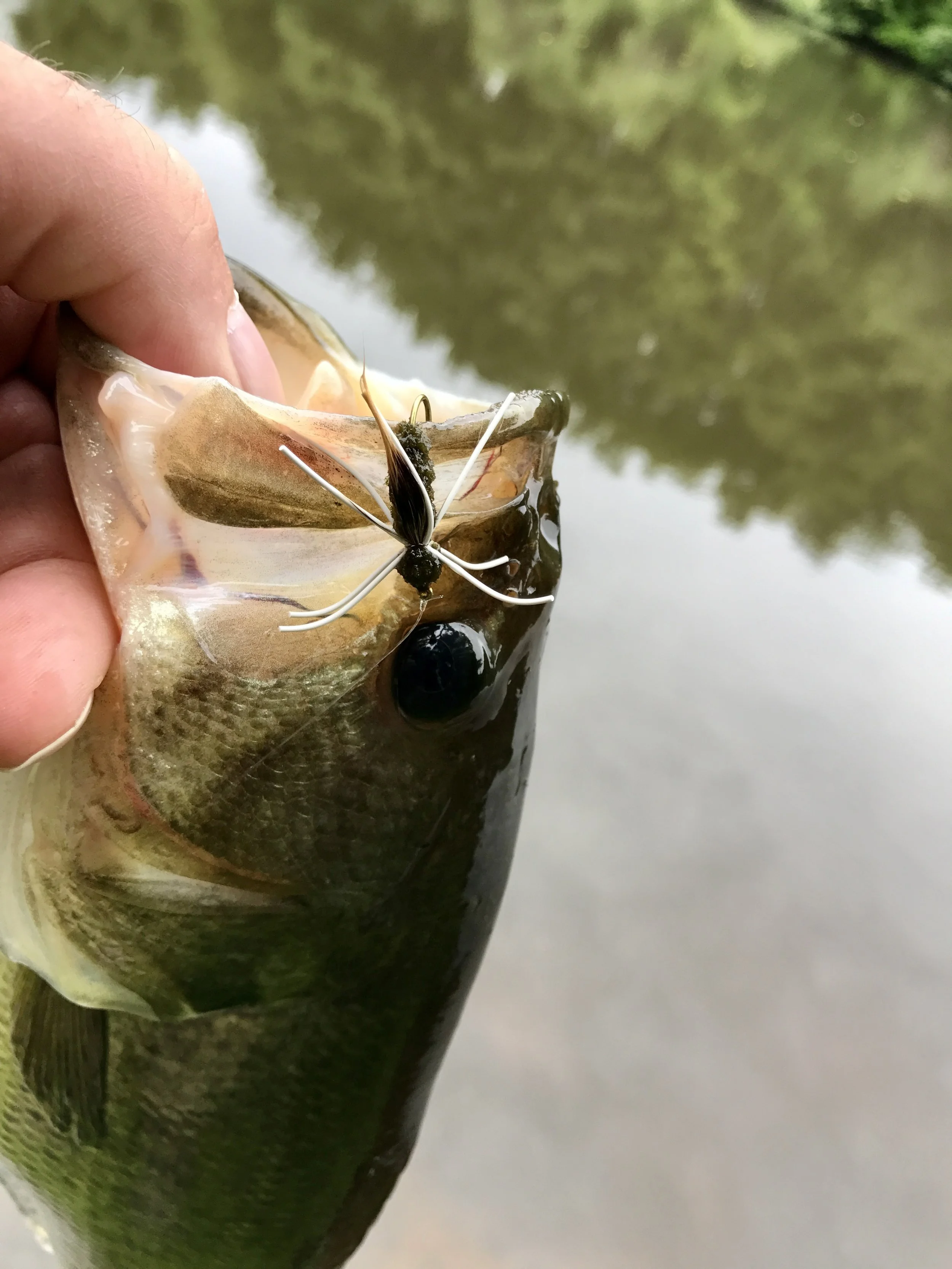
Foam flies tied with an open loop of foam like this Bluegill Bug leave a trail of bubbles when twitched on the surface.

The body of the fly is made from a loop of foam instead of a solid piece. This forms a small air pocket that makes bubbles when you pull the fly through the water. It’s a trick used in other foam panfish patterns, like the Bluegill Bug.

A good bluegill taken mid-day along a shaded bank.

Sunfish and small bass really like this pattern. I’ve caught good fish with it at dawn and dusk, including some bass. It’s also a great fly to use when searching for fish on a slow summer day. Casting it along shady banks has brought fish up during the day, too.

Pattern Recipe:
Hook: Curved Shank Nymph or Emerger Hook (sizes 12-8)

Thread: Semperfli Classic Waxed (8/0 or 6/0)

Body: 2mm Foam Strip

Underbody (optional): Peacock Herl or Semperfli Synthetic Peacock Herl

Legs: Flexi-Floss or Bug Legs in color of choice

Sighter: Bright colored 1mm foam

Below is a video from YouTube that demonstrates the tying procedure.

In Fly Tying, Fly Fishing Tags PJ's Bluegill Crusher
Comment

The JP Ross/ Panfish On The Fly Phat Glass - A Fly Rod for Bass and Other Predators

July 27, 2026 Panfish On The Fly

I first met Jordan, the owner of JP Ross Fly Rods, several years ago at a fly fishing show in Massachusetts. We were introduced by a mutual friend who thought we would hit it off. Long story short, we did! As a result of that very first meeting, JP Ross Fly Rods released a panfish-themed fly rod, the JP Ross/Panfish On The Fly “Toad,” which turned out to be a big success. When Jordan approached me about another collaboration, I jumped at the chance. This time the focus was not panfish but the fish that eat panfish!

I am very excited to announce my second collaboration with JP Ross Fly Rods. A special edition of their new Phat Glass 7/8 weight fly rod. Some people have asked why I decided to promote a fly rod rated for a 7 or 8-weight fly line when the focus of Panfish On The Fly is fly fishing for panfish. The answer is simple. If you’ve spent any time fishing for panfish, you’ve probably run into bigger predators like largemouth bass, smallmouth bass, northern pike, even large catfish. These larger fish live alongside and often hunt the sunfish and other panfish we chase with our flies.

Although big fish often eat panfish flies sometimes it works the other way around!

Bigger fish often go after the panfish flies we use or the actual fish we’ve hooked. I’ve caught plenty of bass and other predators on my light panfish rods but lost just as many because the tackle was too light. That’s why I usually bring two rods on warm water trips: a 3 or 4-weight for panfish and a heavier rod for bigger fish. When fishing from a float tube, kayak, or boat, I keep both rods rigged and ready. The second rod is stored in a rod holder or behind the seat, always within easy reach. This way, if I spot bigger fish or get a follow on a hooked panfish, I can quickly switch rods without stopping to re-rig. When walking the bank or wading, carrying two rods isn’t practical, so I often choose a slightly heavier 5- or 6-weight rod. This works but is not the best solution, as the rod is often too heavy for panfish and still too light for a big predator. Not to mention, by the time you change flies, the opportunity has often passed you by.

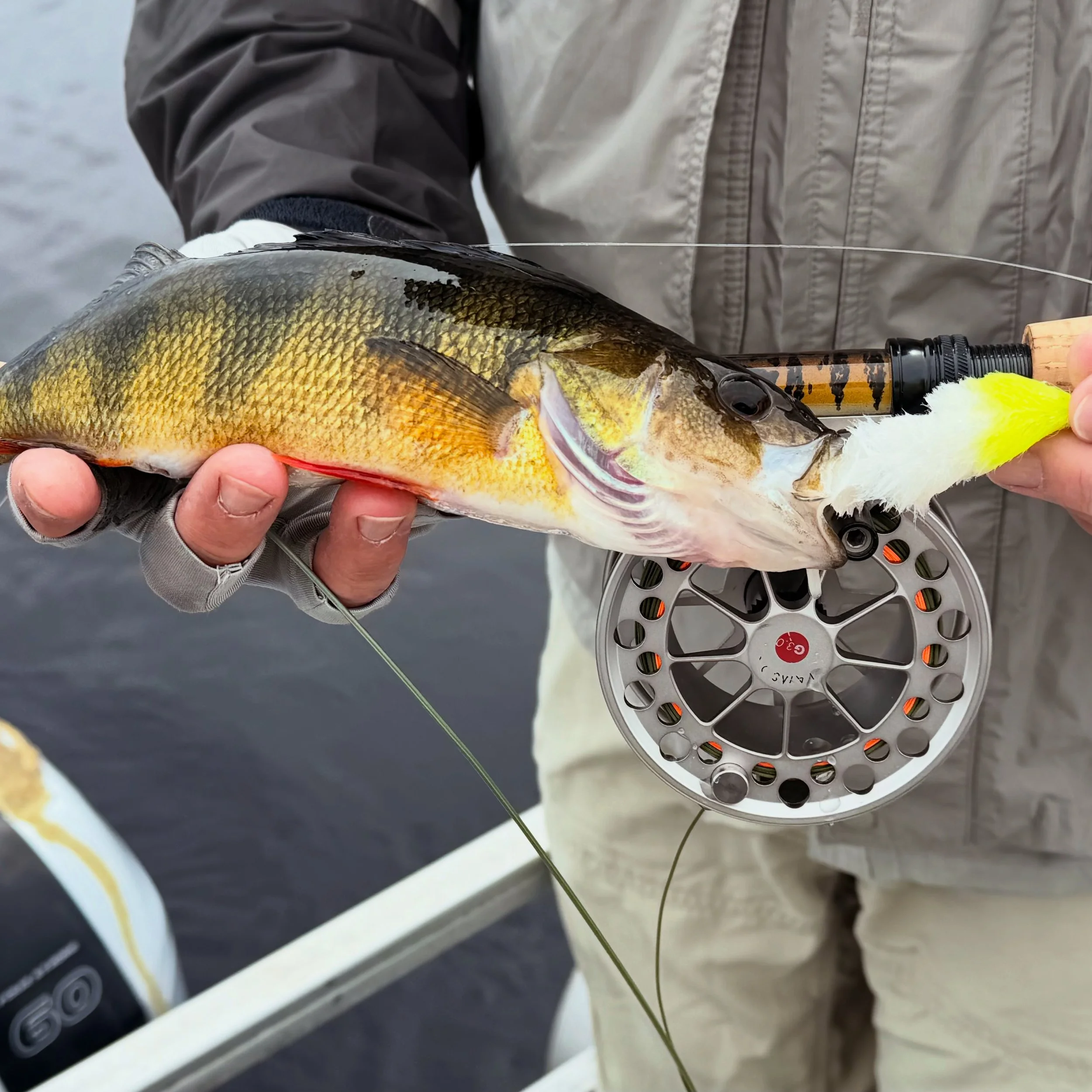
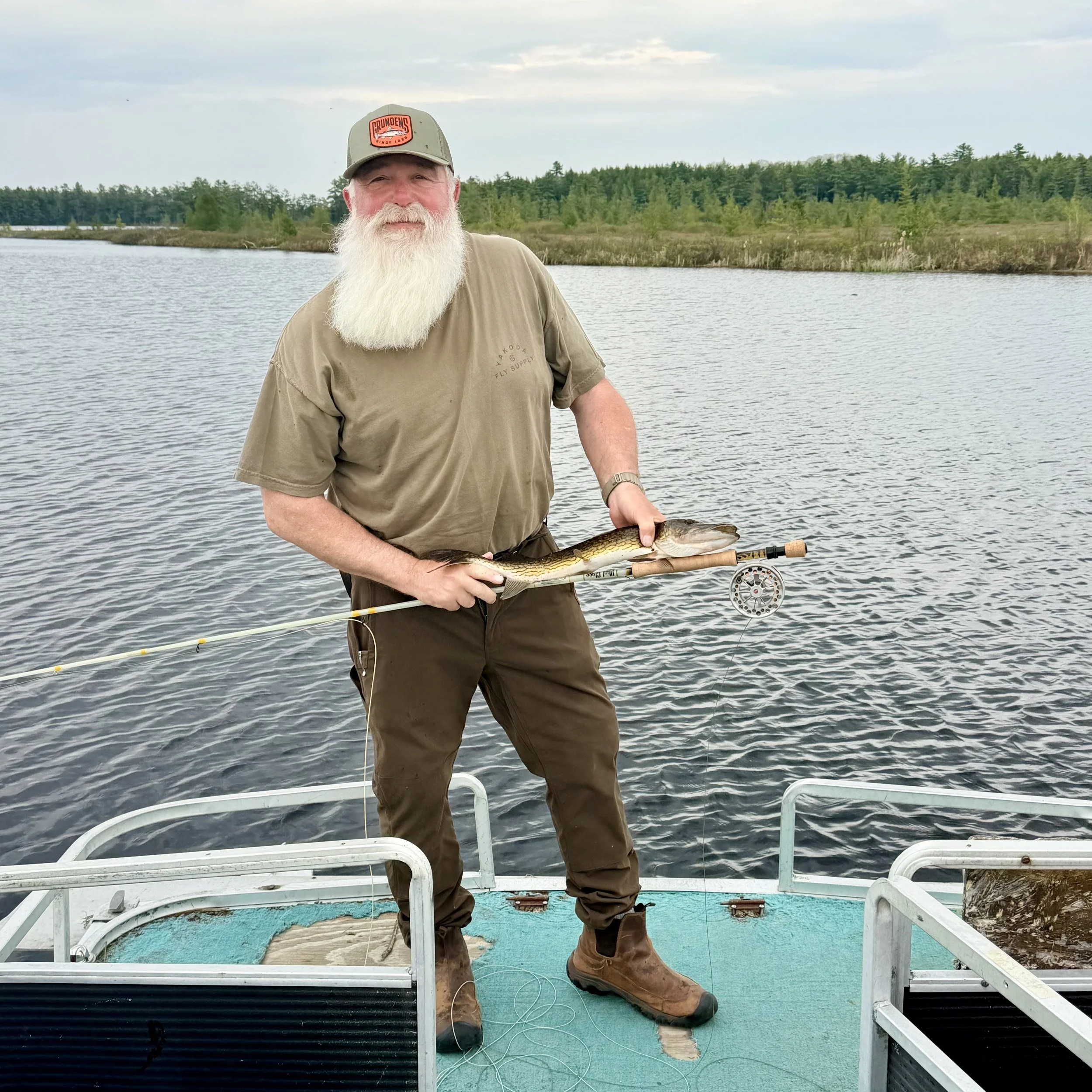
Being able to quickly pick up a second rigged and ready fly rod while perch fishing allowed me to catch this pickerel that followed a hooked perch up to the boat.

Fly fishing for predators such as bass, pike, and other large fish is exciting and fun on its own, and I enjoy it just as much as fishing for panfish. In fact, I often do both on the same trip—panfish in the afternoon, then bass during that magical last hour of light.

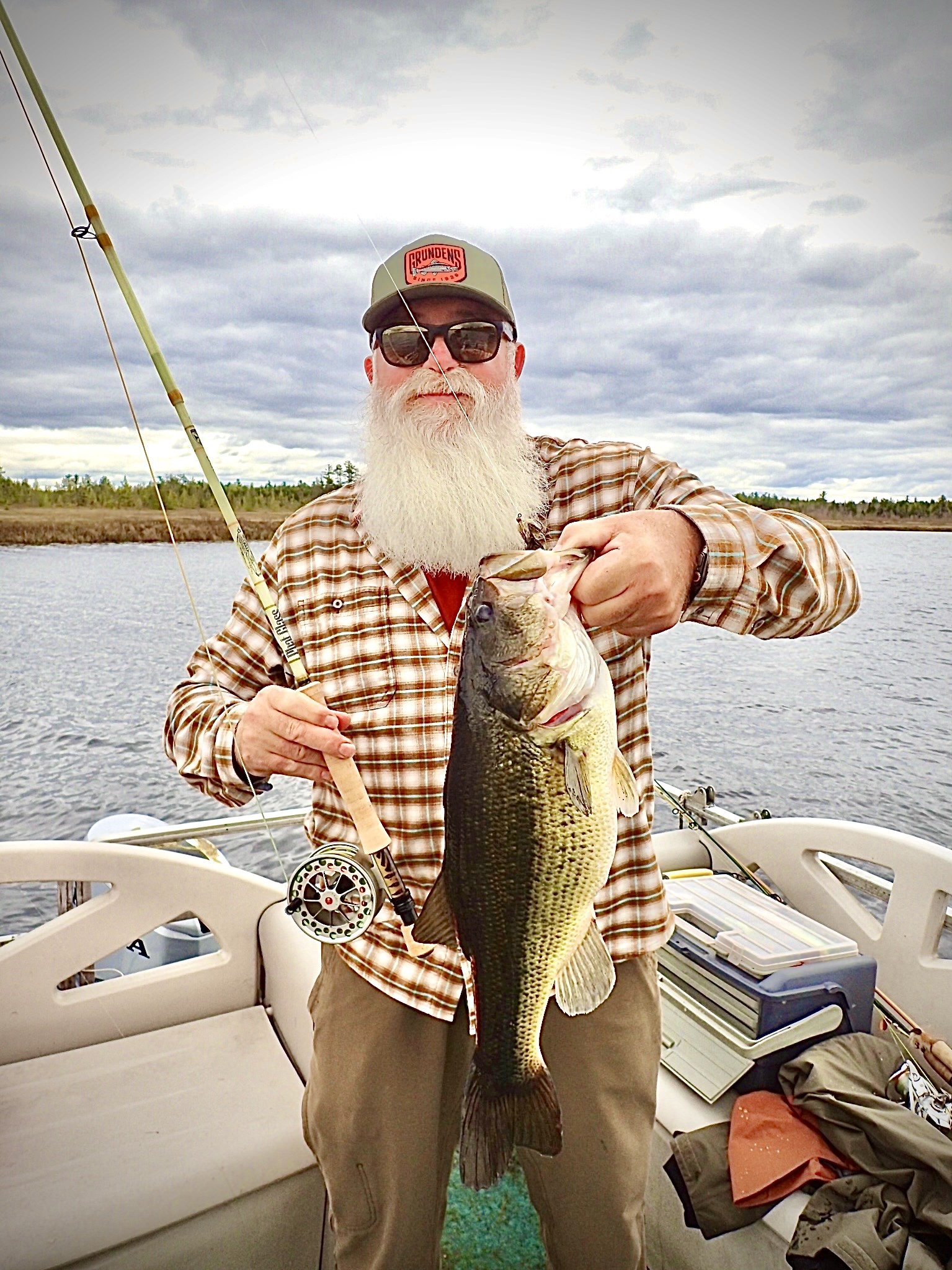
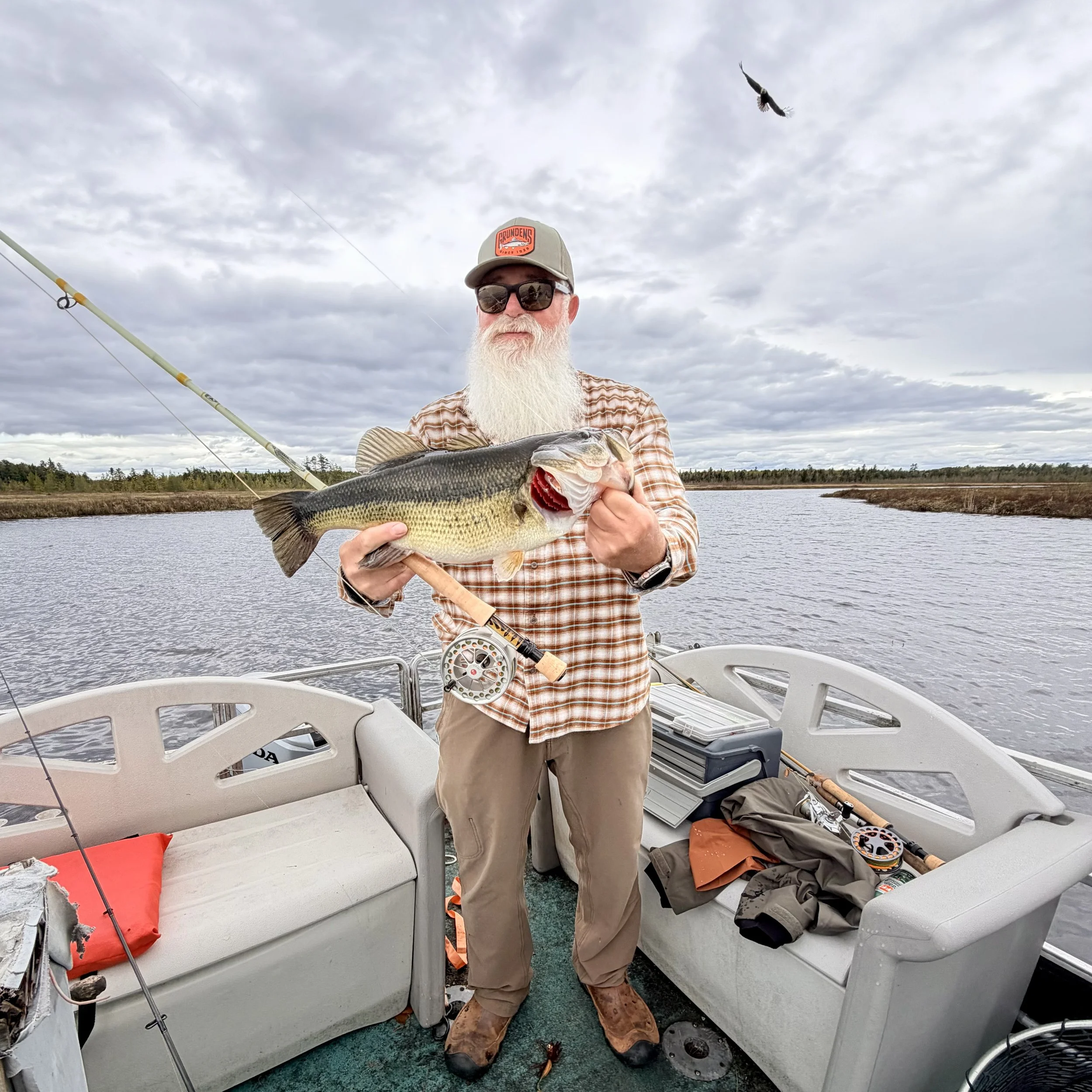
Fly fishing for largemouth bass is a worthy pursuit on its own. Exciting eats from strong fish that love to take the fight to the air!

My first project with JP Ross was the Panfish On The Fly edition of their “Toad” 4-weight. It was designed it with a stiffer butt section, which helps when hooking larger fish like bass by giving you extra backbone for the fight. The Toad is great for casting lighter panfish flies, even smaller bass patterns, and controlling small to medium-sized fish, but as a 4-weight fly rod, there are limitations to how well it can handle bigger, wind-resistant flies or the powerful fight of larger predators.

The JP Ross/Panfish On The Fly Toad is a panfish themed 7 ½ foot S-Glass 4wt. My go-to fly rod for panfish!

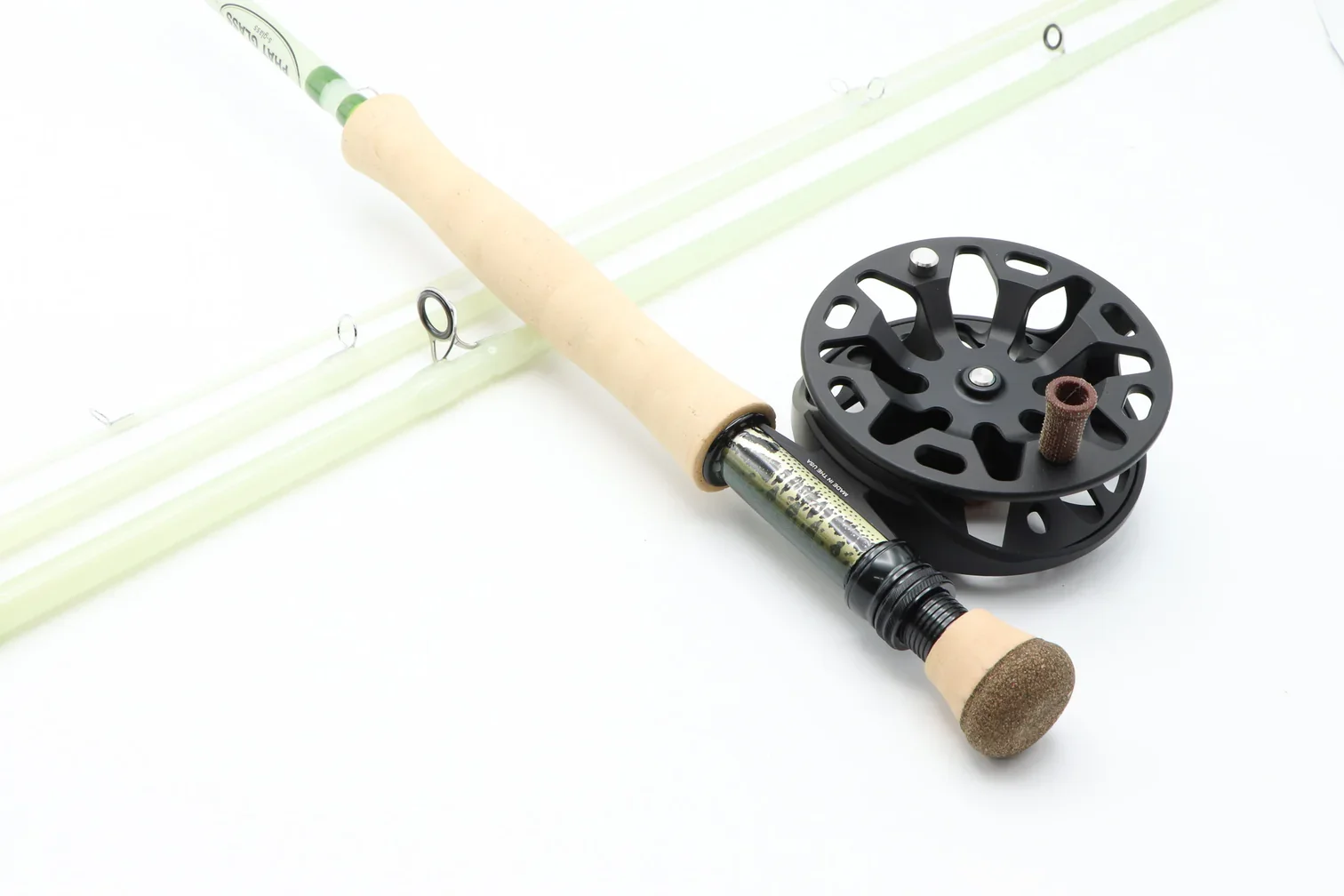
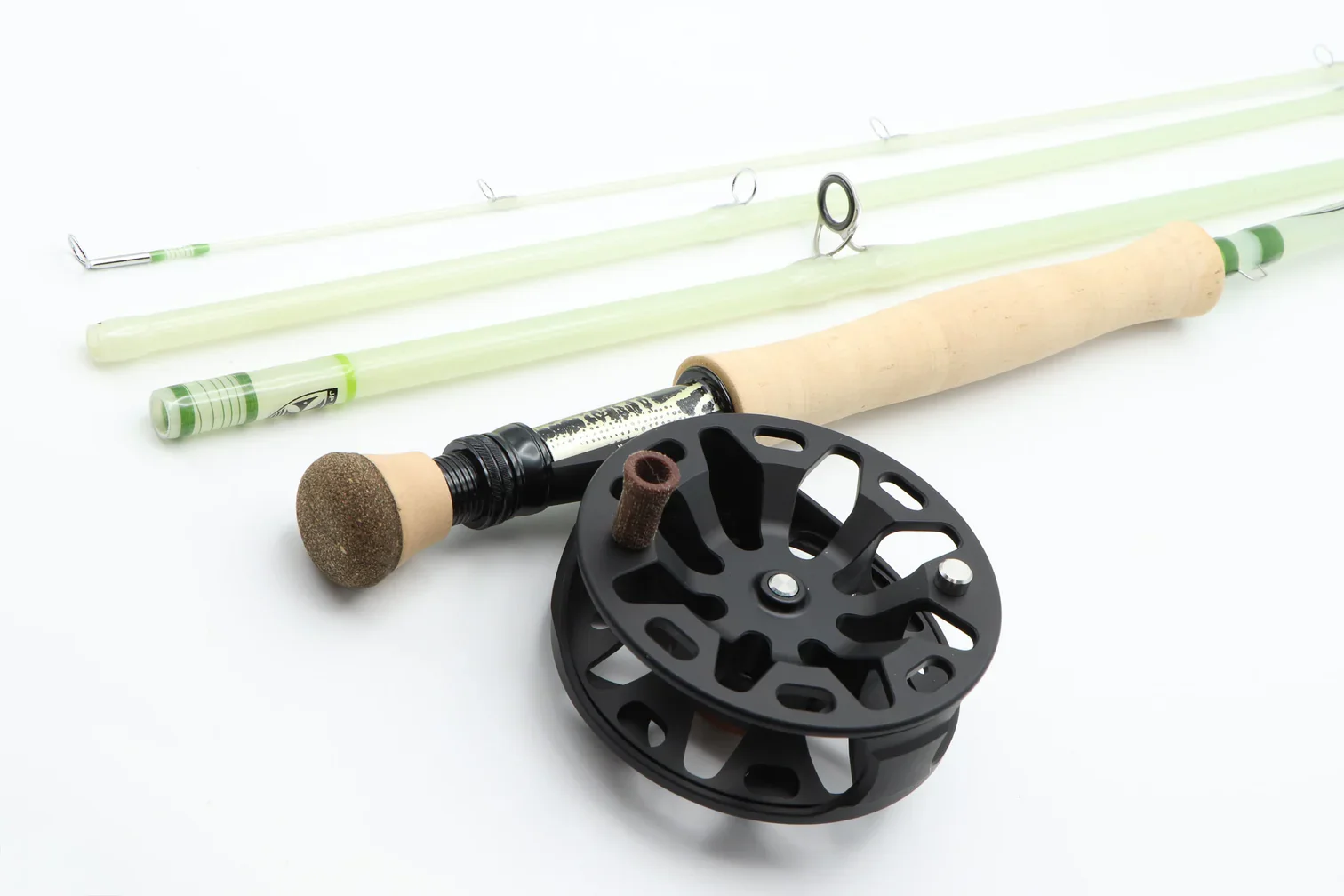
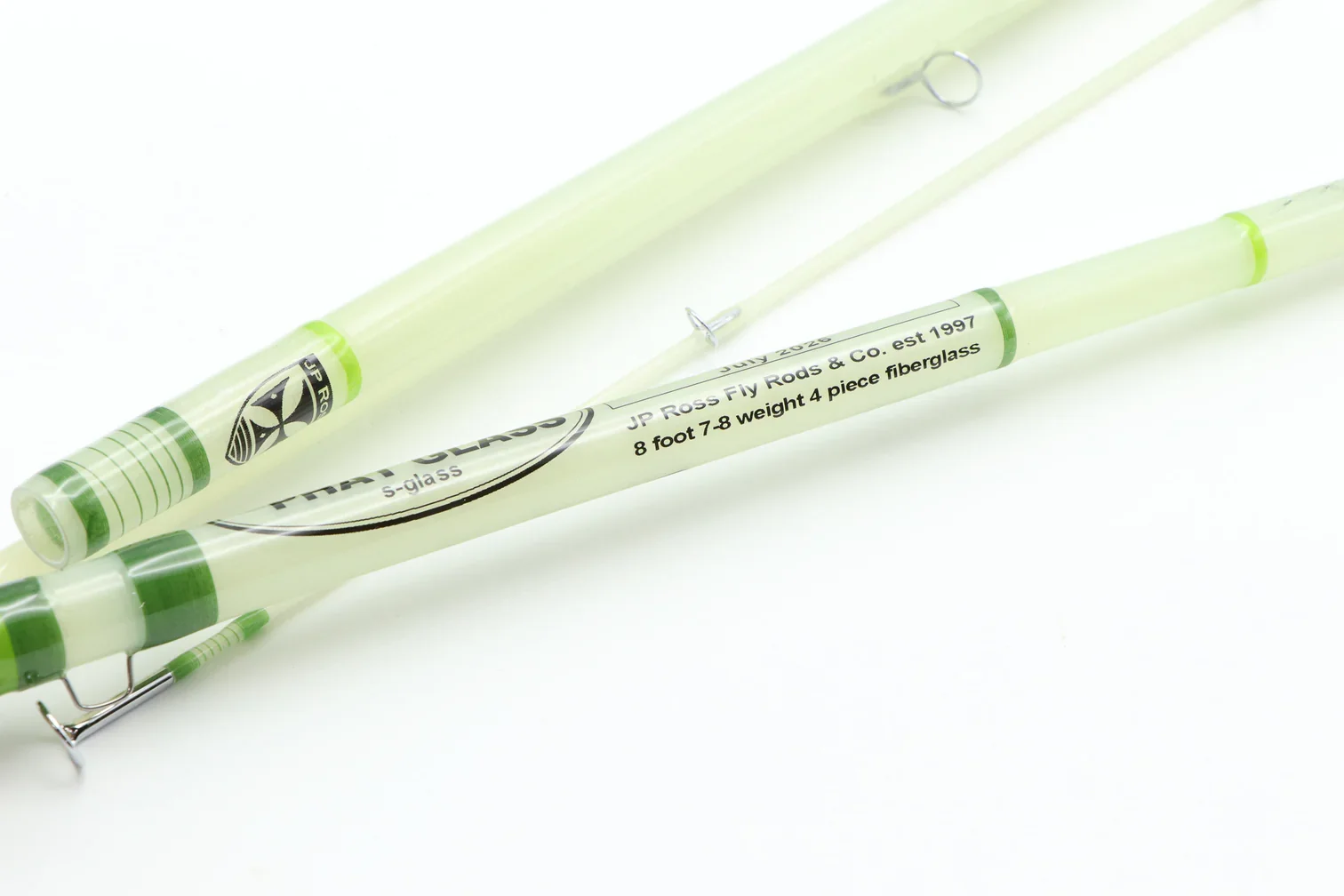
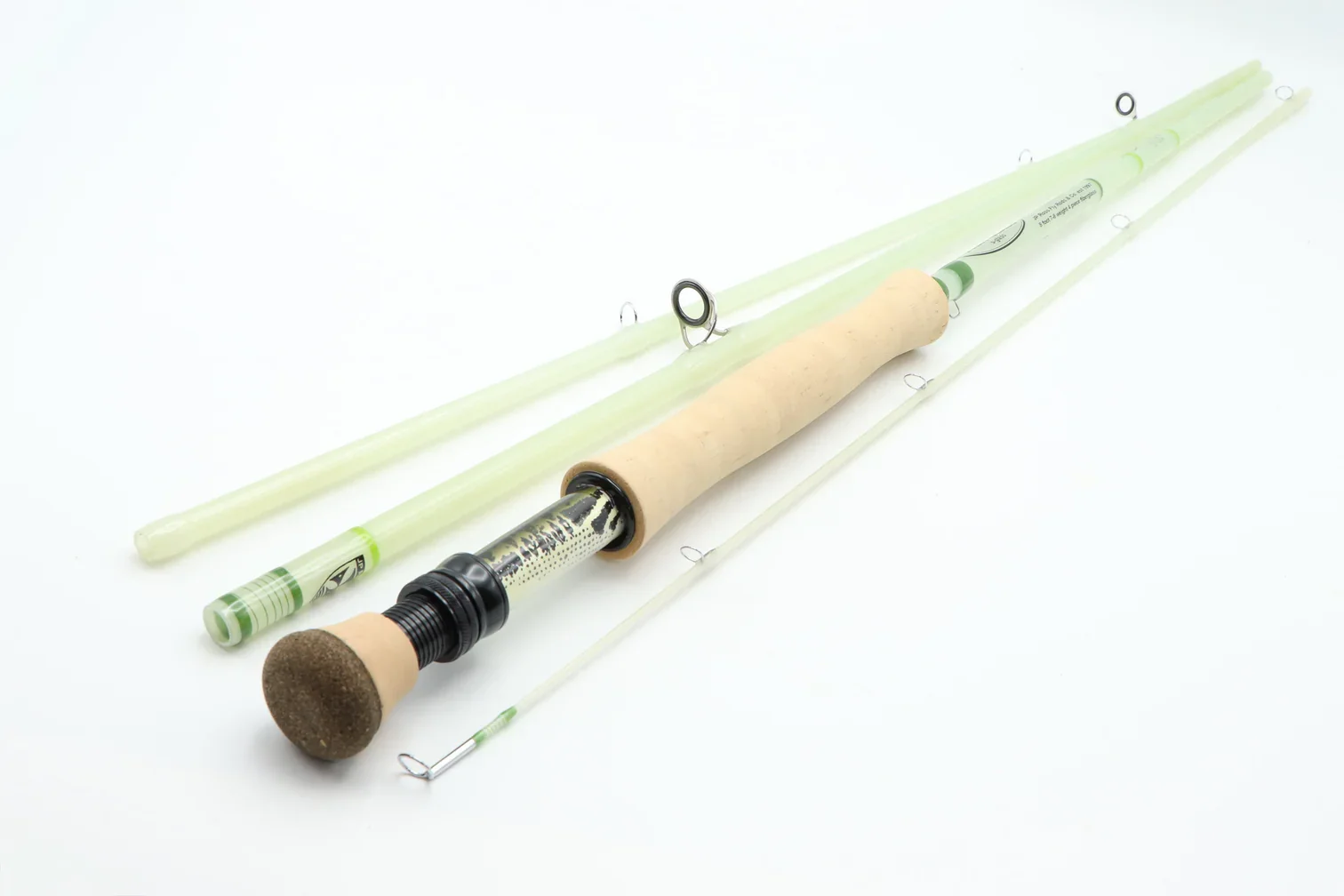
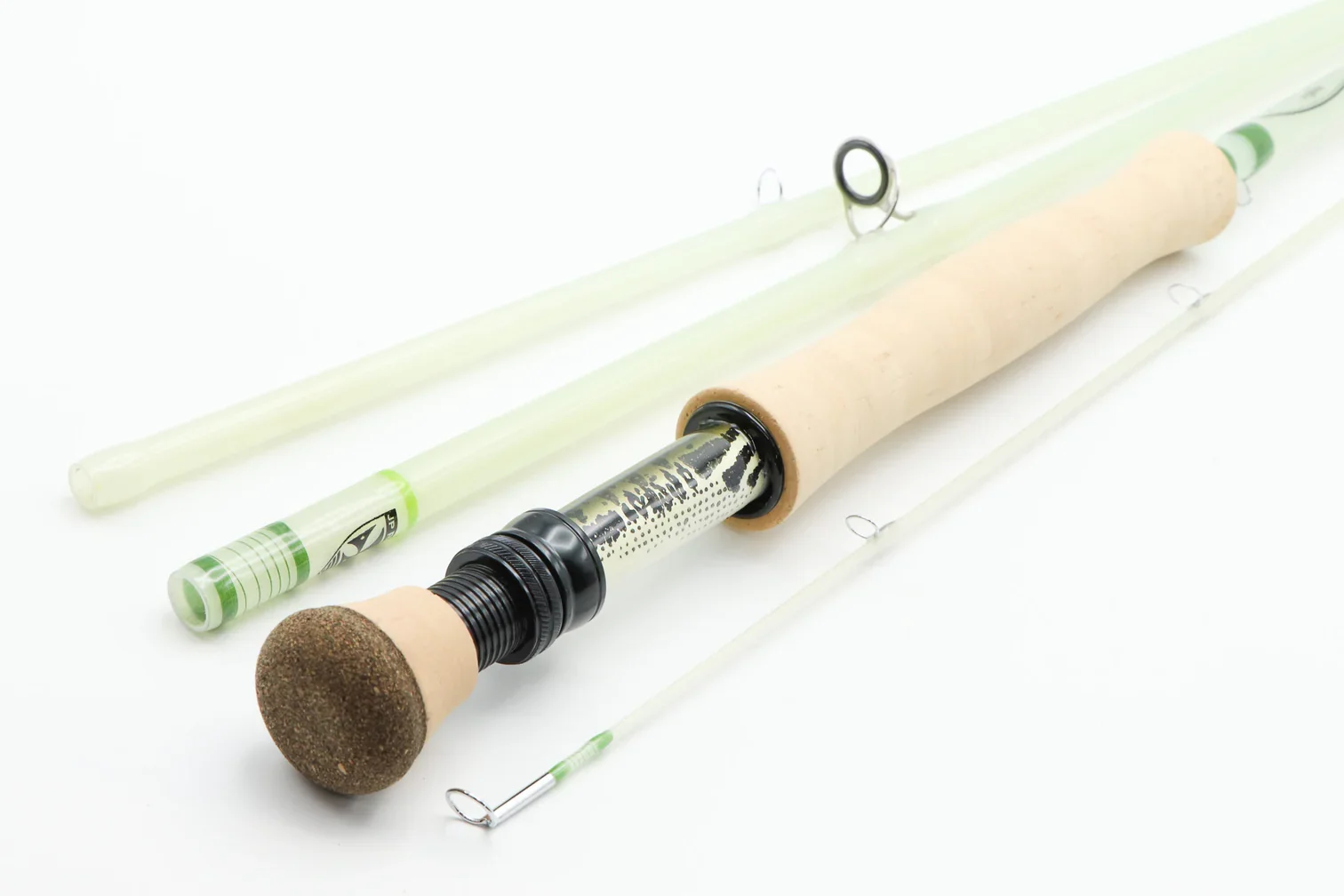
The new Phat Glass is an 8-foot 7/8-weight rod designed for these larger fish. The Phat Glass is constructed of S-Glass, a lighter, stronger form of fiberglass. This rod has a fast action, which allows you to cast large, bulky flies for bass and other predators and gives you the power to steer big fish away from cover.

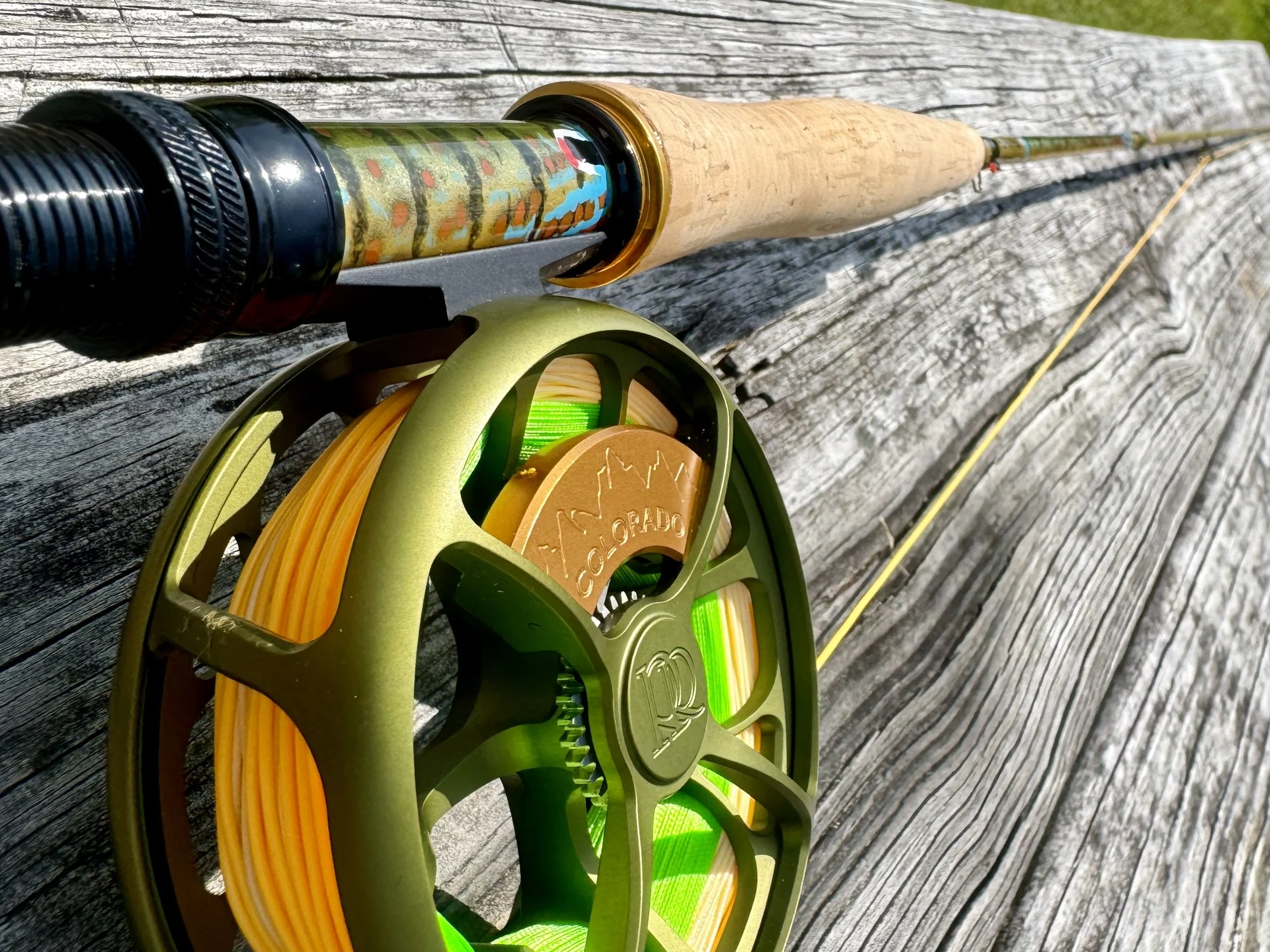
The Phat Glass is a 7/8 weight fly rod perfect for bass and other large predators. (prototype Phat Glass with a smallmouth themed reel seat shown here)

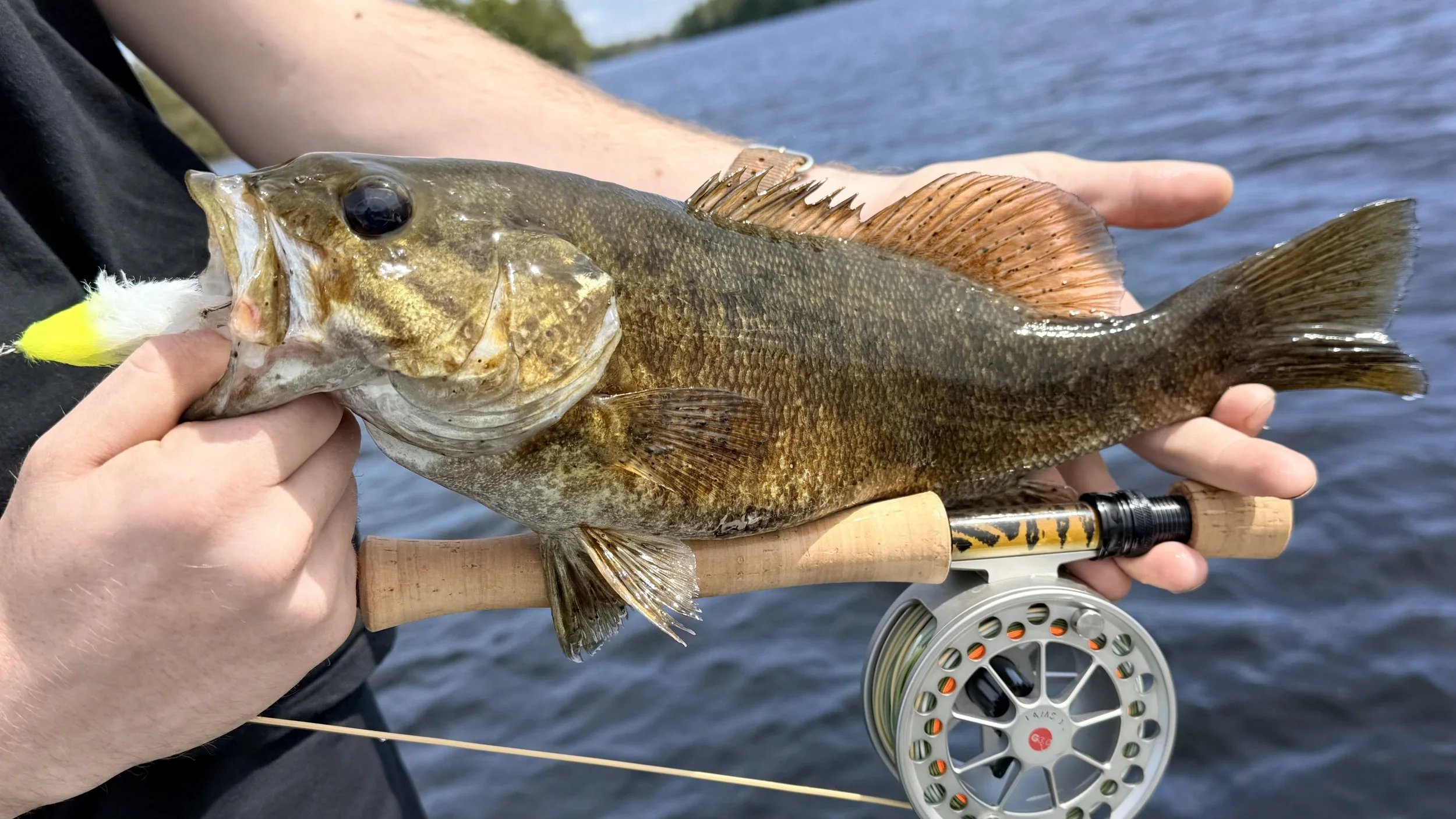
I extensively field-tested a prototype of this fly rod on a bass fishing trip to Maine this May. During this trip, the rod was fished by half a dozen different anglers with different levels of experience. Several different species of predatory fish were targeted (largemouth bass, smallmouth bass, and big chain pickerel) with a wide variety of flies. We fished a number of different line weights (7-9 weights) and tapers (weight forward, double taper, bass and bass bug tapers), and while each angler had their preference in lines, the rod handled them all. In the end, I was immensely pleased with the performance of this fly rod!

A good largemouth taken on a game changer and the new Phat Glass from JP Ross Fly Rod Company during the filed testing of the prototype..

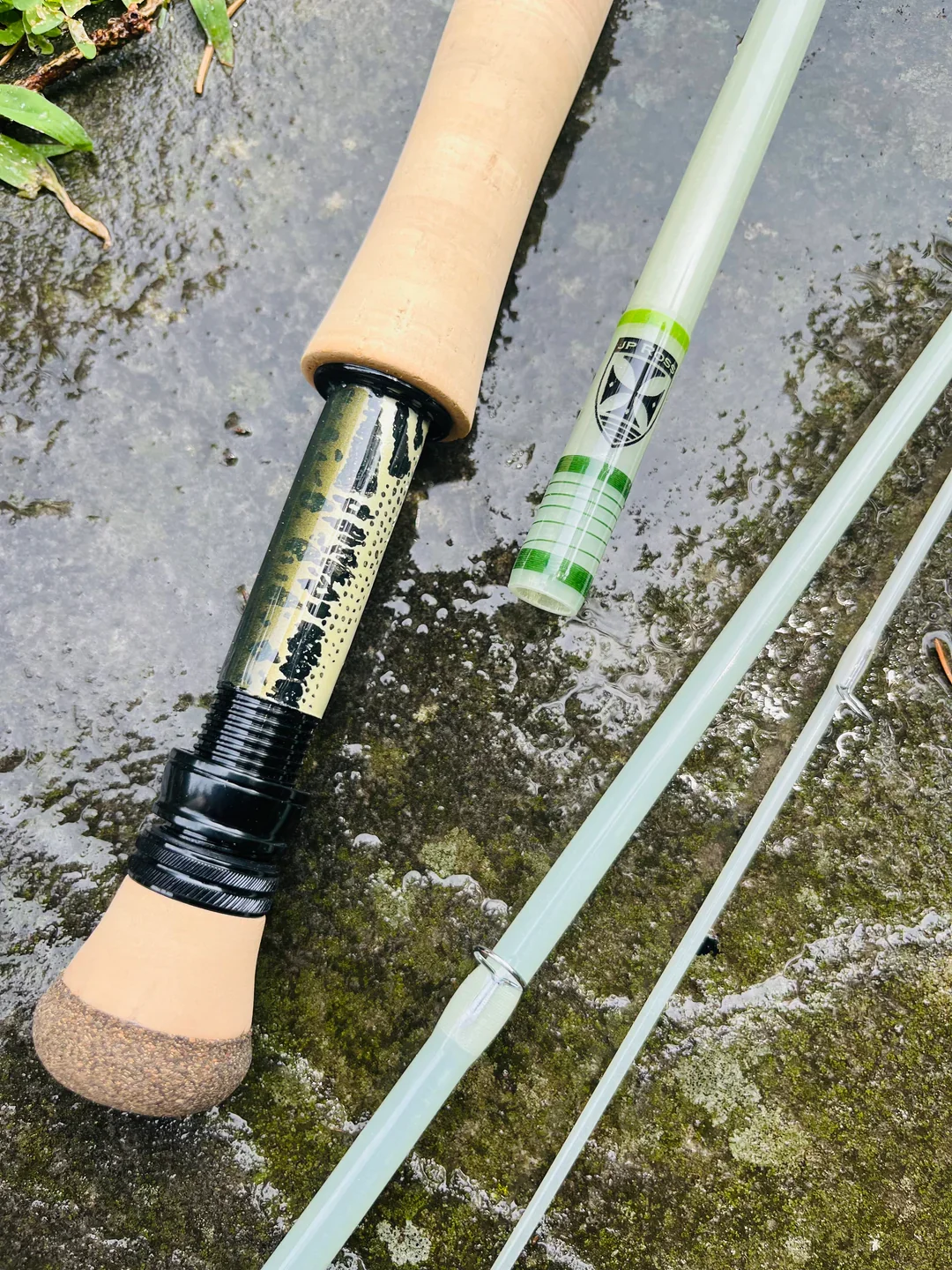
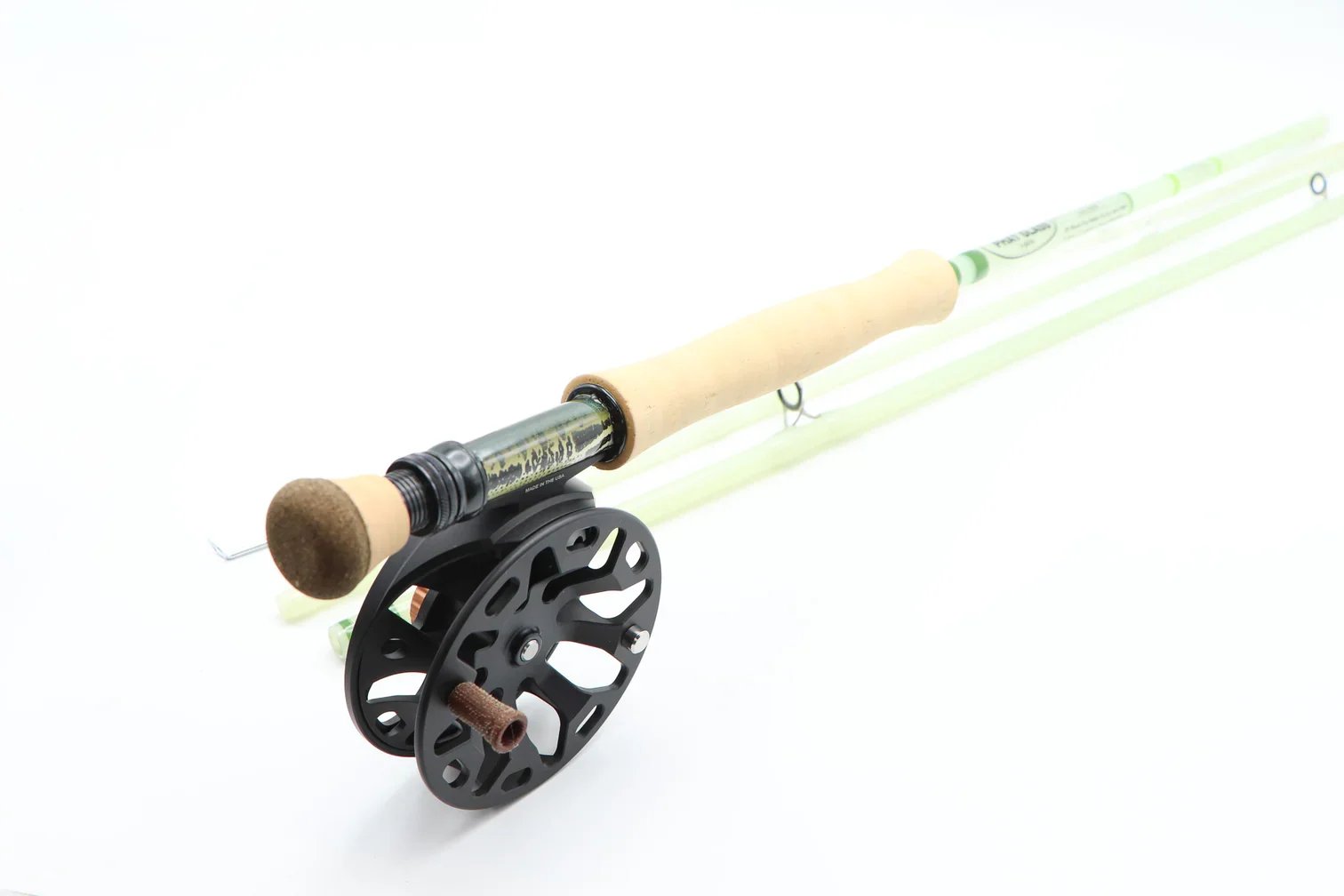
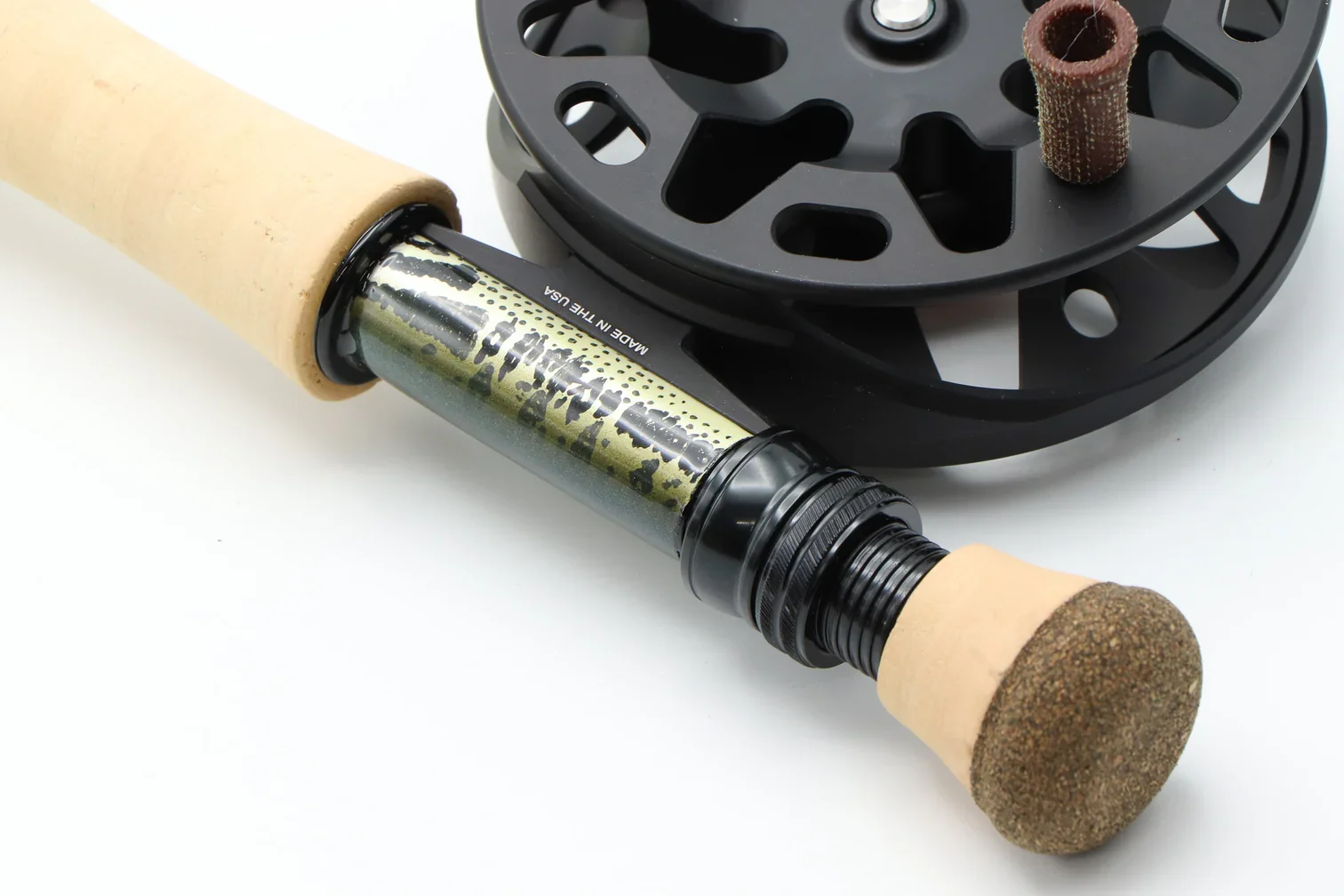
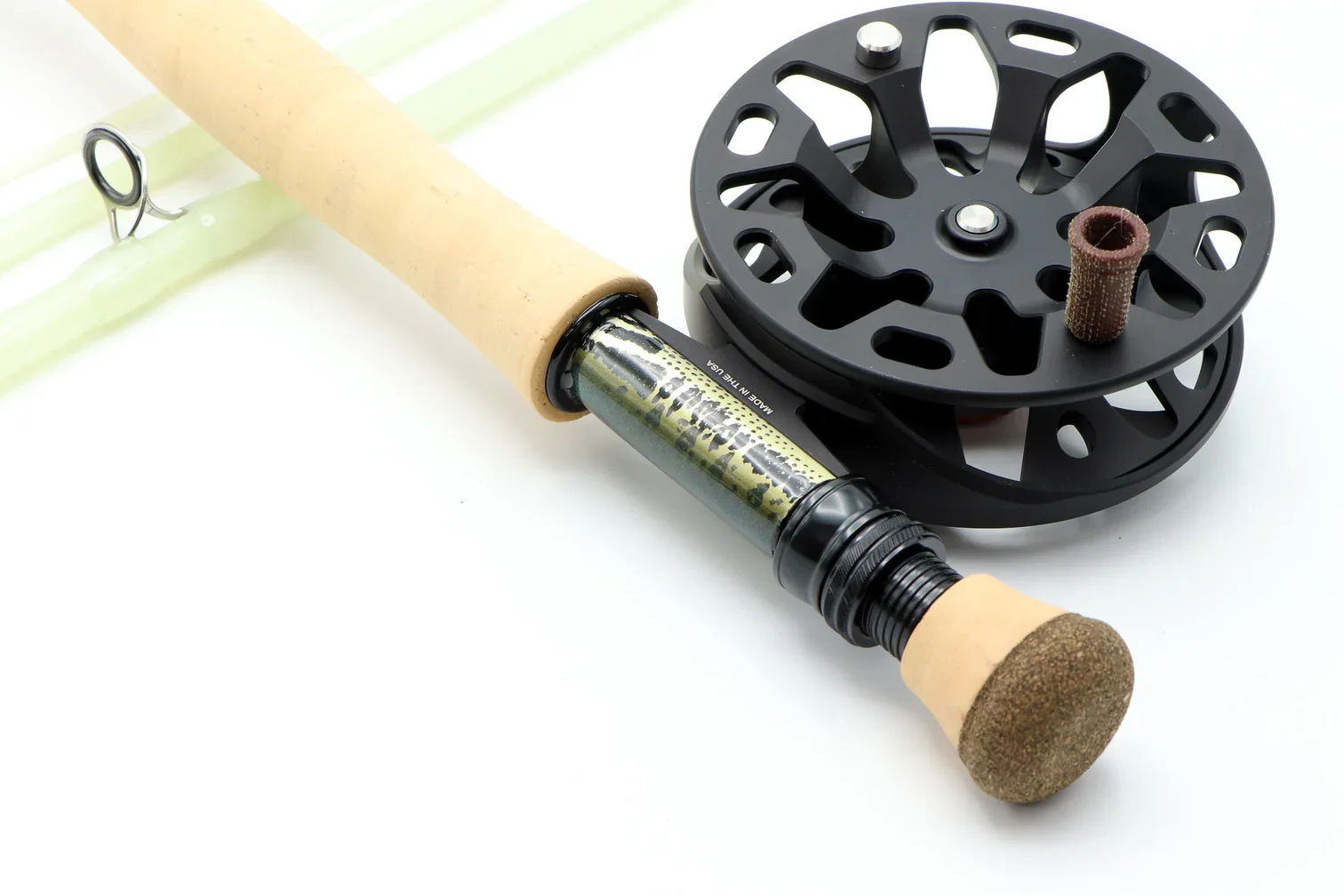
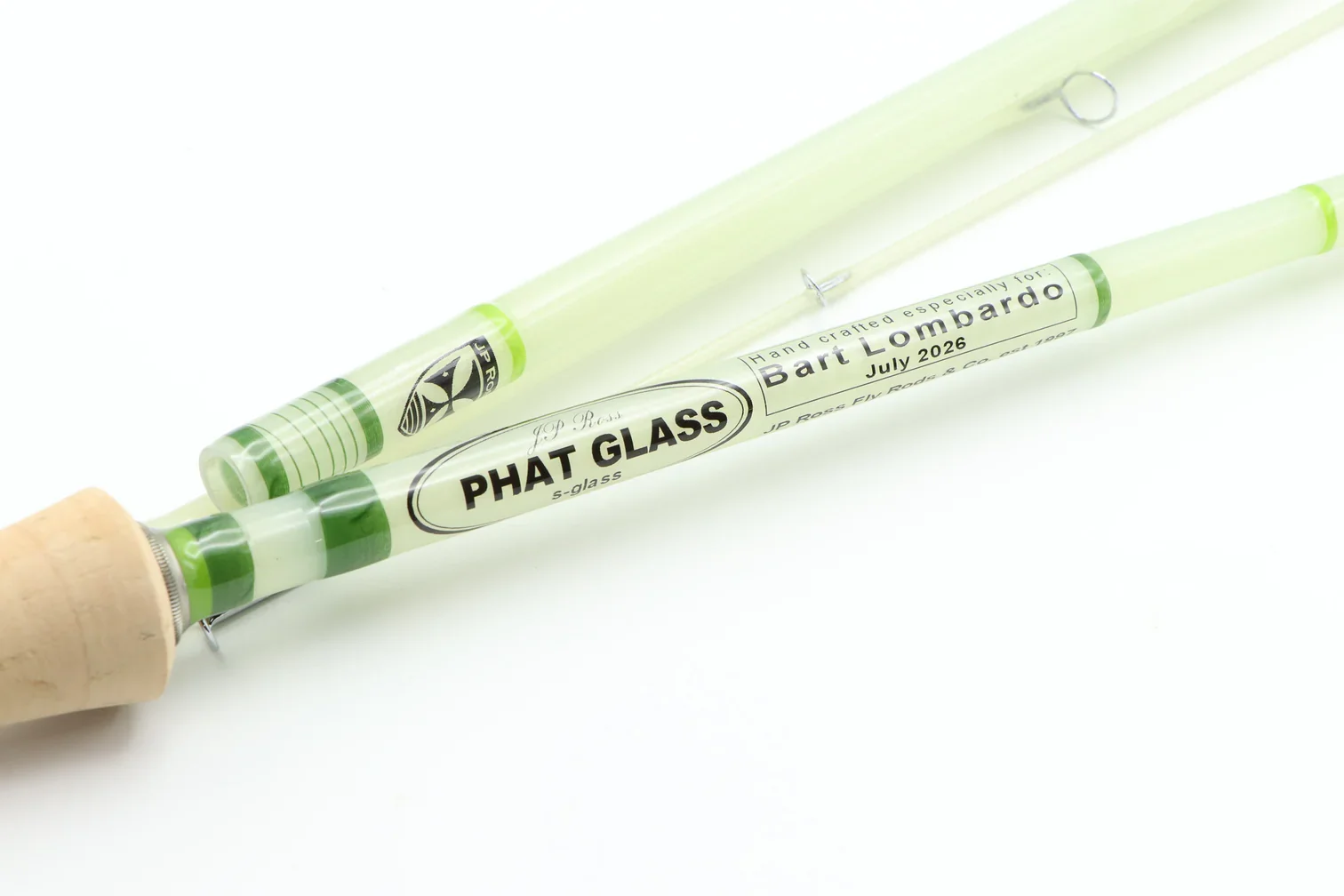
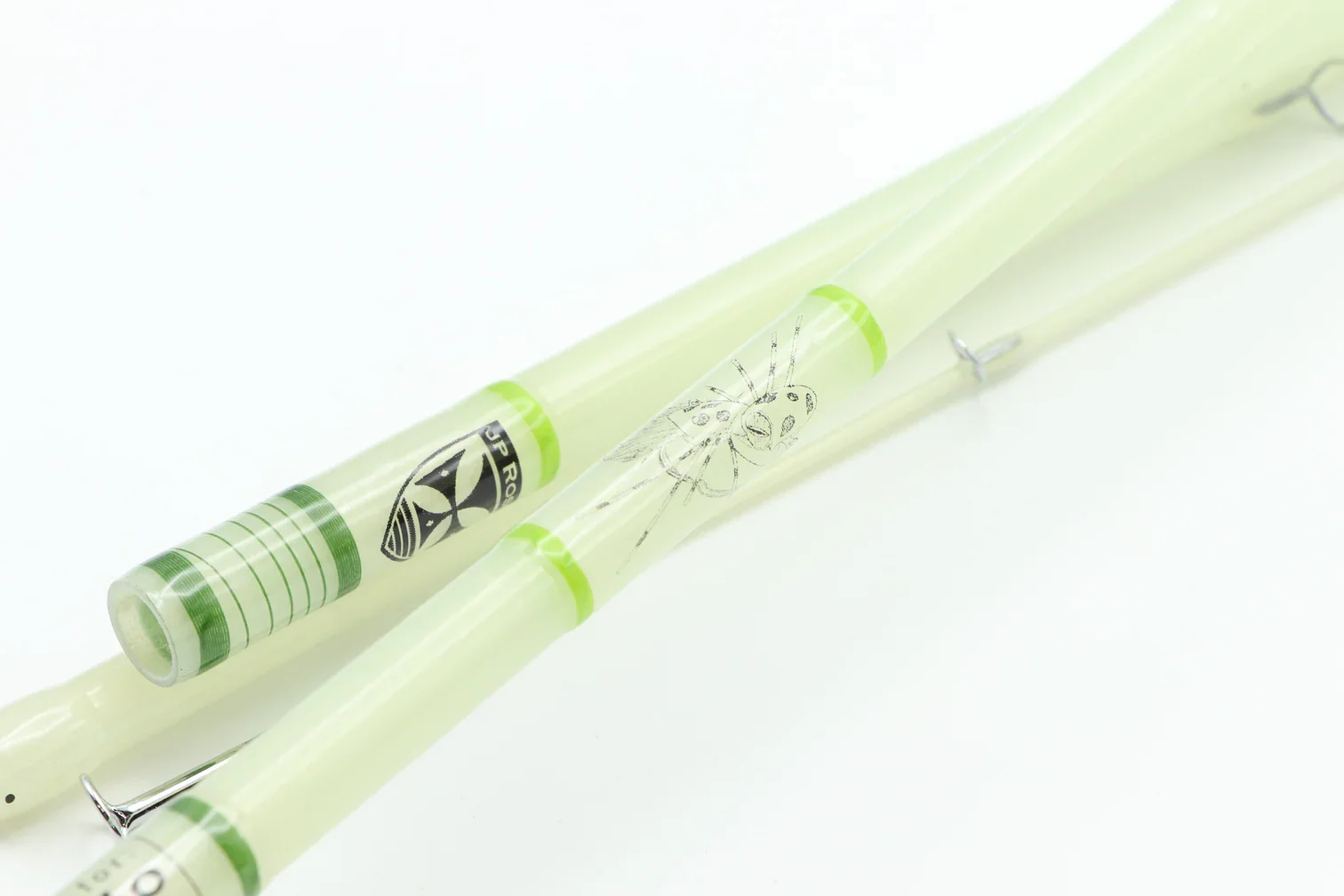
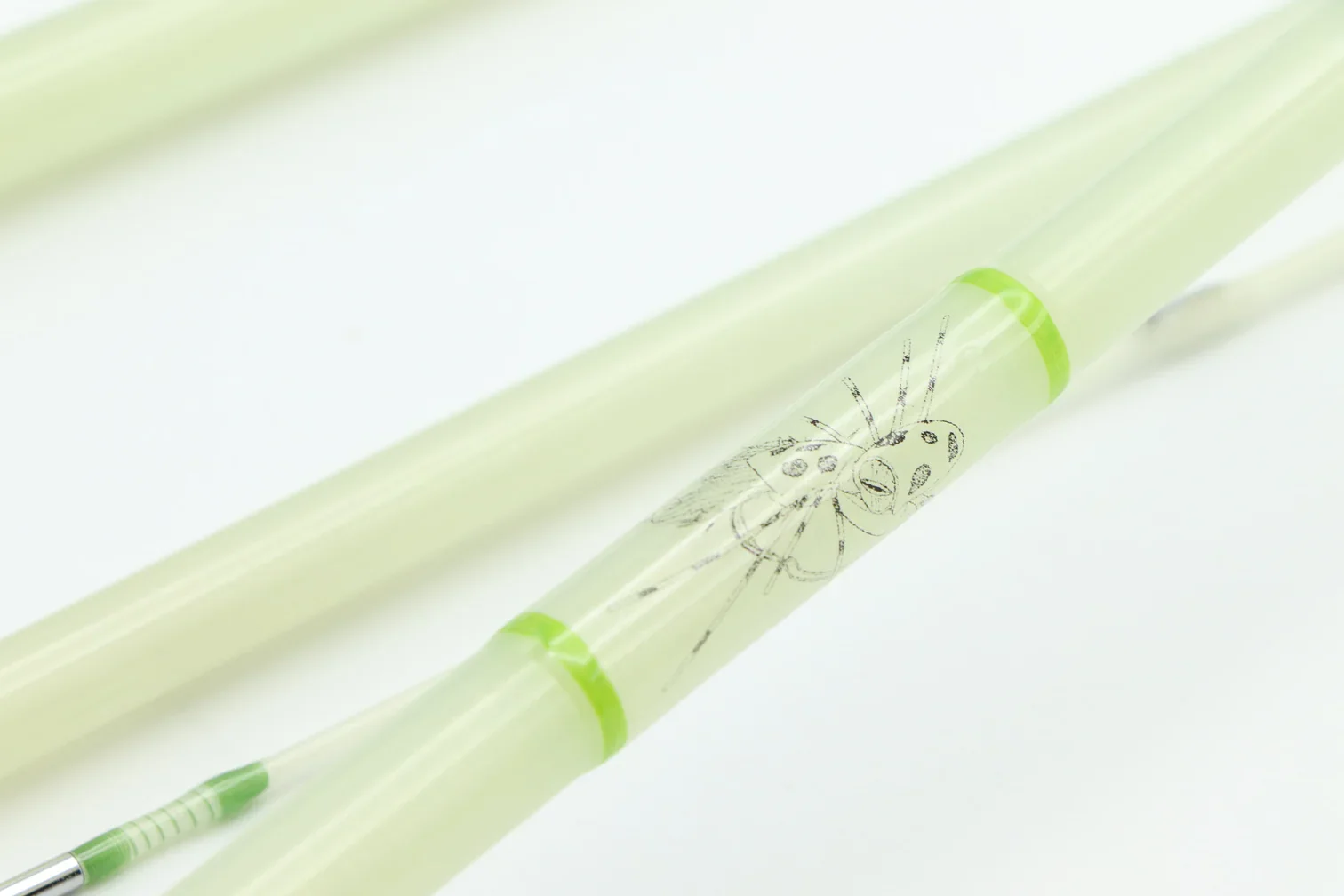
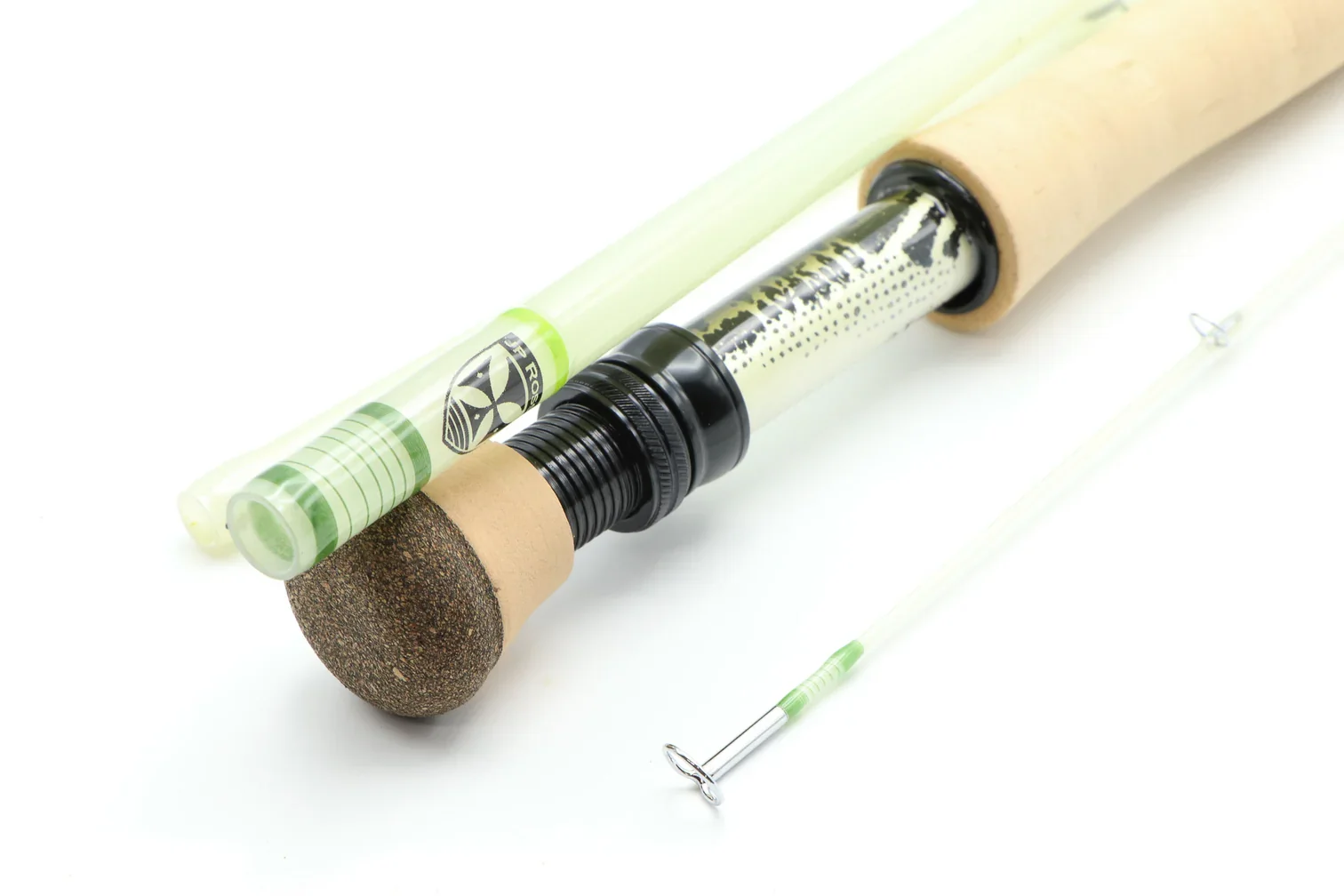
The Panfish On The Fly special edition of the Phat Glass is a largemouth bass-themed fly rod. It features a hand-painted reel seat by the artist Jeff Kimball, and the rod blank features a sketch of a frog pattern of my own design, the Bog Frog. I love the idea that purchasing this fly rod not only supports a long-time custom rod builder but also a local artist as well.

The handprinted largemouth bass-themed reel seat by artist Jeff Kimball (JP Ross photo)

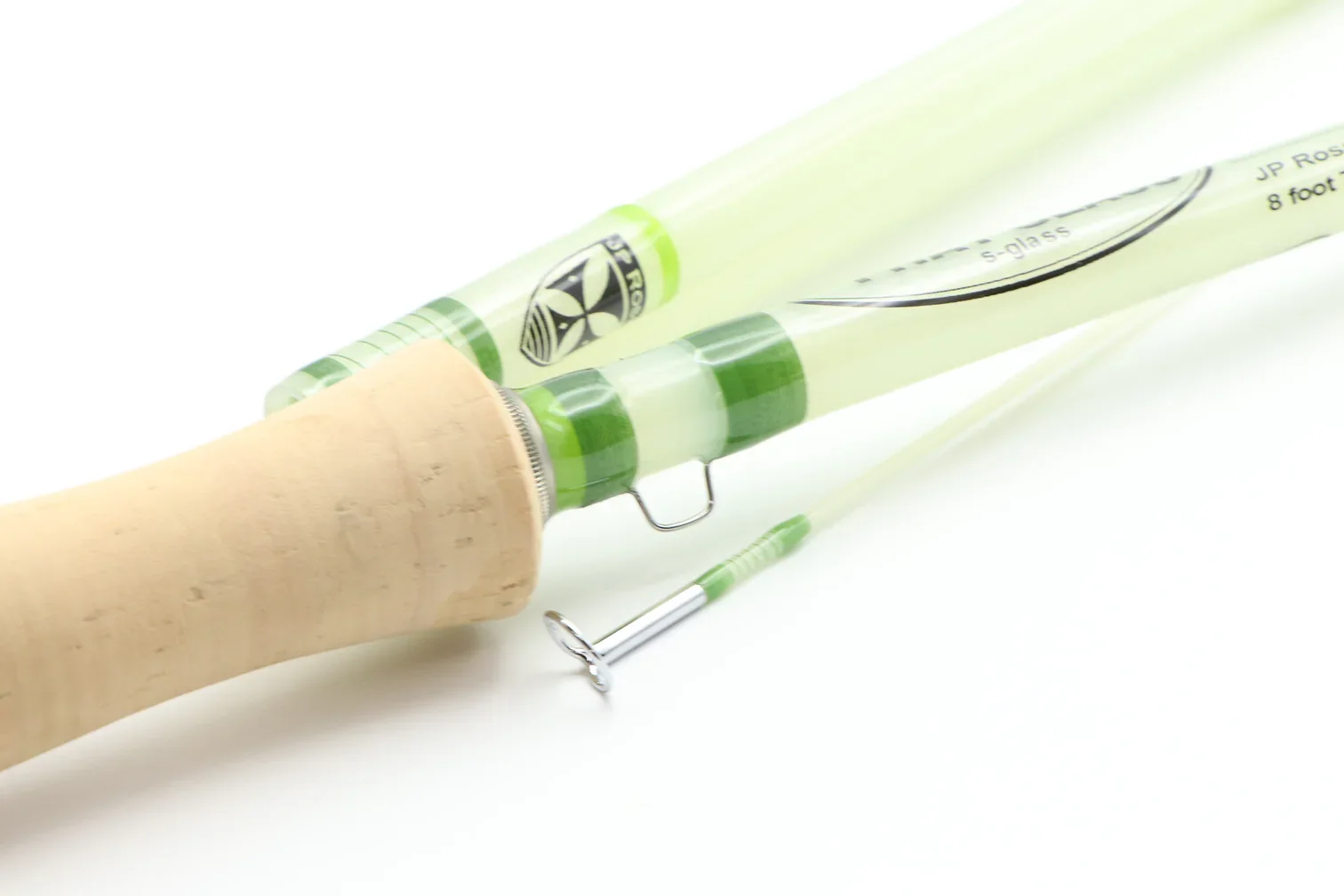
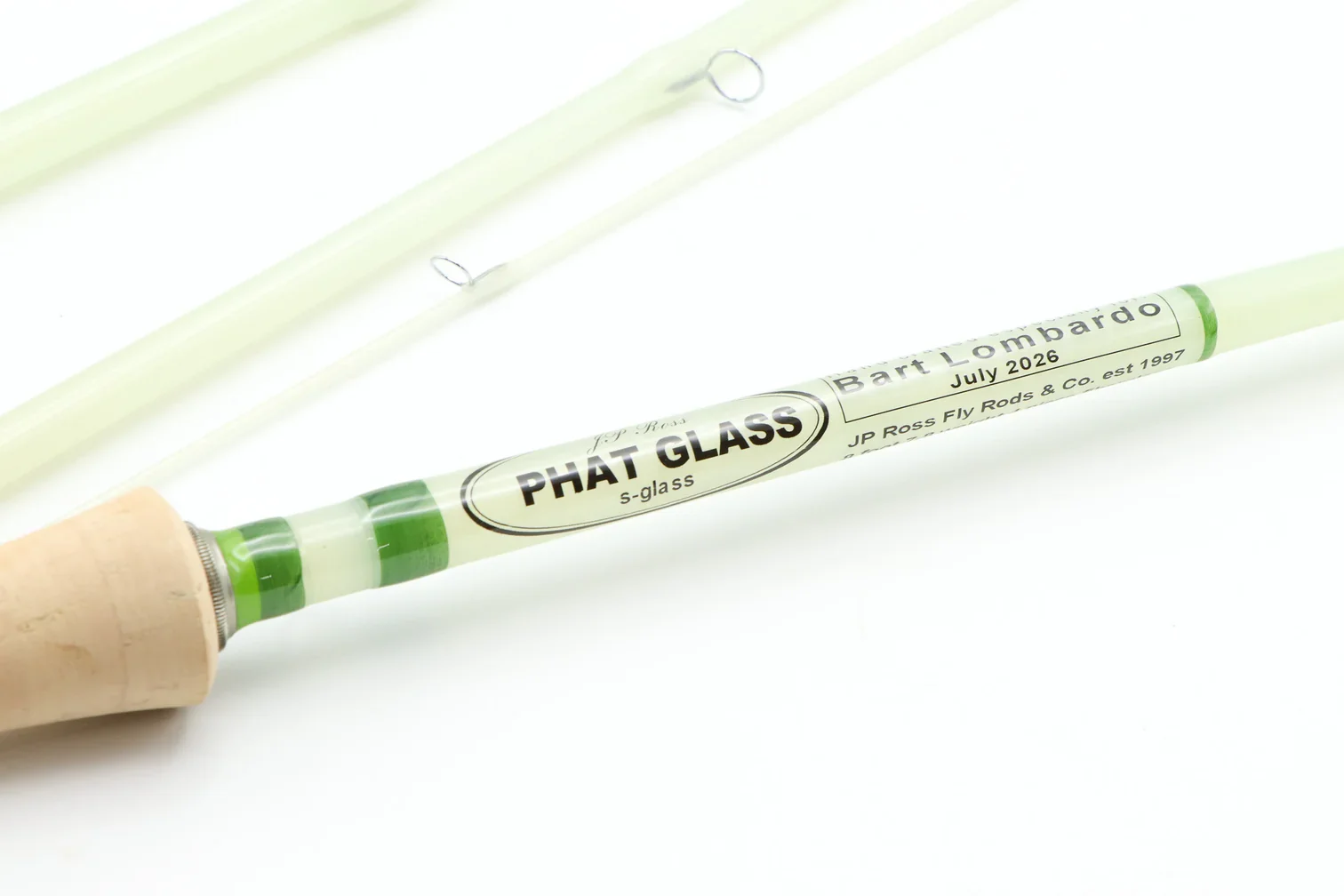
The white blank features spiral lime green thread wraps on the butt section, and a retro-style logo harkens back to the days when fiberglass fly rods like the Shakespeare Wonder Rod dominated the market. But make no mistake: Modern S-glass rods are nothing like the old Wonder Rod your grandfather used. They are lighter, have plenty of power, are more responsive, recover faster, and are a joy to cast.

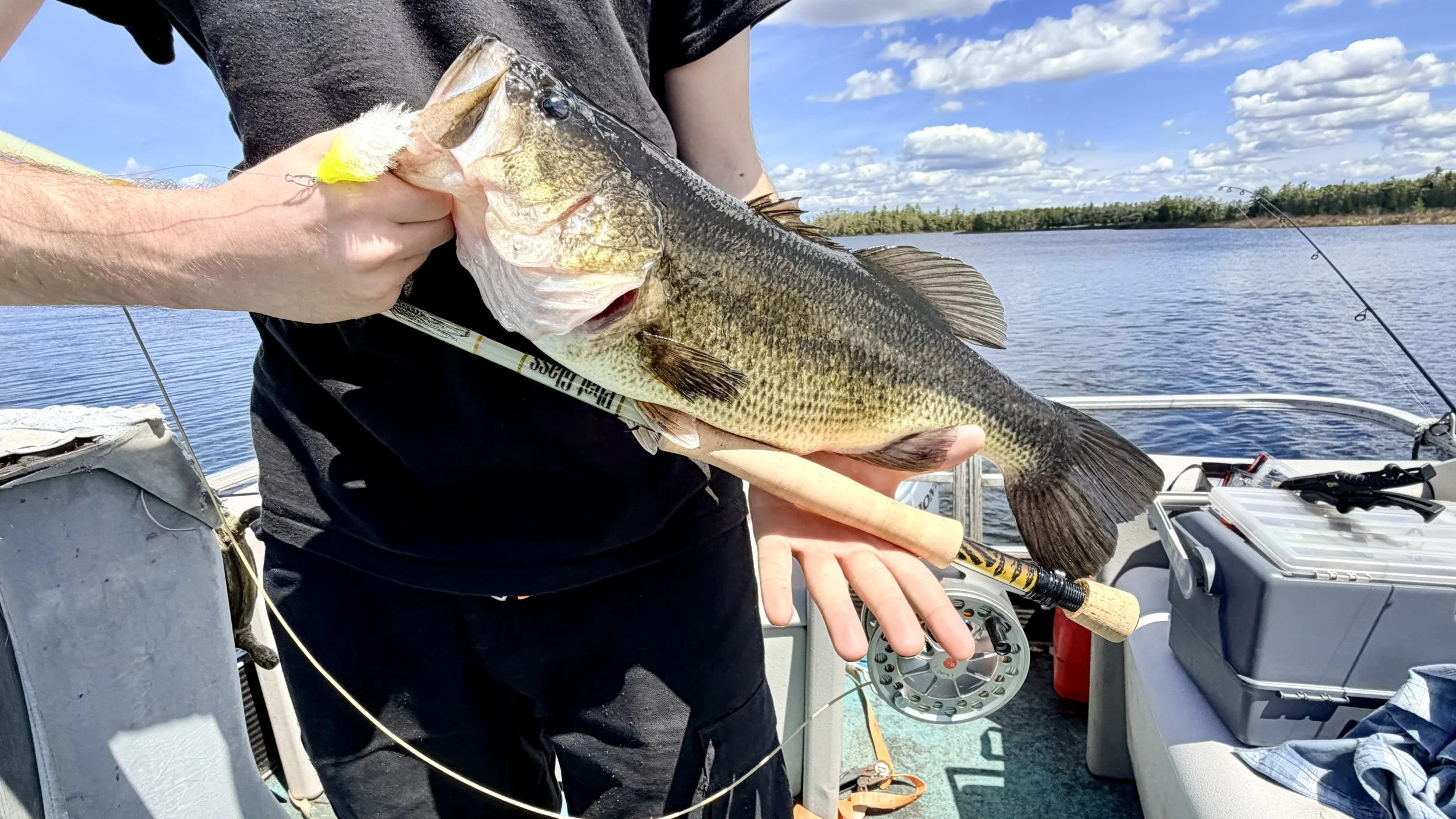
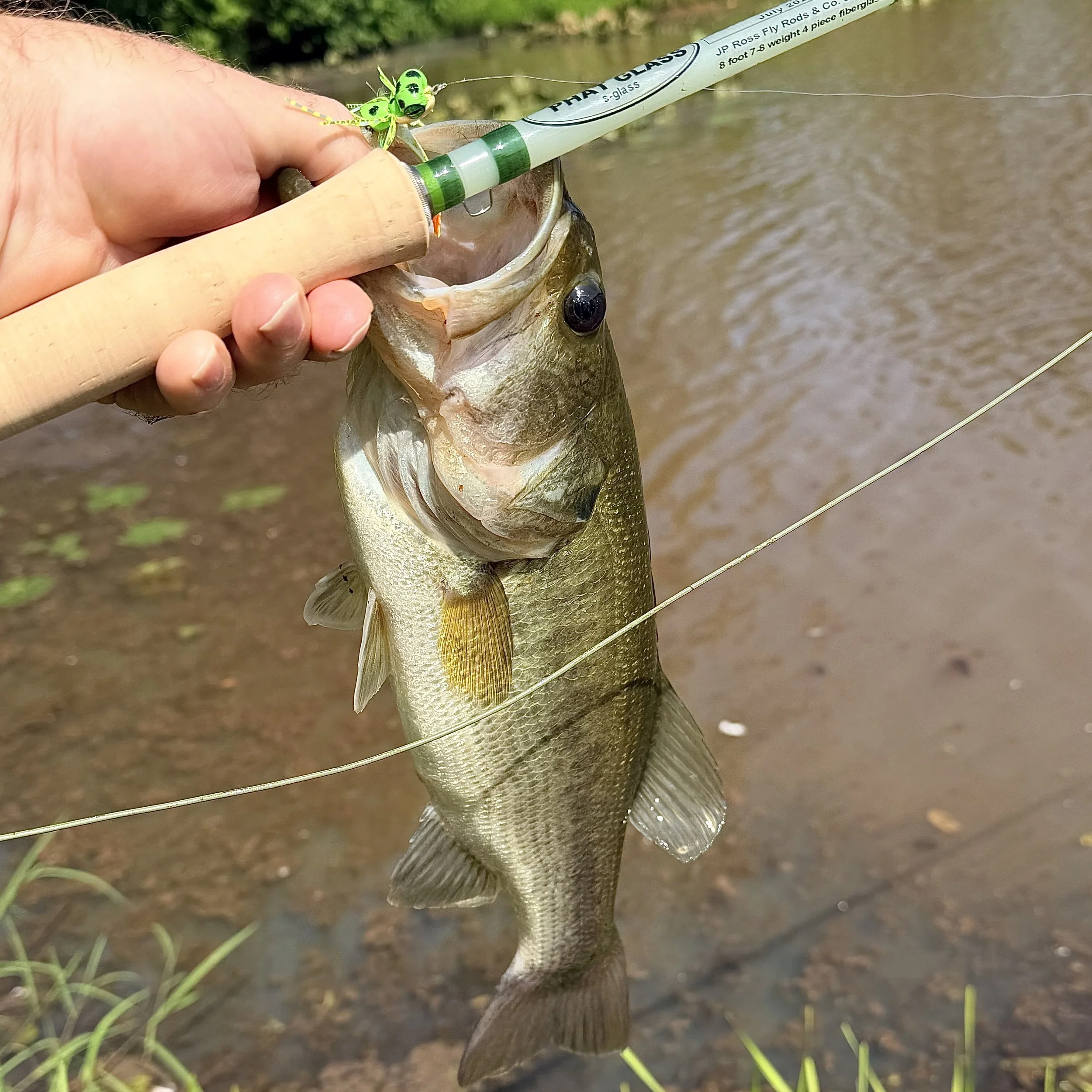
This bass was caught on the fly, pictured on the rod blank. It was caught on the very first cast I made with the final production version of the fly rod! I am taking that as a sign of good things to come.

Below are some photos (provided by Jordan) showing details of the new JP Ross/Panfish On The Fly Phat Glass.

IMG_0154.WEBP
IMG_0152.WEBP
IMG_0151.WEBP
IMG_0150.WEBP
IMG_0149.WEBP
IMG_0148.WEBP
IMG_0147.WEBP
IMG_0146.WEBP
IMG_0145.WEBP
IMG_0144.WEBP
IMG_0142.WEBP
IMG_0140.WEBP
IMG_0153.WEBP
IMG_0143.WEBP

If you would like to learn more about this fly rod or purchase one for yourself, you can check out the Phat Glass on JP Ross Fly Rod Company’s website by clicking the button below.

Check out the Phat Glass

If you would like to contact me directly to ask questions or discuss details about the fly rod, the button below will connect you with me.

Ask bart a question about the phat glass
In Fly Fishing, Product Review, Bass Fishing Tags Phat Glass, Bass fishing, JP Ross
Comment

The Dog Days Of Summer

August 14, 2025 Panfish On The Fly

The Dog Days Of Summer

Bluegills and other panfish are easy pickings on their spawning beds in the spring. That is how they get their reputation as being pushovers. Fly selection is not critical, and poor presentations will often still yield results. However, springtime doesn't last forever, and catching a trophy panfish can be challenging when the spawning season ends. While trophy-sized bluegills often let down their guard when focused on keeping their bloodline going, they did not get that big by accident. Outside of the spawning season, big bluegills can be a challenging quarry to chase with a fly rod.

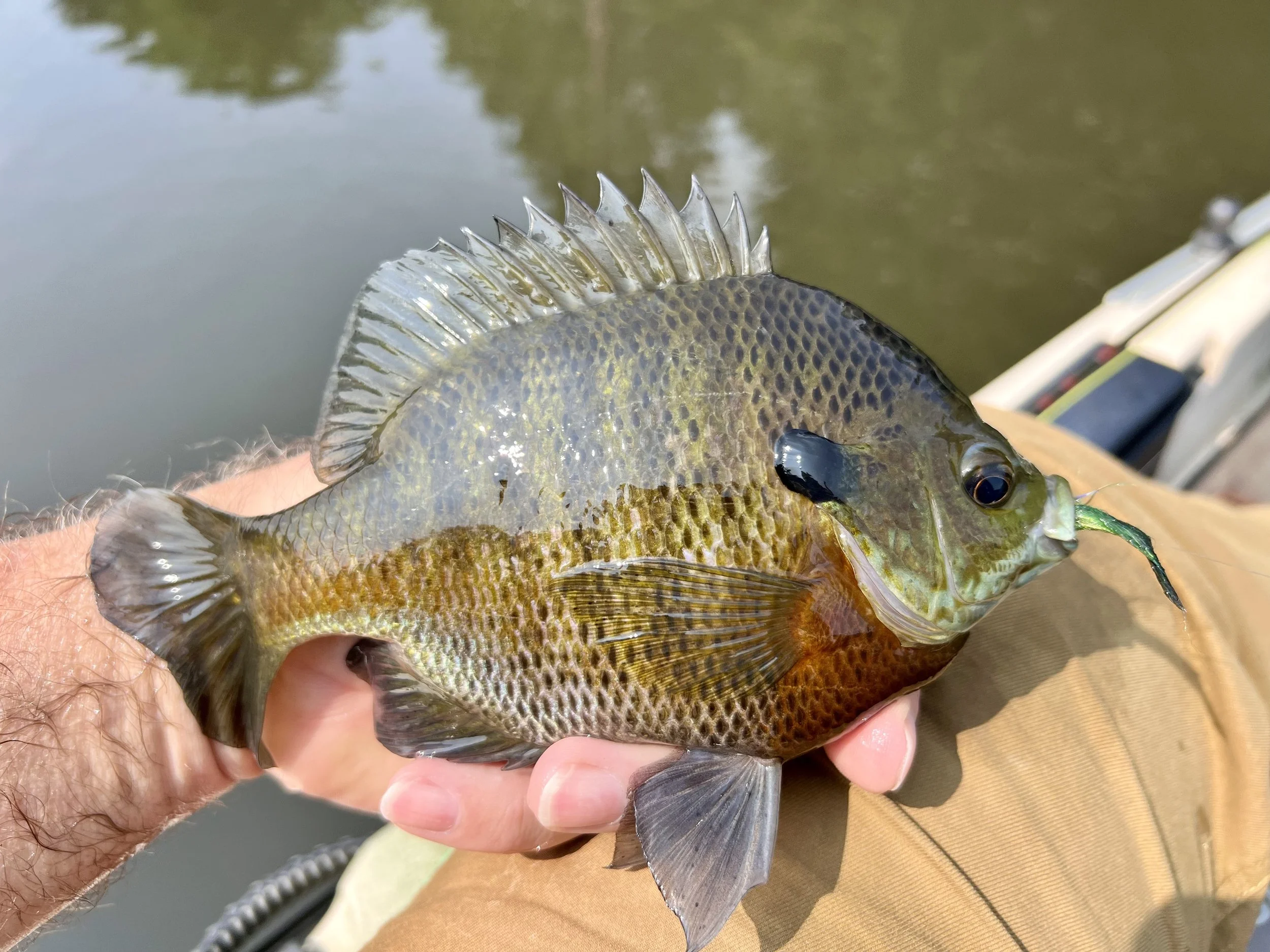
A bluegill this size will put a smile on your face and a serious bend in your fly rod!

Few anglers don't smile ear to ear when fighting big bluegill on a light fly rod. These scrappy fighters know how to use their saucer-shaped bodies to full advantage and never seem to give up. So if you want to keep that three or four-weight fly rod bent to the cork this summer, here is how to do it.

A nice bluegill, caught by fishing a nymph in deep water

To Catch The You Have To Find Them - Go Deep

As the water warms and the shallows become choked with weeds, larger bluegills seek deeper water as the season progresses. They find relief from the blazing sun, stable water conditions with cooler water, and abundant food in deeper water. The largest panfish spend most of their time in deeper water, only entering the shallows to spawn. These fish can be found on the outside edges of weed beds, transition areas (changes in bottom composition), and deep water structures such as creek beds, drop-offs, sunken timber, rock piles, and artificial fish reefs.

Using weighted flies or intermediate /sinking fly lines will help you reach fish holding in deeper water. Try subsurface patterns like small streamers, wet flies, and nymphs. I prefer short, level leaders and unweighted flies when using sinking lines. Short leaders and unweighted flies keep the fly at the same depth as the fly line and can improve strike detection.

Fly line manufacturers don't typically make sinking fly lines for three and four-weight rods. Fishing with sinking fly lines is one of those times I will break out that five-weight for panfish fishing. You can find sink tip, intermediate, and full sinking lines for a five-weight, and big panfish will still put a respectable bend in these stouter rods.

A floating dragon fly nymph, like the one pictured here, fished on a sinking line can be deadly.

Targeting fish in deep water with a fly rod is one of fly fishing's more difficult challenges. Getting your fly down to the fish and detecting the light hit of a bluegill inhaling your fly is no easy task. Here are a few tips for fishing deep water:

  • Maintain a direct connection between you and the fly. Keep as much slack out of your line as possible - Keep your rod tip low to (or just under) the water's surface while retrieving the fly. By doing this, you will eliminate any excess slack line and be able to detect strikes better.

  • Watch your leader/line like a hawk. Often, you can detect the take of a fish by watching your line where it enters the water. Look for anything unusual and set the hook when you see something. You will be surprised how often you end up hooking a fish despite never feeling a thing. Practice this, and after a while, you will develop a "sixth sense" for visually detecting the take of a fish

  • Practice casting sinking lines. Sink tips, intermediate, and full sinking fly lines are cast differently from your standard weight-forward or double-taper fly line. Familiarize yourself with the differences in advance, so you are not flailing around on the water, trying to deliver your fly to the fish!

  • Alternatively, you can fish your subsurface patterns under an indicator. This common stream practice also works well in still water for presenting flies to fish holding in deeper water. Use a sliding indicator system to make casting easier when fishing deeper water. Balanced fly patterns are preferred when fishing under an indicator, as they offer a more natural profile

Leaving the bank behind will help you to access fish holding in deeper water.

Leave The Shoreline Behind

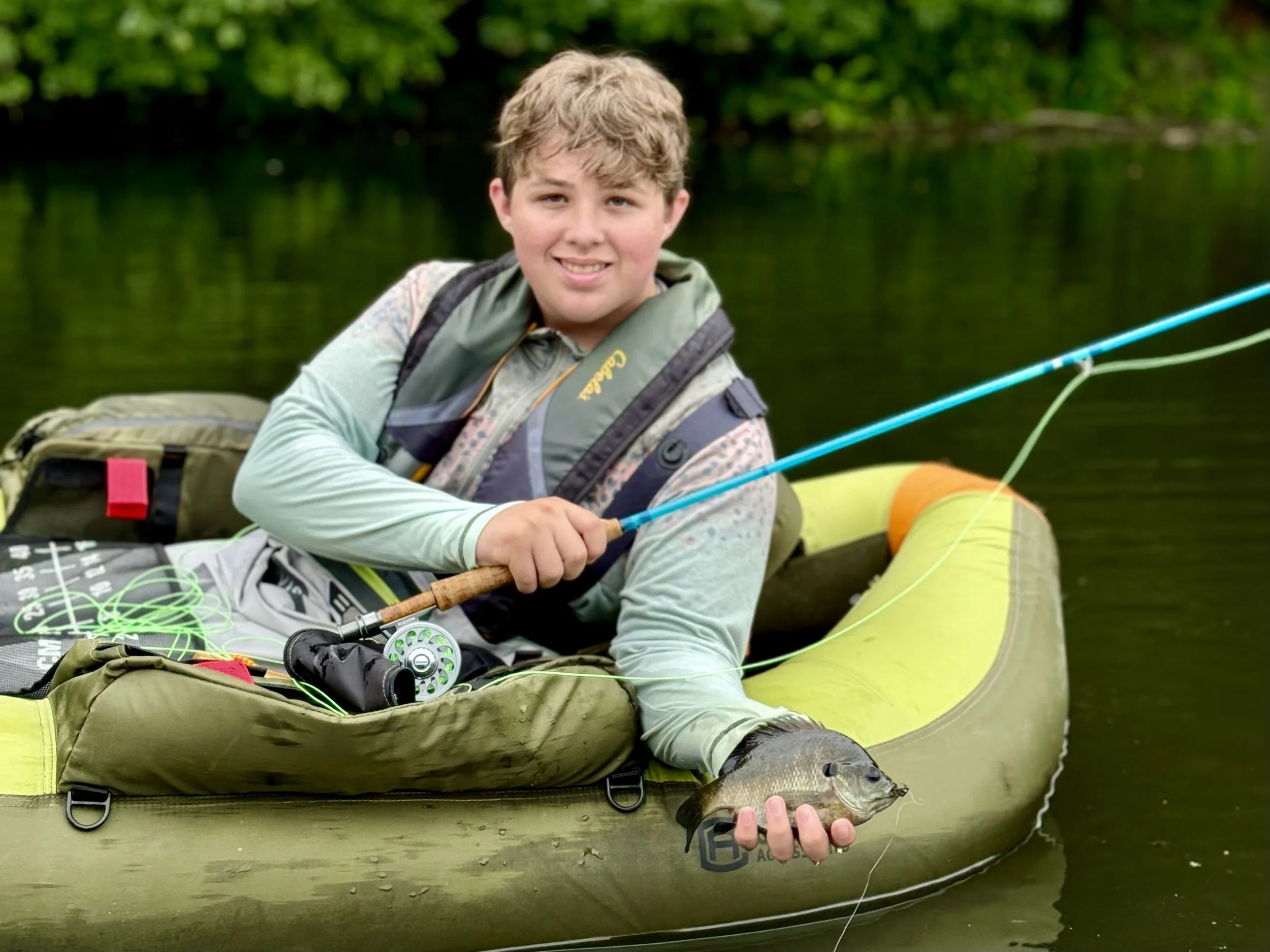
Unfortunately, we often must get off the bank to fish deep water effectively. Fishing from watercraft will give you better access to fish-holding water. It does not have to be fancy; a float tube, canoe, kayak, or johnboat will do the job.

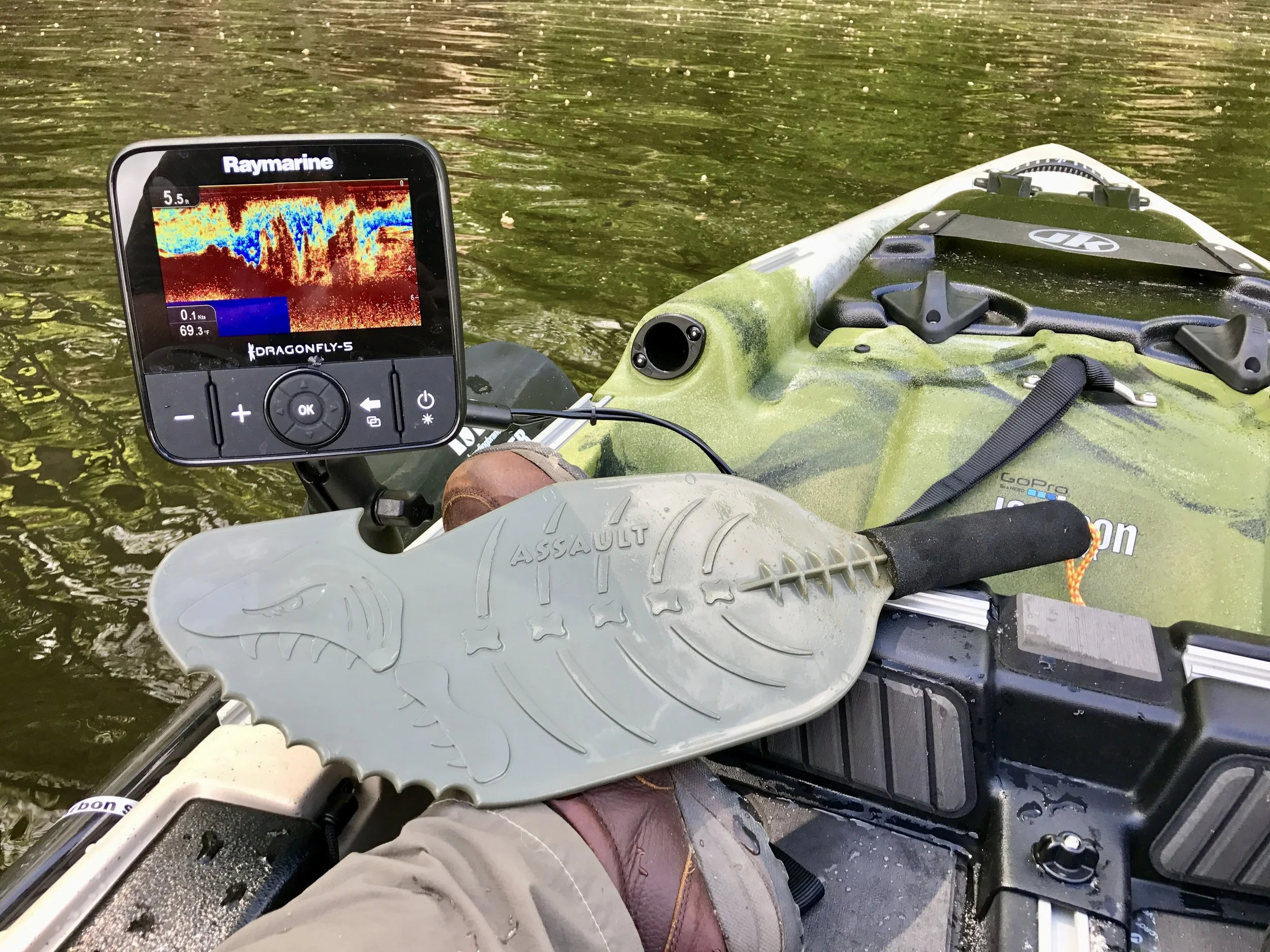
A fish finder is a great tool for locating both fish and structures as well as giving both water temperature and depth readings.

Better Fishing Through Technology

On more than one occasion, I have received snide remarks from other anglers when they observe the expensive fish finder mounted on my kayak, especially when fishing a tiny farm pond. The fish finder's primary use is to locate deepwater fish and structure. Electronics take the guesswork out of finding fish and structure in deeper water.

The squirrel tail wing and rubber legs help slow the sink rate of the Brim Killer.

Slow Your Sink Rate

In the natural world, the things that fish eat seldom plummet rapidly towards the bottom. A fly that slowly descends through the water column does a better job imitating a fish's natural food than one that sinks quickly. Often, a fish will take a slowly sinking fly while ignoring those that sink quickly. If your heavily weighted flies are not doing the trick, fish a lightly weighted pattern that falls gradually. Slow down your presentation and watch that line for takes while the fly is sinking.

Fishing at dawn or dusk is a great way to beat the summer heat.

Fish At The Right Time Of Day

It has been said that the best time to go fishing is any time you can. I have never caught a fish from my couch! During the dog days of summer, fish can be sluggish and reluctant to take a fly in the heat of the day. Concentrate your effects early and late in the day. Get on the water before dawn or fish during the last few hours of the day. The fish will be more active during these times of the day, and you may even get some surface activity if you want to give those poppers a workout. If you can't get up early or stay out late, try to fish on cloudy days. The fish will be more active if they can find some relief from the blazing summer sun.

This bass took a nymph suspended below a topwater foam bug fished near a submerged fallen tree.

Try A Popper-Dropper Combo

We all like to fish topwater patterns for the exciting takes. Unless you are fishing early or late in the day, using a topwater fly may not be the best course of action. However, you can present two options simultaneously by suspending a subsurface fly like a nymph, wet fly, or small streamer beneath a topwater bug. Suspending a fly beneath a surface pattern allows you to fish effectively over subsurface weed beds without fouling your flies in the vegetation on every cast. Strike detection is also easier since an "indicator" floats above your subsurface fly.

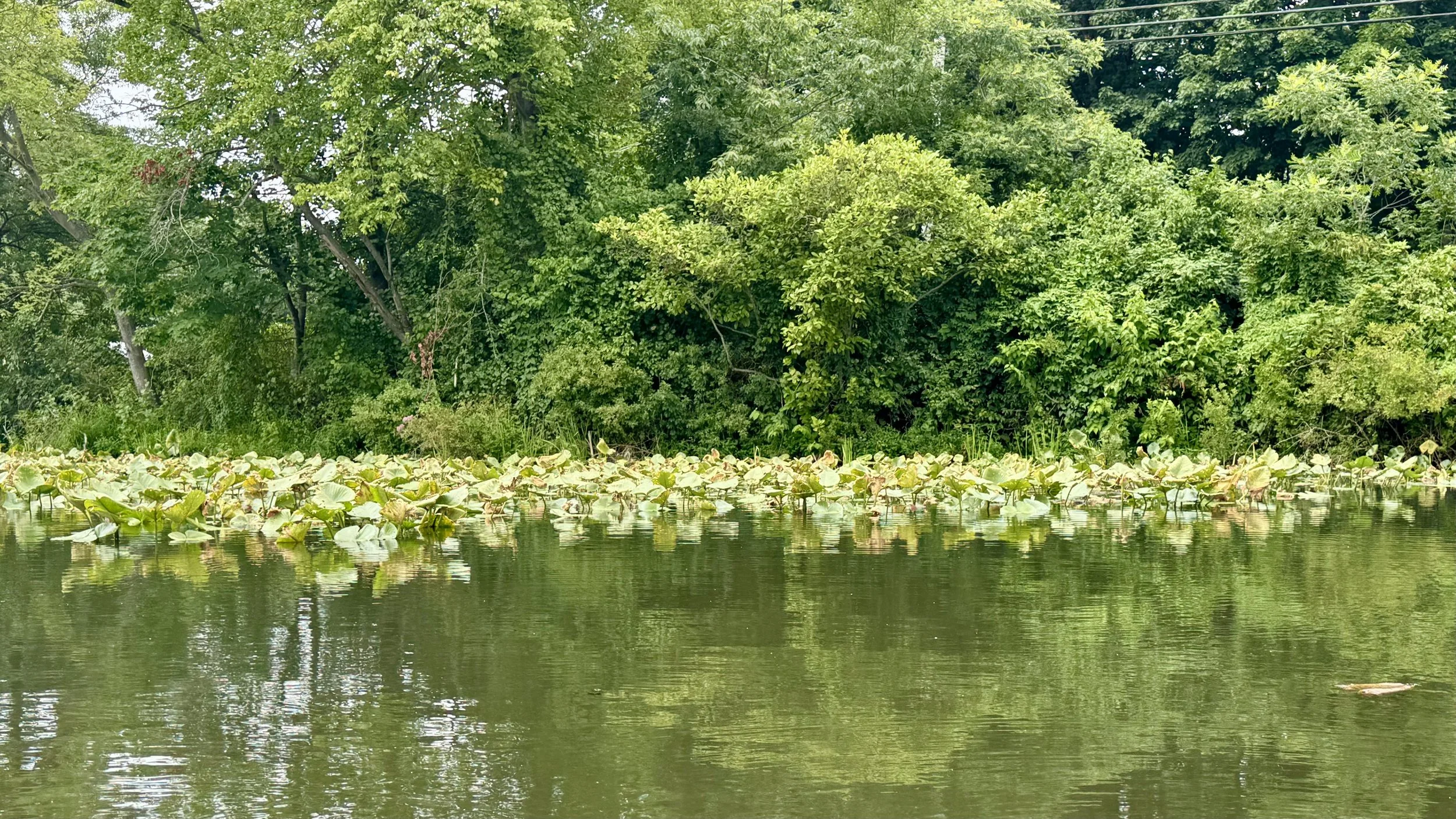
Water lillies provide both shade and food for many fish species, especially panfish and bass. Those edges are perfect for popper/dropper rigs or a floating dragonfly nymph fished on a sinking line.

Get Down In The Weeds

During the summer, aquatic weeds can grow right up to the water's surface, making fishing difficult. These weed beds, especially the edges, are prime big bluegill habitat. Fish these areas with nymphs, wets, and small streamers. Try popper/dropper combos or fish under an indicator to present your flies just above the vegetation. A favorite fishing method for these edges is casting a floating dragonfly nymph on a long leader with a sinking line. The floating fly swimming just above the weeds or lake bottom is irresistible to big panfish.

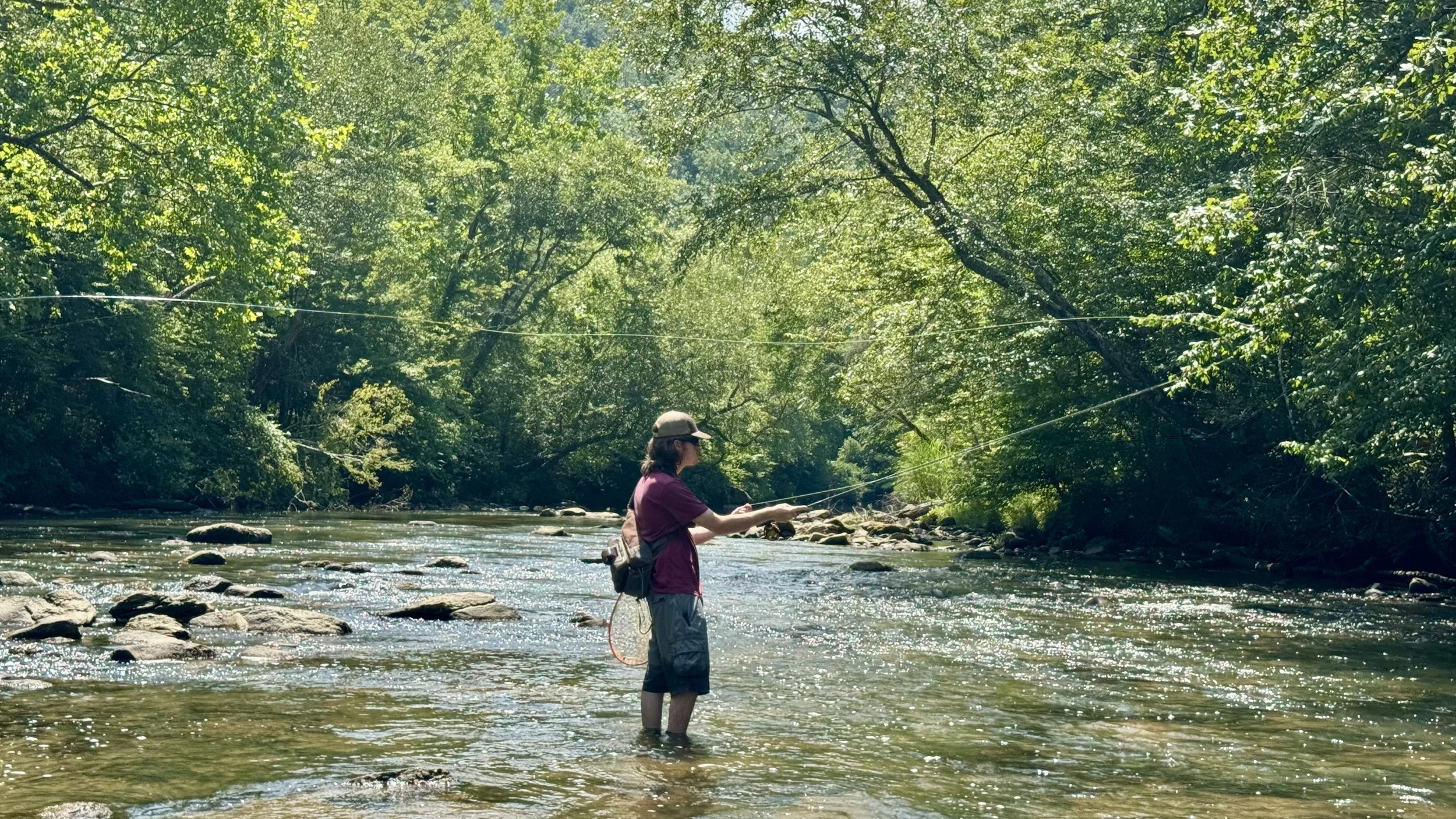
Wet wading creeks and streams is a great way to cool off and discover new waters to fish.

Try New Waters

If you have trouble locating big panfish on large lakes and reservoirs, try fishing smaller lakes and ponds. In comparison, the fish will still be occupying deep water, but that deep water may only be 4 -8 feet deep in a pond instead of 20-30 feet deep in a larger body of water. Fish in these smaller bodies of water will be much easier to target with a fly rod. With fewer places to hide, you will locate fish quickly.

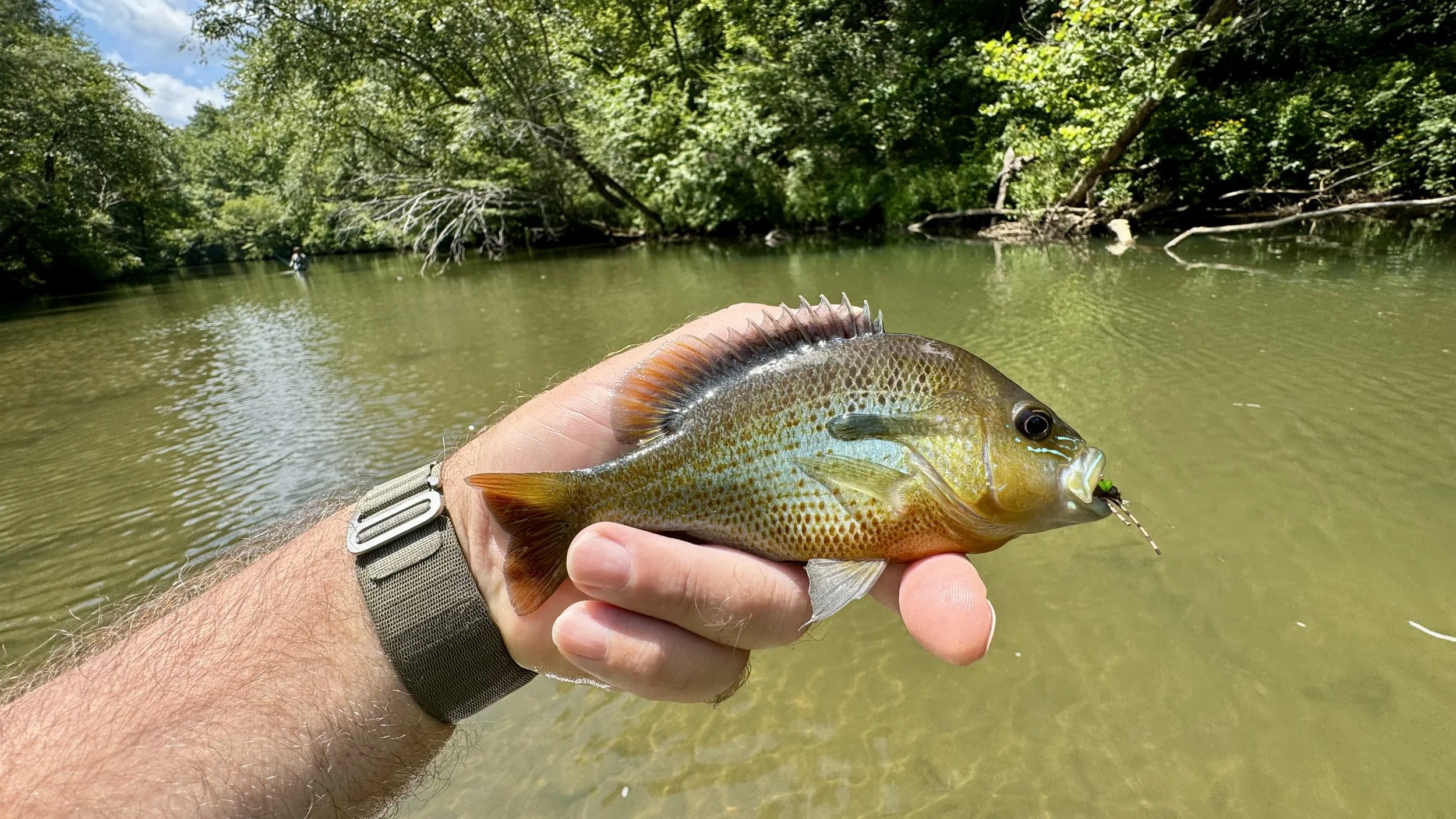
Many species of panfish, like this redbreast sunfish, thrive in moving waters.

A favorite method of fishing during the height of summer is wet wading creeks and rivers. Wet wading streams is a comfortable way to spend a hot summer day. Moving water is often cooler and contains more dissolved oxygen than still waters, which means you can often find good fishing during the hours when lakes and ponds seem to go dormant.

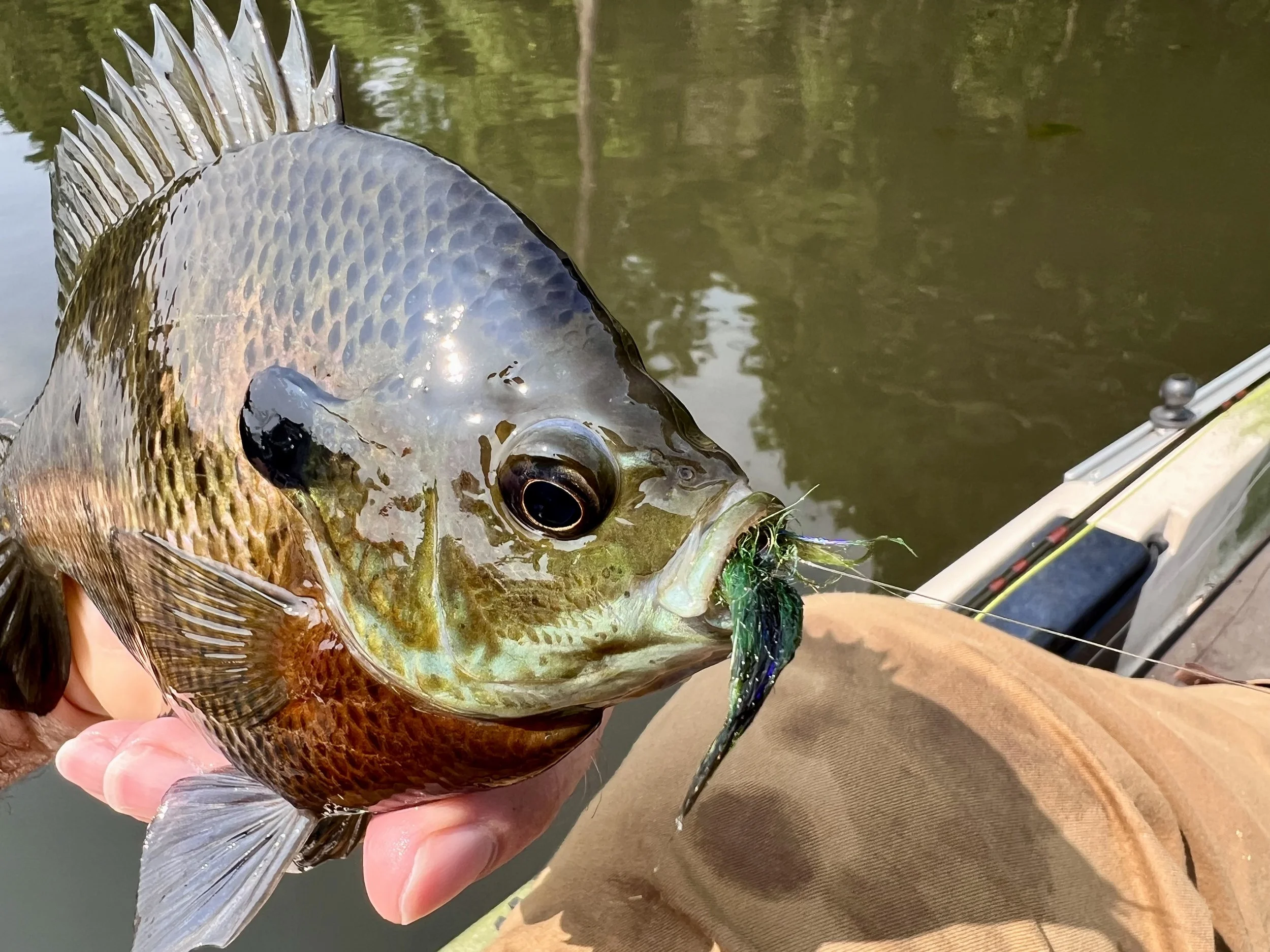
This bluegill has a size four streamer intended for bass stuffed into its mouth!

Go Big Or Go Home

A large panfish will have no problem eating a size six fly. I often catch big bluegills when fishing for bass on size four flies, sometimes as large as two! Many prey items that panfish rely on for food are larger at this time of year. These prey items include dragonfly larvae, leeches, crayfish, and young fish and minnows. Large nymphs, wet flies, and small streamers will produce the largest panfish. As a bonus, these flies also attract the attention of larger predators like bass.

Do you have a tip for summertime panfish on the fly? We'd love to hear it. Leave a comment below!

In Fishing, Fly Fishing
4 Comments

Hoppers and Panfish

July 1, 2025 Panfish On The Fly

When folks discuss hoppers and fly fishing, the conversation almost always revolves around trout. But what about panfish? Are they just as crazy over these giant bugs as their sexy cold-water cousins? The answer is yes! The fact isgrasshoppers turn fish on, whether it's a monster brown trout or a big fat bluegill.

Read more
In Fly Fishing, Fishing Tags hoppers, Summer fishing
Comment
Older Posts →
Summary Block
This block is invalid. Please check the block settings and try again.
Featured
Aenean eu leo Quam
Aenean eu leo Quam

Quisque iaculis facilisis lacinia. Mauris euismod pellentesque tellus sit amet mollis.

Read more →

FAQ AND CUSTOMER SERVICE

Contact Us

About

Book a Presentation

Calendar of Events


© Copyright 2026 Panfish On The Fly    All Rights Reserved

SUBSCRIBE TO OUR NEWSLETTER

Are you interested in learning how to tie a new warm water pattern each month? Do you want to know when new products arrive in the shop? Do you want access to special discounts and sales? Then SIGN UP now!

Subscribe

Sign up with your email address to receive news and updates.

We respect your privacy.

Thank you!