I’m always looking for new panfish patterns to try, even though my fly boxes are already full of good flies. Most new patterns don’t work better than my old favorites, so why keep searching? It’s because I love tying flies just as much as fishing. When I’m at the vise, I think about where I’ll use the fly or remember past trips. Tying keeps me connected to my favorite hobby, especially when I can’t get out on the water.
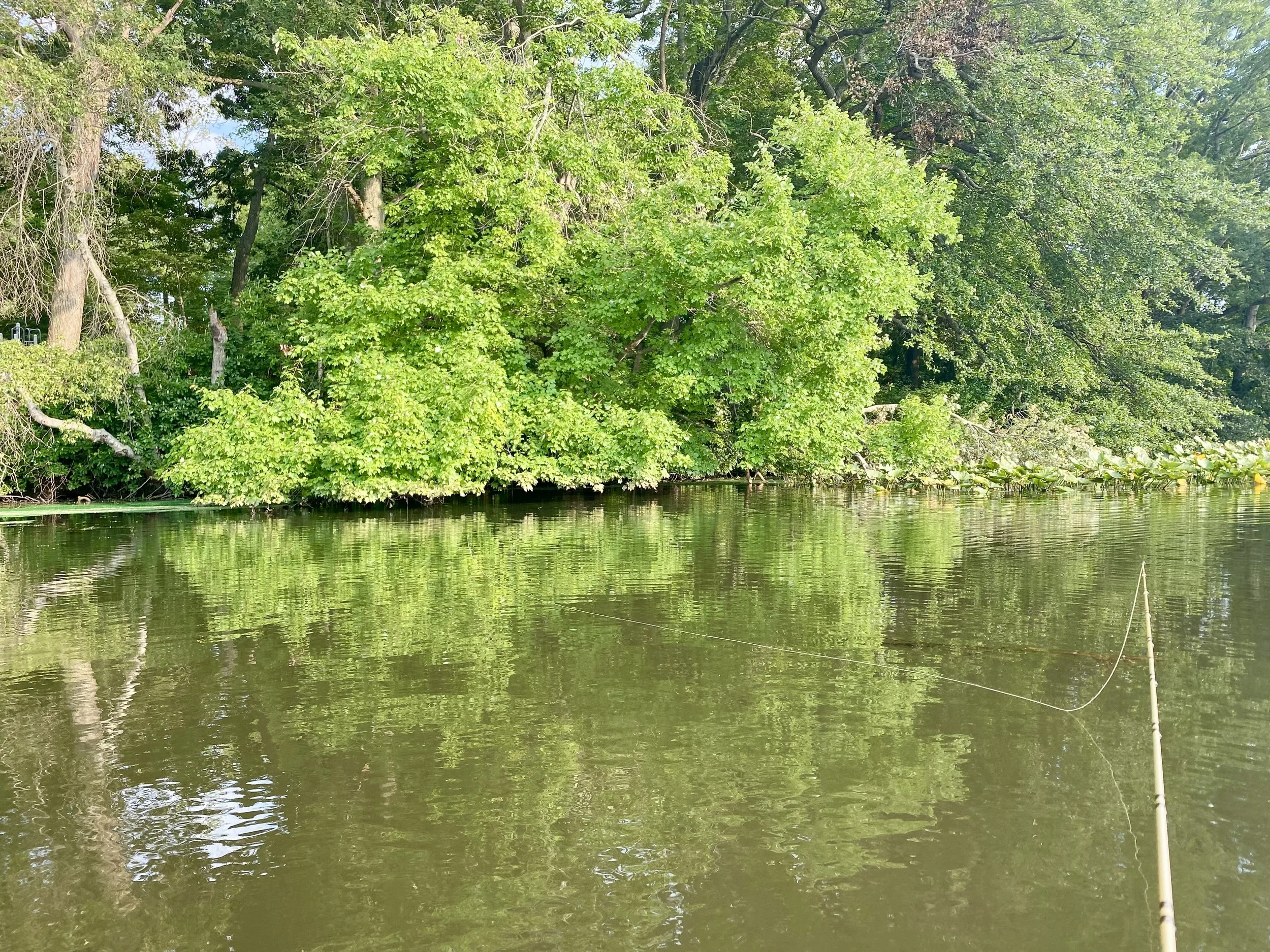
Low hanging branches over the water are a perfect place to present an ant or beetle pattern.
During the summer months, terrestrial insects become an important food source for panfish. All manner of terrestrial insects find their way into the water. Ants, beetles, caterpillars, spiders, and a host of other insects drop from trees and branches overhanging the water. Windy days blow grasshoppers and other bugs out of bank-side vegetation.
Just this week, I went to a local lake and saw over a hundred bluegills and golden shiners feeding on the surface. At first, I couldn’t tell what they were eating. Then I noticed thousands of tiny winged termites emerging from the roots of a dead tree and blowing onto the water. These termites were about size 20. I don’t usually carry flies that small for panfish, but luckily sunfish aren’t as picky as trout. Almost any fly I cast into the feeding fish was eaten immediately.
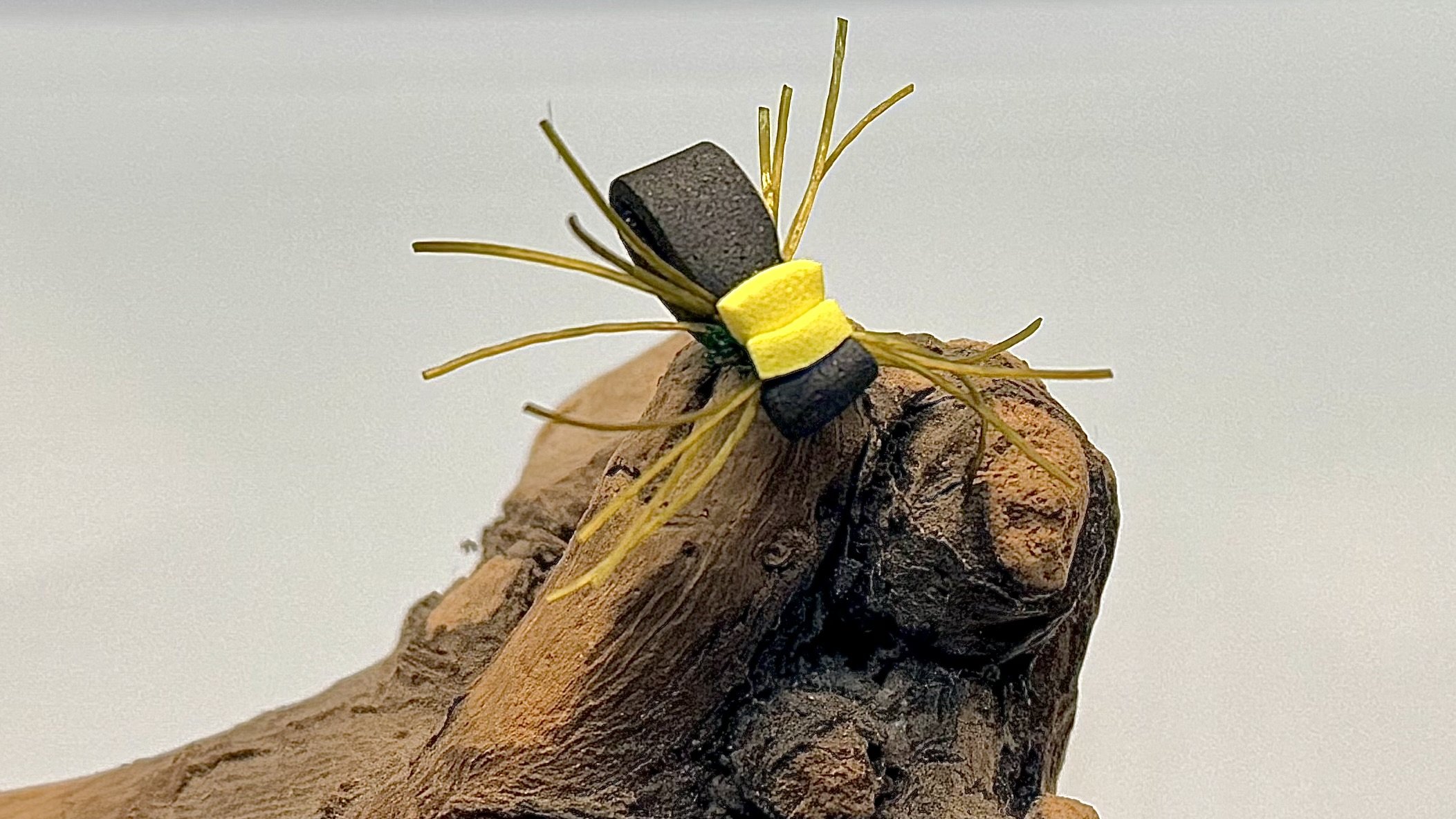
PJ’s Bluegill Crusher with a few added tweaks, such as swapping natural peacock with synthetic for durability and a sighter for visibility.
The fly I used that day was new to me. A few weeks ago, I was searching for new ant and beetle patterns and found one called PJ’s Bluegill Crusher. It’s a simple, easy fly to tie that looks a bit like both an ant and a beetle. You can use it when fish are feeding on either insect.
This fly uses just three materials besides the hook and thread: foam, fine rubber legs, and peacock herl. I made a few changes when tying it for panfish. The first thing I changed was the peacock herl. Natural peacock herl looks great, but it’s very fragile and comes apart after a few fish. The fly still worked well even when the herl wore off, so I’m not sure it’s needed. But the herl does help spread out the rubber legs, which might be why it’s included. To keep the original look but make the fly tougher, I used Semperfli’s synthetic peacock instead. Now the fly is much more durable.
Since small, dark flies like this can be hard to see on the water, I added a small, bright foam sighter on top. This makes the fly much easier to spot. I tied them in sizes 10 and 12, since I rarely make panfish flies smaller than that. It can be tough to remove tiny flies from a sunfish’s mouth, so I prefer larger flies or patterns like the Triangle Bug, which are harder for fish to swallow.
For size 10 flies, I used Hareline 3mm foam. For sizes 12 to 16, I switched to 2mm foam, and for the smallest flies, I used 1mm foam. Evazote-style foam works great for this pattern because it floats all day and is very tough.
For the legs, I use fine span flex material, which comes in different brands and thicknesses. I pick the thinnest for small flies and standard for sizes 10 and 12. It’s a bit harder to work with than regular rubber or silicone legs, but it moves better in the water. Since it’s so thin, I can use more legs without making the fly bulky. I put 4-5 legs on each side.. I figure if the usual four legs are good, eight to ten are even better!
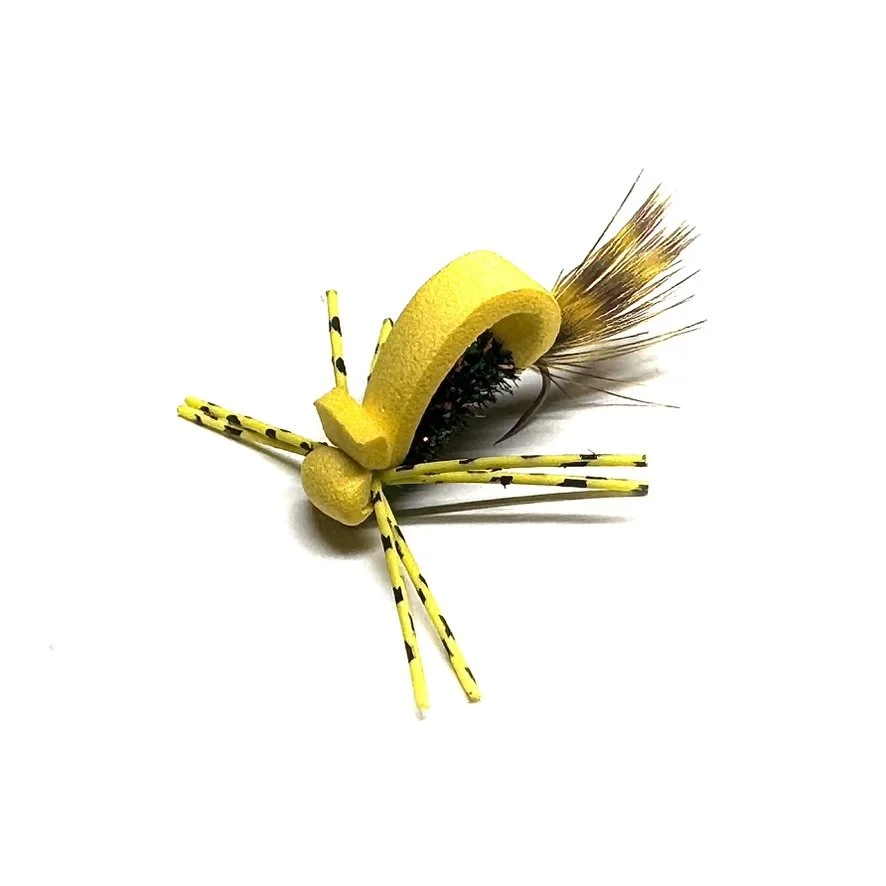
Foam flies tied with an open loop of foam like this Bluegill Bug leave a trail of bubbles when twitched on the surface.
The body of the fly is made from a loop of foam instead of a solid piece. This forms a small air pocket that makes bubbles when you pull the fly through the water. It’s a trick used in other foam panfish patterns, like the Bluegill Bug.
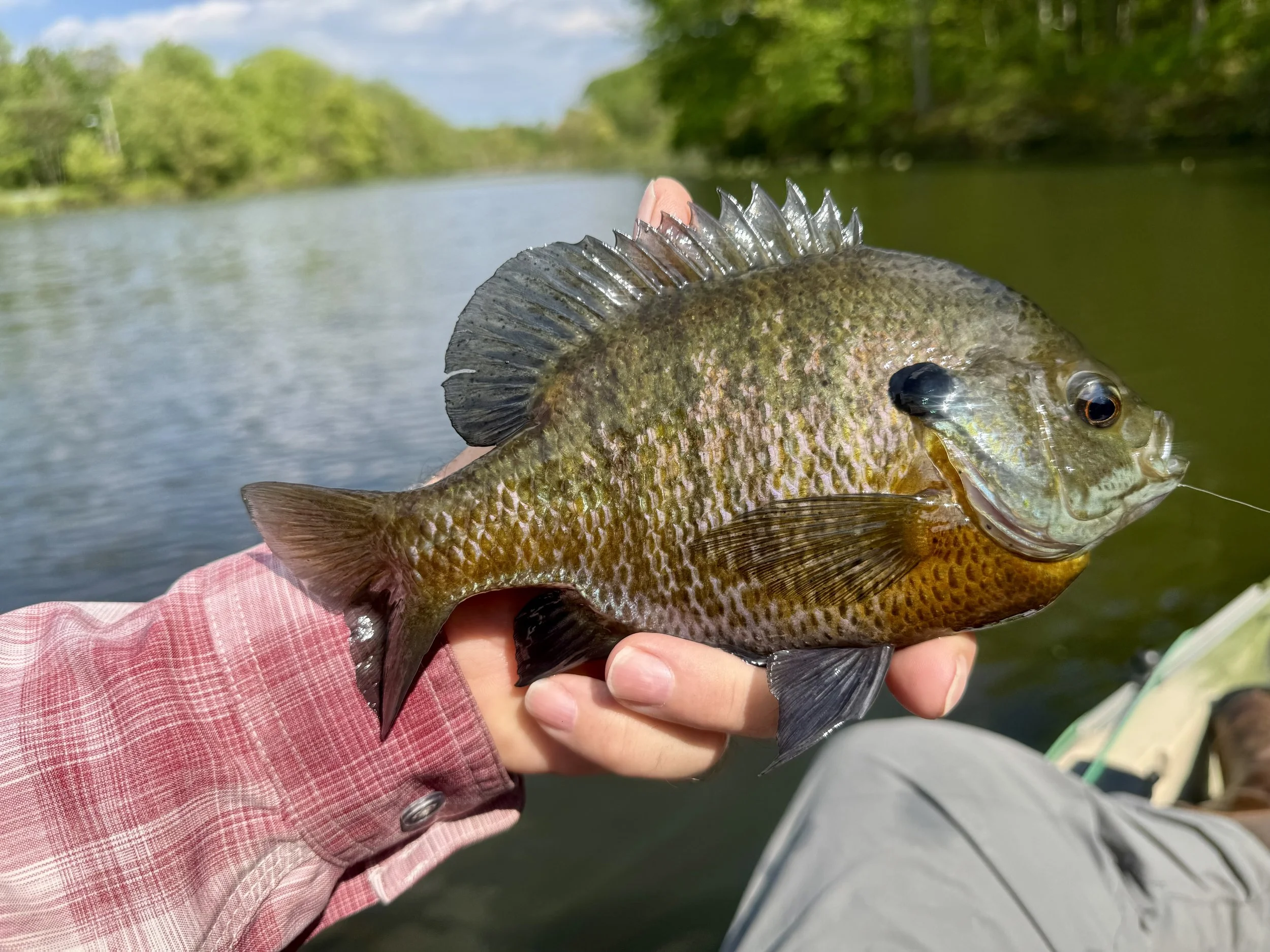
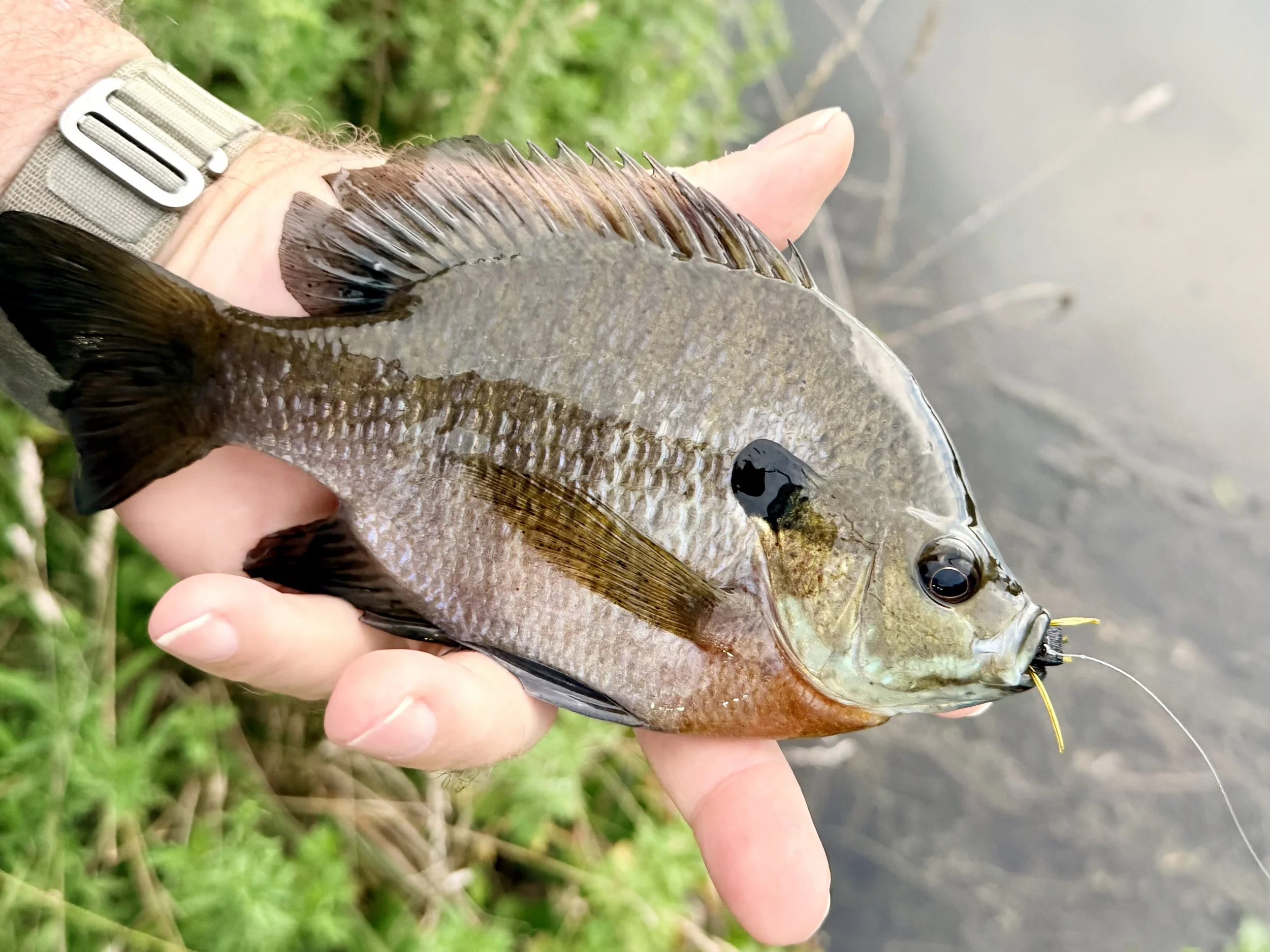
A good bluegill taken mid-day along a shaded bank.
Sunfish and small bass really like this pattern. I’ve caught good fish with it at dawn and dusk, including some bass. It’s also a great fly to use when searching for fish on a slow summer day. Casting it along shady banks has brought fish up during the day, too.
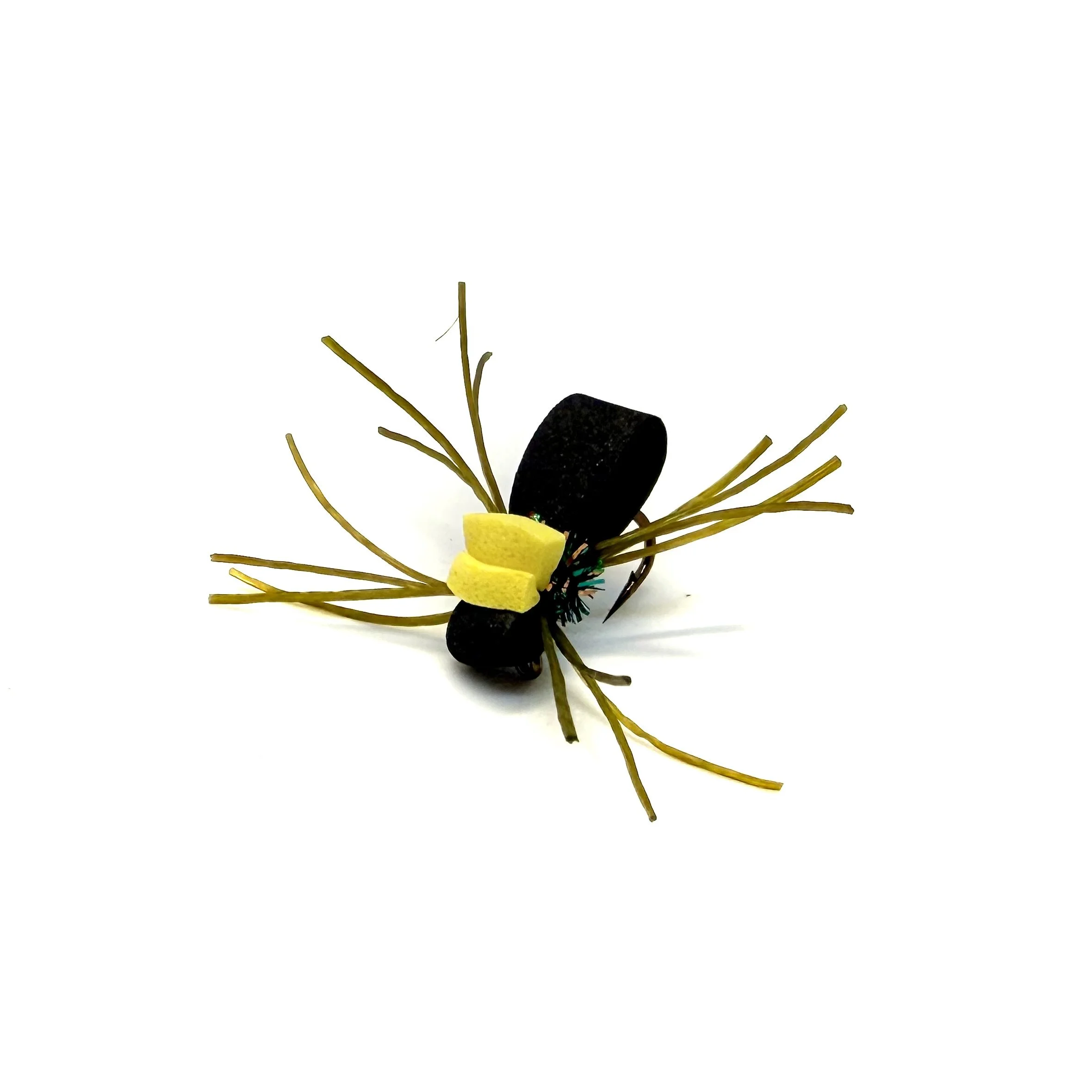
Pattern Recipe:
Hook: Curved Shank Nymph or Emerger Hook (sizes 12-8)
Thread: Semperfli Classic Waxed (8/0 or 6/0)
Body: 2mm Foam Strip
Underbody (optional): Peacock Herl or Semperfli Synthetic Peacock Herl
Legs: Flexi-Floss or Bug Legs in color of choice
Sighter: Bright colored 1mm foam
Below is a video from YouTube that demonstrates the tying procedure.
